Introduction
The Walia Ibex (Capra walie) is a striking and unique species of wild goat native to the Ethiopian Highlands, particularly within the Simien Mountains National Park. This majestic animal is a testament to nature’s adaptability and beauty, thriving in one of the most rugged terrains in the world. The Walia Ibex holds a special place in biodiversity due to its limited geographical range and its status as an endangered species. Understanding the life and challenges of the Walia Ibex is crucial for its conservation and the ecological balance of its habitat.
Physical Description
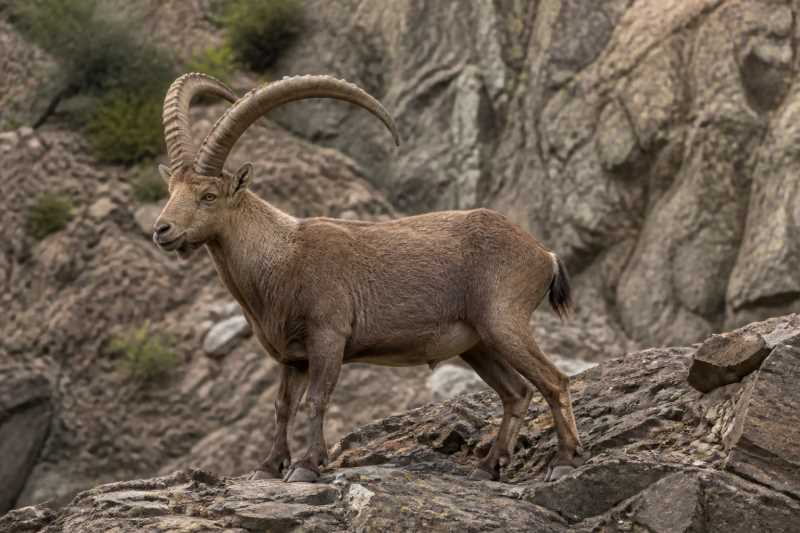
The Walia Ibex stands out due to its impressive physical features. Males are notably larger than females, with a shoulder height ranging from 90 to 100 cm and weighing between 80 to 125 kg. Females are smaller, typically weighing between 50 to 65 kg. One of the most striking attributes of the male Walia Ibex is its distinctive, massive horns which can grow up to 110 cm in length. These horns curve gracefully backwards, setting them apart from other goat species. Females also have horns, though they are shorter and thinner.
The coat of the Walia Ibex is a rich, dark brown to reddish-brown, with a lighter underbelly and a black stripe running down the spine. In contrast to the males, females and juveniles tend to have lighter coats, which aid in camouflage against the rocky terrain. The males develop a beard and a mane of longer hair on the neck and chest, adding to their distinguished appearance.
Range and Habitat
The Walia Ibex is endemic to the Ethiopian Highlands, with its primary stronghold in the Simien Mountains National Park. This area is characterized by dramatic cliffs, deep valleys, and rugged plateaus, creating a formidable yet perfect environment for these agile climbers. The altitudinal range they inhabit is typically between 2,500 to 4,500 meters above sea level. This high-altitude range provides them with a cooler climate and a unique selection of vegetation.
The habitat consists of montane forests, subalpine grasslands, and rocky outcrops. The Walia Ibex relies on these diverse landscapes for foraging and protection from predators. The steep cliffs offer refuge and vantage points to spot potential threats, while the varied vegetation provides a steady diet throughout the year.
Behavior and Diet
Walia Ibex are primarily diurnal, being most active during the early morning and late afternoon. They are social creatures, often found in groups ranging from small herds of females and young, to larger assemblies that include males particularly during the breeding season.
Their diet is herbivorous, consisting mainly of grasses, herbs, and shrubs found in their high-altitude habitat. During the dry season, when vegetation is sparse, they may descend to lower elevations in search of food. The Ibex’s agile climbing ability allows it to access vegetation in areas that are inaccessible to other herbivores, giving it a unique niche in its ecosystem.
The breeding season occurs from March to May, during which males compete for access to females through displays of strength and horn clashing. After a gestation period of about 150-165 days, females give birth to one or two kids, which are able to follow their mothers almost immediately.
Identification Tips
Identifying the Walia Ibex in the field requires attention to several key characteristics:
- Horns: Look for the large, backward-curving horns of the males, which are much longer and thicker than those of the females.
- Coloration: Note the dark brown to reddish-brown coat with a distinctive black dorsal stripe.
- Size and Build: Males are significantly larger and have a more robust build compared to the more slender females.
- Habitat: They are typically found on steep, rocky terrains within the Ethiopian Highlands.
- Behavior: Observe their social grouping; males are often solitary or in bachelor groups outside the breeding season, while females and young form larger herds.
Conservation Status
The Walia Ibex is classified as Endangered by the International Union for Conservation of Nature (IUCN). Its population has been under significant threat due to habitat loss, human encroachment, and hunting.
Threats:
- Habitat Destruction: Expansion of agriculture and settlements into the highlands reduces their natural habitat.
- Hunting: Although illegal, hunting for their horns and meat still occurs.
- Climate Change: Changes in climate can affect the availability of food resources and suitable habitat.
Protections:
- Protected Areas: The Simien Mountains National Park provides a sanctuary for the Walia Ibex, with measures in place to protect their habitat and regulate human activities.
- Conservation Programs: Various NGOs and government initiatives are working to monitor populations and promote sustainable tourism practices.
- Community Engagement: Local communities are being involved in conservation efforts to enhance awareness and reduce human-wildlife conflict.
Frequently Asked Questions
What is the Walia Ibex’s natural habitat?
The Walia Ibex is native to the Ethiopian Highlands, primarily in the Simien Mountains National Park. They inhabit high-altitude areas characterized by steep cliffs and rocky terrains.
How can you identify a Walia Ibex?
The Walia Ibex can be identified by its large, backward-curving horns, dark brown to reddish-brown coat, and distinctive black dorsal stripe. Males are larger and more robust than females.
Why is the Walia Ibex endangered?
The Walia Ibex is endangered due to habitat destruction from agricultural expansion, illegal hunting, and the impacts of climate change. Conservation efforts are ongoing to protect this species.
What do Walia Ibex eat?
Their diet consists mainly of grasses, herbs, and shrubs found in the high-altitude regions they inhabit. They are adapted to grazing in steep, rocky areas.
Are there conservation programs for the Walia Ibex?
Yes, several conservation programs are in place, including protection within the Simien Mountains National Park and community engagement initiatives to promote sustainable practices.
Related posts