Introduction
The Unduavi Mouse Opossum, scientifically known as Cryptonanus unduaviensis, is a small marsupial that has captured the interest of researchers and wildlife enthusiasts alike. This elusive species belongs to the family Didelphidae, which is notable for comprising the largest group of marsupials in the Western Hemisphere. Despite its intriguing nature, the Unduavi Mouse Opossum remains understudied compared to other marsupials, making it a subject of interest for ongoing research in mammalogy and conservation biology.
Physical Description
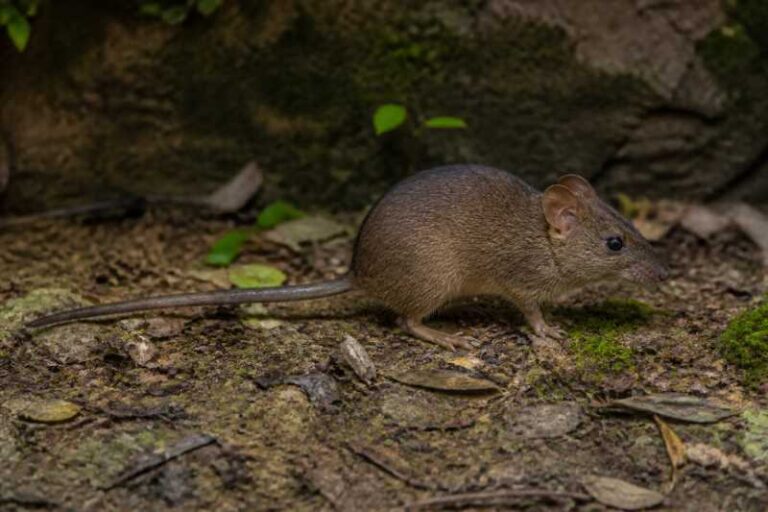
The Unduavi Mouse Opossum is characterized by its small size and delicate features. Typically, these opossums have a body length ranging from 7 to 12 cm, with a tail length that often equals or slightly surpasses the length of their bodies, providing them with excellent balance and mobility. Their fur is soft and dense, usually a blend of gray and brown hues that offer effective camouflage against the leaf litter of their forest habitats.
One of the most distinguishing features of this species is its pointed snout and large, rounded ears, which enhance its sensory capabilities. The eyes are relatively large, an adaptation that suggests a nocturnal lifestyle, aiding in night-time navigation and foraging. Additionally, the hind limbs of the Unduavi Mouse Opossum are slightly more robust than the forelimbs, a trait that supports their adept arboreal movement.
Range and Habitat
The Unduavi Mouse Opossum is endemic to South America, with its range primarily concentrated in the Andean regions. It is named after the locality of Unduavi in Bolivia, which is considered one of the significant habitats for the species. These marsupials prefer montane forest environments, where they have access to a complex ecosystem that provides ample food resources and shelter.
Their habitat is typically characterized by a humid climate with dense vegetation, which offers both protection from predators and a wealth of invertebrate prey. The Unduavi Mouse Opossum’s arboreal lifestyle is well-suited to the dense canopy and understory of these forests, where they can move freely in search of food and mates.
Behavior and Diet
The Unduavi Mouse Opossum is primarily nocturnal, spending the daylight hours resting in concealed locations within the forest. At night, they become active, foraging for food across the forest floor and in the lower canopy. Their diet is omnivorous, consisting of a wide variety of insects, small invertebrates, fruits, and possibly small vertebrates.
This species exhibits solitary behavior, with individuals typically foraging alone except during the breeding season. During this time, the search for mates leads to increased activity and interaction among individuals. The reproductive strategies of the Unduavi Mouse Opossum are not well documented, but as with many marsupials, they are likely to have a short gestation period followed by the development of young in a pouch or nest.
Identification Tips (Field Recognition Cues)
Identifying the Unduavi Mouse Opossum in the field requires careful observation of several key characteristics:
- Size and Shape: Look for a small, slender-bodied marsupial with a long tail and a pointed snout.
- Coloration: Note the gray-brown fur that blends well with the forest floor, providing camouflage.
- Ears and Eyes: Large, rounded ears and prominent eyes are indicative of the species.
- Behavior: Nocturnal activity and solitary foraging habits are typical.
These cues are essential for distinguishing the Unduavi Mouse Opossum from other sympatric marsupial species and small rodents in its habitat.
Conservation Status (With Threats and Protections)
The conservation status of the Unduavi Mouse Opossum is currently not well defined, largely due to the lack of comprehensive studies and data. However, like many forest-dwelling species in the Andes, it faces potential threats from habitat loss and fragmentation due to deforestation and agricultural expansion.
Conservation efforts for the Unduavi Mouse Opossum would benefit from further research into its ecology and population dynamics. Protecting large tracts of montane forest and implementing sustainable land-use practices are crucial steps to ensure the preservation of this species and its habitat.
Frequently Asked Questions
Why is this species unique?
The Unduavi Mouse Opossum is unique due to its specialized arboreal adaptations, nocturnal lifestyle, and its limited geographical range within the Andean regions. Its elusive nature makes it a subject of interest for researchers studying biodiversity and evolutionary adaptations in marsupials.
What is the main threat to the Unduavi Mouse Opossum?
The primary threat to the Unduavi Mouse Opossum is habitat destruction due to deforestation and agricultural development. These activities lead to the fragmentation of their natural habitat, which can significantly impact their populations and long-term survival.
How can I help in the conservation of this species?
Supporting conservation organizations that focus on preserving Andean habitats and advocating for sustainable land-use practices can significantly contribute to the protection of the Unduavi Mouse Opossum. Additionally, raising awareness about the importance of biodiversity can help garner more support for conservation efforts.
Are there any ongoing research projects on this species?
While specific research projects on the Unduavi Mouse Opossum are limited, ongoing studies in the Andean regions often include this species as part of broader biodiversity assessments. These studies aim to gather data on species distribution, ecology, and the effects of environmental changes.
How do researchers study such elusive species?
Researchers often use a combination of methods to study elusive species like the Unduavi Mouse Opossum, including camera traps, live trapping for population studies, and genetic sampling. These techniques help gather valuable data without significantly disturbing the animals or their habitats.
Related posts