Introduction
The Albertine Rift Thicket Rat, scientifically known as Grammomys dryas, is a small, lesser-known rodent species that thrives in the dense forest undergrowths of the Albertine Rift, a region rich in biodiversity. This unique mammal is part of the Muridae family, which comprises various species of mice and rats. Despite its relatively obscure profile, the Albertine Rift Thicket Rat plays a crucial role in its ecosystem, contributing to the health and balance of its habitat.
Physical Description
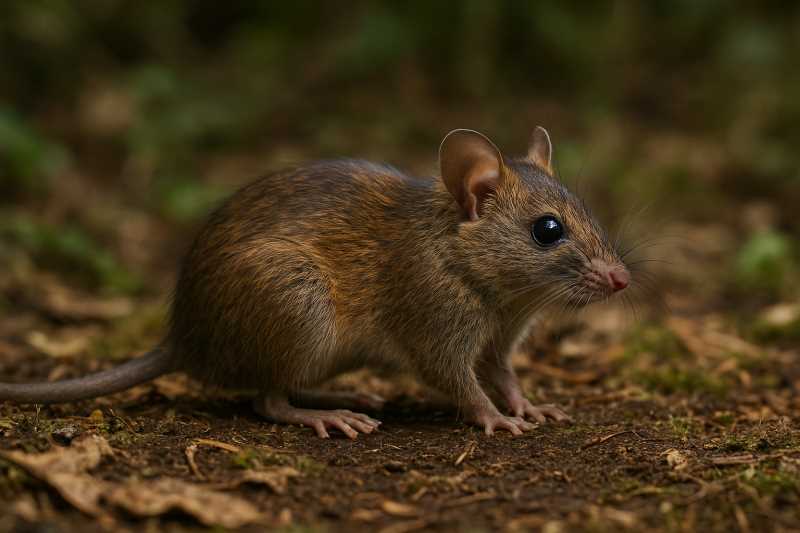
The Albertine Rift Thicket Rat is a small, agile rodent characterized by its delicate yet robust build. Adults typically measure around 11 to 14 centimeters in body length, with an additional tail length that can range from 12 to 18 centimeters, making their tails longer than their bodies. This species exhibits a soft, dense fur coat that is generally grayish-brown on the dorsal side and lighter, often whitish, on the ventral side. Their large, prominent eyes and ears are adaptations for their nocturnal lifestyle, providing them with enhanced sensory capabilities for navigating their dimly lit forest environment.
One of the most distinguishing features of the Albertine Rift Thicket Rat is its tail, which is prehensile and aids in climbing, allowing it to navigate the thickets and branches of its arboreal habitat with ease. Their limbs are well-adapted for climbing, with sharp claws that provide a strong grip on branches and bark.
Range and Habitat
The Albertine Rift Thicket Rat is endemic to the Albertine Rift, a region that spans several countries in East-Central Africa, including Uganda, Rwanda, Burundi, and the Democratic Republic of the Congo. This area is part of the larger East African Rift system and is renowned for its high levels of endemic species and diverse ecosystems.
This species primarily inhabits montane forests and dense thickets within this region, thriving at elevations between 1,400 and 3,000 meters. These environments provide the complex vegetation structure necessary for their survival, offering ample food resources and protection from predators. The dense foliage and undergrowth also facilitate their arboreal lifestyle, allowing them to forage and nest above ground level.
Behavior and Diet
The Albertine Rift Thicket Rat is primarily nocturnal, exhibiting heightened activity during the night when it forages for food. Its diet is omnivorous, consisting mainly of seeds, fruits, and leaves, supplemented by small invertebrates. This varied diet not only sustains the rat but also aids in seed dispersal, contributing to the propagation of local plant species.
Socially, the Albertine Rift Thicket Rat is relatively solitary, although several individuals may occupy overlapping territories. Communication within the species is facilitated through vocalizations and scent markings, which help establish territory boundaries and reproductive status. During breeding, these rats engage in intricate mating rituals, and after a gestation period of about 21 to 24 days, females give birth to litters typically consisting of two to four young.
Identification Tips (Field Recognition Cues)
Identifying the Albertine Rift Thicket Rat in the field requires careful observation of several key characteristics:
- Size and Shape: Look for a small rodent with a body length of 11 to 14 cm and a distinctly longer tail.
- Coloration: Note the grayish-brown dorsal fur contrasting with a lighter ventral side.
- Tail: Observe the long, prehensile tail, which is a critical feature for arboreal navigation.
- Eyes and Ears: Large, prominent eyes and ears are indicative of their nocturnal habits.
- Behavior: Watch for their climbing skills and listen for any vocalizations during nighttime activity.
Conservation Status (with Threats and Protections)
The conservation status of the Albertine Rift Thicket Rat is currently classified as "Data Deficient" by the International Union for Conservation of Nature (IUCN). This designation underscores the need for further research to determine population trends and threats accurately.
Threats
The primary threats to the Albertine Rift Thicket Rat include:
- Habitat Loss: Deforestation for agriculture, logging, and human settlement is a significant threat, leading to habitat fragmentation.
- Climate Change: Alterations in temperature and precipitation patterns may affect their habitat and food availability.
- Predation: Natural predators such as birds of prey and snakes pose a constant risk, particularly to the young and inexperienced individuals.
Protections
Efforts to protect this species are currently limited by the lack of specific data. However, general conservation measures applicable to the Albertine Rift region include:
- Protected Areas: Establishing and maintaining protected areas that encompass their natural habitats.
- Habitat Restoration: Initiatives aimed at reforesting and restoring degraded forest areas.
- Research and Monitoring: Encouraging scientific research to better understand the species’ ecology, behaviors, and population dynamics.
Frequently Asked Questions
1. What do Albertine Rift Thicket Rats eat?
Albertine Rift Thicket Rats have an omnivorous diet consisting of seeds, fruits, leaves, and small invertebrates. This varied diet helps in seed dispersal and contributes to the ecological balance of their forest habitat.
2. How can you identify an Albertine Rift Thicket Rat?
Identifying an Albertine Rift Thicket Rat involves observing its small size, grayish-brown dorsal fur, lighter ventral side, long prehensile tail, and large eyes and ears. These features, combined with their nocturnal behavior, are key identification cues.
3. What is the conservation status of the Albertine Rift Thicket Rat?
The Albertine Rift Thicket Rat is currently classified as "Data Deficient" by the IUCN, indicating a need for more research to accurately assess its population status and threats.
4. Where can Albertine Rift Thicket Rats be found?
This species is found in the Albertine Rift region, spanning Uganda, Rwanda, Burundi, and the Democratic Republic of the Congo, primarily inhabiting montane forests and dense thickets.
5. Are Albertine Rift Thicket Rats social animals?
Albertine Rift Thicket Rats are relatively solitary, although they may have overlapping territories. They communicate through vocalizations and scent markings, especially during breeding seasons.
Related posts