Introduction
The Southern Right Whale (Eubalaena australis) is an iconic marine mammal that captivates scientists and wildlife enthusiasts alike. Known for its imposing size, distinctive appearance, and intriguing behaviors, this species is a key subject of marine conservation efforts. Southern Right Whales inhabit the Southern Hemisphere’s oceans, migrating thousands of miles each year between their feeding grounds in cold Antarctic waters and their breeding grounds in warmer coastal areas.
These magnificent whales are a symbol of resilience, having rebounded from near extinction due to historical whaling. Today, understanding their biology, ecology, and conservation status is essential for their continued survival.
Physical Description
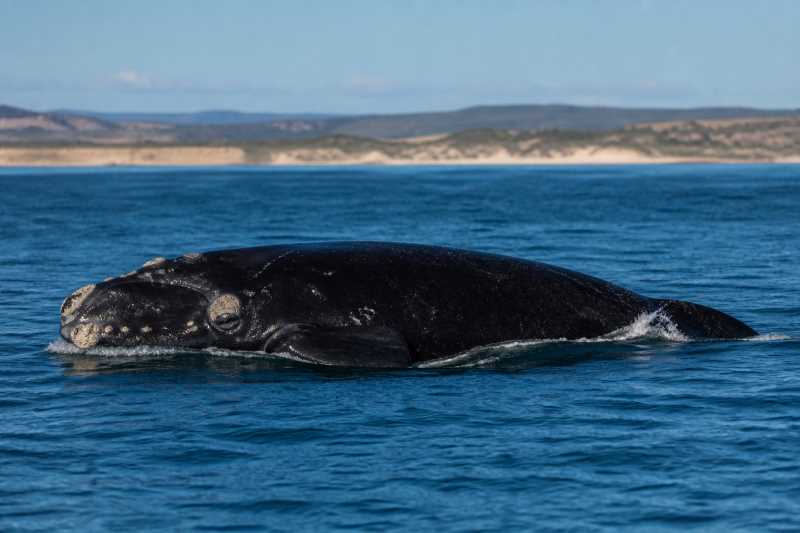
Southern Right Whales are one of the largest whale species, reaching lengths of up to 18 meters (59 feet) and weighing up to 80 tons. Their bodies are robust and black, although some individuals exhibit white patches on their bellies. A defining feature of the Southern Right Whale is its broad back without a dorsal fin, which distinguishes it from many other whale species.
The head of a Southern Right Whale comprises nearly a third of its total body length. It is marked by callosities—rough, white patches of skin populated by whale lice. These callosities are unique to each individual, similar to human fingerprints, and are used by researchers for identification.
Their baleen plates, which are dark and can number up to 300 on each side of the upper jaw, are used to filter small marine organisms out of the water. Their massive flippers are paddle-shaped, and their tails are wide, with a distinctive notch in the center.
Range and Habitat
Southern Right Whales are found throughout the Southern Hemisphere, primarily in the Atlantic, Indian, and Pacific Oceans. They prefer colder waters and are often seen off the coasts of Argentina, South Africa, Australia, and New Zealand.
During the summer, Southern Right Whales migrate to high-latitude feeding areas, such as the waters around Antarctica, where krill and other small organisms are abundant. In the winter, they travel to warmer, low-latitude coastal waters to breed and give birth.
These whales are often sighted in shallow bays and sheltered coastal waters during the breeding season, making them accessible for whale watching and research.
Behavior and Diet
Southern Right Whales are known for their slow and graceful swimming. They are not fast swimmers, which historically made them easy targets for whalers. Despite their size, they can perform impressive aerial displays, such as breaching, where they launch their bodies out of the water.
Socially, these whales are often seen in small groups, although they can also be solitary. Mothers and calves are closely bonded, with calves staying with their mothers for up to a year.
Their diet primarily consists of zooplankton, such as krill and copepods. Southern Right Whales are filter feeders, using their baleen plates to sieve tiny prey from the water. They often feed by swimming with their mouths open through dense patches of plankton.
Identification Tips (Field Recognition Cues)
- No Dorsal Fin: The absence of a dorsal fin is a key identifier of the Southern Right Whale.
- V-shaped Blow: When they surface to breathe, the exhalation creates a distinctive V-shaped spout.
- Callosities: Unique patterns of callosities on the head are visible from afar and vary between individuals.
- Broad Back: Their broad, smooth back is visible during surfacing.
- Paddle-shaped Flippers: Large, paddle-shaped flippers can be seen when they breach or roll.
Conservation Status (with Threats and Protections)
The Southern Right Whale is currently listed as "Least Concern" by the International Union for Conservation of Nature (IUCN), but this status belies the challenges it still faces. Historically decimated by whaling, populations have rebounded since the international moratorium on commercial whaling.
Today, the primary threats include entanglement in fishing gear, ship strikes, climate change, and habitat degradation. Noise pollution from shipping and industrial activities can also disrupt their communication and navigation.
Conservation efforts focus on monitoring populations, creating marine protected areas, and implementing measures to reduce ship strikes and entanglement risks. International collaboration and legal protections are crucial for safeguarding their future.
Frequently Asked Questions
How long do Southern Right Whales live?
Southern Right Whales can live for over 70 years. They reach sexual maturity at around 10 years of age and have a long gestation period of approximately 12 months.
What is the best time to see Southern Right Whales?
The best time to see Southern Right Whales is during their breeding season, which varies by region but typically occurs between June and November. Coastal regions of Argentina, South Africa, and Australia are popular spots for whale watching.
How do Southern Right Whales communicate?
Southern Right Whales communicate through a series of low-frequency sounds and vocalizations, which can travel long distances underwater. These sounds are used for social interactions and navigating their environment.
Are Southern Right Whales dangerous to humans?
Southern Right Whales are not considered dangerous to humans. They are generally gentle and curious creatures, often approaching boats out of curiosity. However, maintaining a safe distance is essential to avoid disturbing them.
What are the main threats to Southern Right Whales?
The main threats to Southern Right Whales include ship strikes, entanglement in fishing gear, climate change, and habitat degradation. Conservation efforts aim to mitigate these threats through protective measures and international cooperation.
Related posts