Introduction
The Altai Vole (Microtus obscurus) is a small rodent species belonging to the family Cricetidae. Native to the temperate regions of Central Asia, this vole has garnered interest among researchers due to its ecological significance and adaptive behaviors. Its role in the ecosystem as both prey and a herbivore makes it a vital component of its natural habitat. This article explores the various facets of the Altai Vole, including its physical characteristics, habitat preferences, behavior, and conservation status.
Physical Description
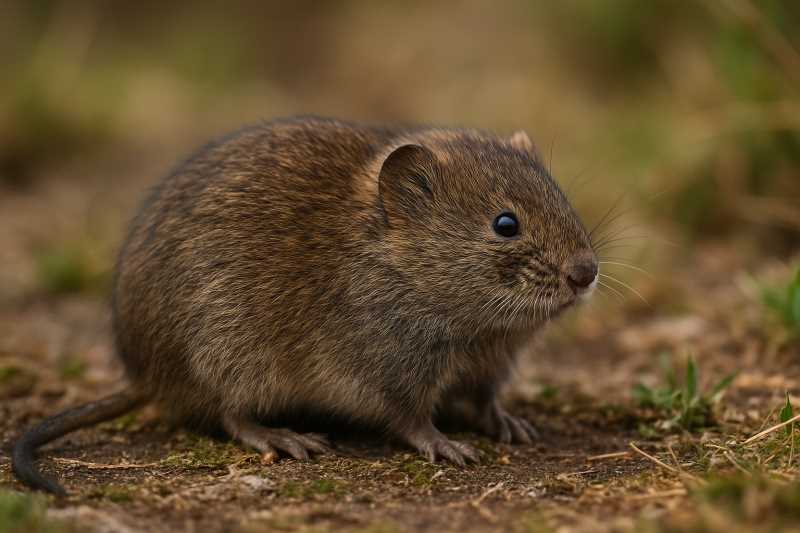
The Altai Vole is a small mammal with a compact body, typically measuring 10 to 12 centimeters in length, excluding its tail which adds an additional 3 to 4 centimeters. It weighs between 20 to 50 grams. Its fur is dense and soft, providing insulation against the cold climates of its native habitats. The dorsal coloration ranges from brown to dark grey, while the underparts are lighter, often greyish-white. The vole’s ears are small and rounded, partially hidden by its fur, and its eyes are relatively small, an adaptation to its subterranean lifestyle.
Notably, the Altai Vole possesses a short, robust tail and strong, clawed limbs that aid in burrowing. Its dental formula is adapted for a herbivorous diet, with ever-growing incisors that require constant gnawing to maintain length.
Range and Habitat
The Altai Vole is primarily found in the Altai Mountains of Central Asia, encompassing regions in Russia, Mongolia, Kazakhstan, and China. It occupies a range of altitudes from 500 to 3000 meters above sea level. The vole prefers grasslands, steppes, and alpine meadows, where it can find ample food resources and suitable conditions for burrowing.
These habitats provide a mix of grasses and shrubs, which are crucial for the vole’s diet and shelter. The presence of loose, well-drained soil is essential for its burrowing activities, allowing it to create extensive underground networks for nesting and food storage.
Behavior and Diet
Altai Voles are primarily nocturnal, although they may exhibit some diurnal activity during the breeding season. Their social structure is relatively simple, with individuals often maintaining solitary territories, except during mating periods.
Their diet consists mainly of grasses, seeds, and occasionally roots and tubers. The vole’s incisors are well-suited to gnawing tough plant material, which forms the bulk of their diet. Seasonal variations affect their food preferences, with a shift to seeds and roots during the harsher winter months when green vegetation is scarce.
The Altai Vole is an adept burrower, creating complex networks of tunnels that can span several meters. These burrows serve as protection from predators and harsh weather conditions, as well as storage for food reserves.
Identification Tips (Field Recognition Cues)
Identifying the Altai Vole in the field can be challenging due to its resemblance to other vole species. However, a combination of physical and behavioral cues can aid in proper identification:
- Size and Coloration: Look for a small, compact body with a length of 10 to 12 centimeters and a brown to dark grey fur.
- Tail Length: The vole’s tail is relatively short, measuring about a quarter to a third of its body length.
- Habitat Preference: Observing the vole in grasslands or alpine meadows at high altitudes can be a strong indicator.
- Behavior: Note its burrowing behavior and preference for nighttime activity.
Conservation Status (with Threats and Protections)
The Altai Vole is currently categorized as Least Concern by the International Union for Conservation of Nature (IUCN). This status is due to its wide distribution and presumed large population. However, there are localized threats that could impact certain populations.
Threats
- Habitat Loss: Agricultural expansion and land development pose significant threats to their natural habitats.
- Climate Change: Shifts in climate patterns can alter the availability of food resources and suitable habitats.
- Predation: Natural predators include birds of prey, foxes, and other carnivorous mammals.
Protections
- Protected Areas: Some populations reside within national parks and protected areas that offer a refuge from human encroachment.
- Research and Monitoring: Ongoing studies help monitor population trends and ecological requirements to aid in conservation efforts.
Frequently Asked Questions
What do Altai Voles eat?
Altai Voles primarily consume grasses, seeds, and roots. Their diet changes seasonally, with an increased reliance on seeds and roots during winter.
Where can Altai Voles be found?
They are found in the Altai Mountains across Russia, Mongolia, Kazakhstan, and China, favoring grasslands and alpine meadows at altitudes of 500 to 3000 meters.
How do Altai Voles avoid predators?
Their primary defense mechanisms include nocturnal activity, burrowing to create protective tunnels, and rapid reproduction to maintain population numbers despite predation.
Are Altai Voles endangered?
Currently, Altai Voles are not endangered. They are classified as Least Concern by the IUCN, although they face threats such as habitat loss and climate change.
How do Altai Voles reproduce?
The breeding season occurs from spring to early autumn, with females producing multiple litters annually. Each litter typically contains 3 to 7 young.
Related posts