Introduction
Robert’s Arboreal Rice Rat, scientifically known as Oecomys roberti, is a fascinating rodent species belonging to the family Cricetidae. This small mammal, primarily arboreal, is part of the diverse ecosystem of the Central and South American forests. Named in honor of an early 20th-century naturalist, Robert’s Arboreal Rice Rat is a species of considerable interest to researchers due to its unique adaptations and ecological role.
As an arboreal creature, this rat exhibits behaviors and physiological traits that allow it to thrive in the treetops, making it an integral component of its native habitat. Its presence is an indicator of healthy forest ecosystems, and studying it can provide insights into the broader ecological processes at play.
Physical Description
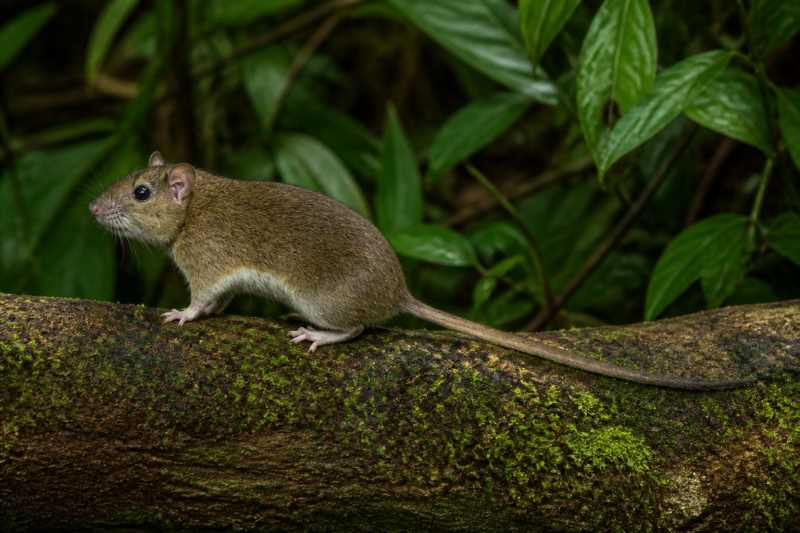
Robert’s Arboreal Rice Rat is a medium-sized rodent, with adults typically weighing between 50 to 100 grams. Its body length ranges from 12 to 20 centimeters, with a tail measuring slightly longer than its body, aiding in balance and maneuverability among the trees.
The fur of Oecomys roberti is soft and dense, with a coloration that varies from light brown to a more reddish hue on the dorsal (upper) side, while the ventral (under) side is usually a lighter gray or white. This coloration provides excellent camouflage against predators when the rat is moving among the foliage.
The rat’s ears are relatively large and rounded, a feature that enhances its ability to detect sounds in its environment, crucial for avoiding predators and communicating with fellow rats. Its eyes are also proportionately large, indicating a strong reliance on vision in its arboreal lifestyle.
Range and Habitat
The range of Robert’s Arboreal Rice Rat extends across the tropical rainforests of Central and South America, with populations documented in countries such as Brazil, Peru, Ecuador, and Colombia. They thrive in humid, densely forested areas where there is an abundance of trees and undergrowth.
These rats are primarily found in lowland forests but can also inhabit montane forests at elevations up to 1,500 meters. Their preference for forested habitats is linked to their arboreal nature, as they rely on the complex structure of the forest canopy for shelter, foraging, and movement.
Behavior and Diet
The arboreal nature of Oecomys roberti dictates much of its behavior. These rats are highly agile climbers, using their prehensile tails and sharp claws to navigate the complex network of branches and vines. They build nests in the trees using leaves and twigs, providing shelter from predators and the elements.
Robert’s Arboreal Rice Rat is primarily nocturnal, emerging at night to forage for food. Its diet is omnivorous, consisting of fruits, seeds, insects, and occasionally small invertebrates. This varied diet allows the rat to adapt to seasonal changes in food availability, a critical survival trait in the dynamic rainforest environment.
Socially, these rats are relatively solitary, except during the breeding season. They communicate through vocalizations and scent markings, which play a role in territory establishment and mate attraction.
Identification Tips
Identifying Robert’s Arboreal Rice Rat in the field can be challenging due to its elusive nature and the dense habitats it occupies. However, several key characteristics can aid in recognition:
- Tail Length and Usage: Look for a rat with a tail longer than its body, often used for balance as it moves through trees.
- Fur Coloration: Observe the dorsal coloration, which is typically a rich reddish-brown, contrasting with its lighter underbelly.
- Ear and Eye Size: Note the large, rounded ears and prominent eyes, adaptations for an arboreal lifestyle.
- Behavior: Look for signs of nocturnal activity, such as rustling in the trees at night or nests made of leaves and twigs high in the canopy.
Conservation Status
The conservation status of Robert’s Arboreal Rice Rat is currently classified as "Least Concern" by the International Union for Conservation of Nature (IUCN). However, this status does not imply that the species is free from threats.
The primary threat to Oecomys roberti is habitat destruction due to deforestation, driven by logging, agriculture, and urban expansion. These activities result in the fragmentation and degradation of the forest habitat that is critical to the rat’s survival.
Conservation efforts focus on habitat protection and restoration. Protected areas and national parks in regions where these rats are found play a vital role in conserving their habitat. Additionally, sustainable forestry practices and reforestation initiatives are crucial in mitigating habitat loss.
Frequently Asked Questions
1. Where can I find Robert’s Arboreal Rice Rat in the wild? Robert’s Arboreal Rice Rat is predominantly found in the tropical rainforests of Central and South America, particularly in countries like Brazil and Peru. They inhabit forest canopies, making them more challenging to spot.
2. What does Robert’s Arboreal Rice Rat eat? This species has an omnivorous diet, consuming fruits, seeds, insects, and small invertebrates. Their diet varies with the seasonal availability of food sources.
3. How does deforestation affect Robert’s Arboreal Rice Rat? Deforestation leads to habitat loss and fragmentation, which are significant threats to the survival of Robert’s Arboreal Rice Rat. These changes can reduce food availability and increase predation risks.
4. Are Robert’s Arboreal Rice Rats social animals? Generally, these rats are solitary except during the breeding season. They communicate through vocalizations and scent markings to establish territory and attract mates.
5. What are the main predators of Robert’s Arboreal Rice Rat? Predators include birds of prey, snakes, and larger mammals that can navigate the forest canopy. Their arboreal lifestyle and camouflage help mitigate some predation risks.
Robert’s Arboreal Rice Rat exemplifies the intricate balance of life in the rainforest, highlighting the importance of conservation efforts to protect these vital ecosystems and the species that inhabit them.
Related posts