Introduction
The Rio Acarí Marmoset, scientifically known as Mico acariensis, is a captivating primate species found in the lush Amazonian rainforest of Brazil. This diminutive New World monkey has garnered significant attention from researchers and conservationists alike due to its unique characteristics, limited distribution, and the environmental challenges it faces. Understanding the Rio Acarí Marmoset can provide valuable insights into the biodiversity of the Amazon and the conservation efforts necessary to protect this remarkable species.
Physical Description
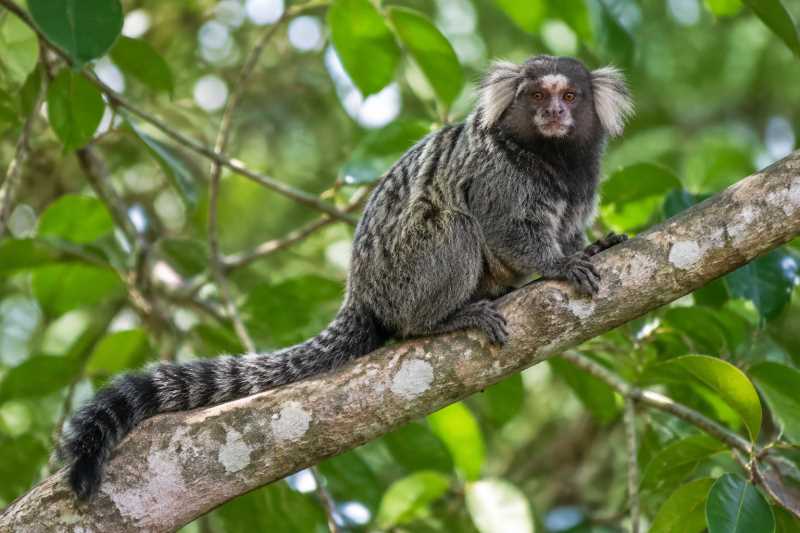
The Rio Acarí Marmoset is a small primate with a body length ranging from 18 to 28 centimeters, not including its tail, which can be as long as 32 centimeters. This species typically weighs between 300 to 400 grams. Its fur is predominantly grayish-brown with a lighter underbelly, and it boasts striking white ear tufts, which are a distinctive feature among marmosets. The facial features include a short snout and large expressive eyes that provide excellent vision, essential for maneuvering through the dense foliage of its habitat.
The marmoset’s hands and feet are adapted for an arboreal lifestyle, with claw-like nails aiding in gripping tree branches as it forages for food. Unlike many other primates, the Rio Acarí Marmoset lacks opposable thumbs, relying instead on its sharp claws to navigate its environment.
Range and Habitat
Mico acariensis is endemic to the Amazon rainforest, specifically within the Rio Acarí region of northern Brazil. This area is characterized by dense tropical rainforest, rich in biodiversity and ecological complexity. The marmoset’s distribution is limited to this specific region, making it particularly vulnerable to habitat disturbances.
The primary habitat of the Rio Acarí Marmoset is the lowland tropical rainforest, where it inhabits the upper and middle canopy layers. These marmosets are rarely seen on the ground, preferring the safety and abundance of food sources found high in the trees. The Rio Acarí region provides a complex matrix of trees and vegetation, ideal for the marmoset’s arboreal lifestyle.
Behavior and Diet
Rio Acarí Marmosets are social animals, typically living in groups of five to fifteen individuals. These groups usually consist of a dominant breeding pair and their offspring, with a strong emphasis on family dynamics and cooperation. Social grooming is a significant part of their behavior, reinforcing bonds and maintaining group cohesion.
The diet of the Rio Acarí Marmoset is varied and consists mainly of fruits, insects, and tree sap. They have specialized incisors that allow them to gnaw into tree bark to extract gum and sap, which are crucial food sources, especially during the dry season when fruits are less abundant. Insects, small vertebrates, and other plant materials supplement their diet, providing necessary protein and nutrients.
Identification Tips (Field Recognition Cues)
Recognizing the Rio Acarí Marmoset in the wild requires attention to several key features:
- Distinctive Ear Tufts: Look for the prominent white ear tufts that contrast with the marmoset’s overall grayish-brown fur.
- Size and Build: Note the small size and light weight, with a body length of 18-28 cm and a long tail that aids in balance.
- Vocalizations: Listen for their high-pitched, bird-like calls, which they use to communicate with group members and establish territory.
- Arboreal Movement: Observe their agile movements through the canopy, using claw-like nails to grip branches tightly.
- Dietary Behavior: Watch for their characteristic feeding behavior, such as gnawing on tree bark to access sap and gum.
Conservation Status (with Threats and Protections)
The conservation status of the Rio Acarí Marmoset is of significant concern due to its restricted range and the threats posed by habitat destruction. Classified as "Near Threatened" by the International Union for Conservation of Nature (IUCN), the species faces several challenges:
- Deforestation: Large-scale logging and agricultural expansion in the Amazon have resulted in significant habitat loss, fragmenting the forest and reducing the available territory for marmoset populations.
- Climate Change: Alterations in climate patterns can affect food availability and habitat conditions, posing additional risks.
- Illegal Wildlife Trade: Although less common, the capture and sale of marmosets as exotic pets can impact wild populations.
Conservation efforts are underway to protect this species. These include the establishment of protected areas, reforestation projects, and community-based conservation initiatives aimed at promoting sustainable land use practices. Continued research and monitoring are crucial to understanding the population dynamics and ecological needs of the Rio Acarí Marmoset.
Frequently Asked Questions
1. What is the habitat of the Rio Acarí Marmoset?
The Rio Acarí Marmoset inhabits the lowland tropical rainforests of the Rio Acarí region in northern Brazil. It prefers the upper and middle canopy layers, where it finds safety and abundant food resources.
2. What does the Rio Acarí Marmoset eat?
The diet of the Rio Acarí Marmoset includes fruits, insects, and tree sap. They are known for their ability to gnaw on tree bark to extract gum and sap, which are vital food sources, especially during the dry season.
3. How can I identify a Rio Acarí Marmoset in the wild?
Key identification features include their small size, white ear tufts, grayish-brown fur, and long tail. They also have distinctive high-pitched vocalizations and are often seen moving through the forest canopy.
4. What threats do Rio Acarí Marmosets face?
The major threats to the Rio Acarí Marmoset include habitat loss due to deforestation, climate change, and, to a lesser extent, the illegal wildlife trade.
5. Are there conservation efforts in place to protect the Rio Acarí Marmoset?
Yes, conservation efforts include the creation of protected areas, reforestation, and community-based initiatives to promote sustainable land use and protect the marmoset’s natural habitat.
Related posts