Red Crested Tree-rat (Santamartamys rufodorsalis): A Comprehensive Overview
Introduction
The Red Crested Tree-rat, scientifically known as Santamartamys rufodorsalis, is a critically endangered rodent species that has captured the attention of conservationists and biologists alike. Native to Colombia, this elusive mammal was once thought to be extinct, having not been observed in the wild since 1898, until its dramatic rediscovery in 2011. This article explores the unique characteristics, natural habitat, behavior, and the critical conservation efforts surrounding this enigmatic species.
Physical Description
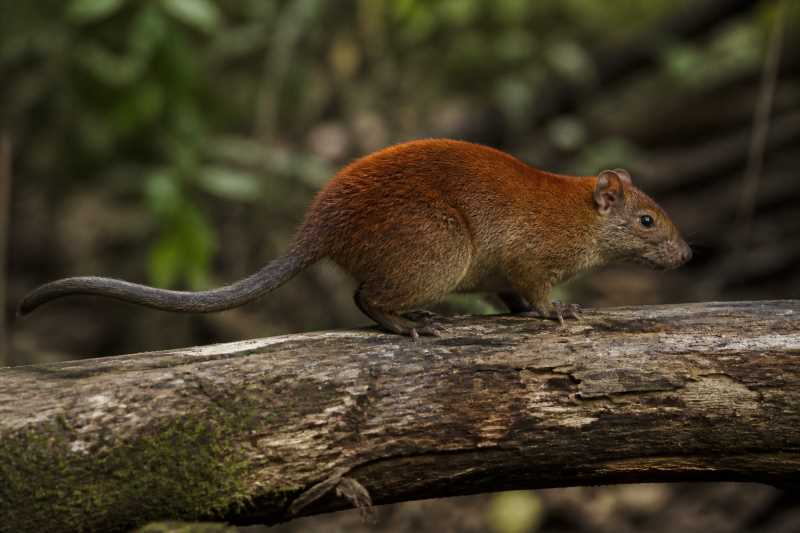
The Red Crested Tree-rat is a medium-sized rodent characterized by its distinctive reddish-brown crest of fur along its back, which contrasts with its otherwise greyish body. Adult individuals typically measure around 30 cm (12 inches) from the tip of their nose to the base of their tail, with the tail itself adding an additional 20 cm (8 inches). Their fur is dense and soft, serving as insulation against the cooler mountain climate of their native habitat. The tail, covered in sparse hair, is prehensile, aiding in balance and arboreal navigation.
Notable features include large, expressive eyes adapted for nocturnal activity, delicate whiskers, and sharp claws designed for climbing. Their ears are relatively small and rounded, providing acute hearing capabilities essential for detecting predators and navigating their environment.
Range and Habitat
The Red Crested Tree-rat is endemic to the Sierra Nevada de Santa Marta, a mountainous region in northern Colombia. This area is recognized for its unique biodiversity and is considered one of the most critical ecosystems in the world. The tree-rat primarily inhabits humid montane forests, thriving at elevations ranging between 700 to 2,000 meters (2,300 to 6,600 feet).
These forests are characterized by dense foliage, abundant epiphytes, and a rich understory, providing ample food sources and shelter. The tree-rat’s arboreal lifestyle is supported by the complex forest structure, which offers numerous vertical and horizontal pathways for movement.
Behavior and Diet
The Red Crested Tree-rat is a nocturnal and solitary creature, spending most of its life in the trees. It is primarily herbivorous, feeding on a diet of fruits, seeds, and leaves. Occasionally, it may also consume insects and small invertebrates, supplementing its diet with protein.
Behaviorally, the tree-rat is known to be elusive and secretive, traits that likely contributed to its long period of obscurity. During the day, it rests in nests constructed from leaves and branches, usually located in tree hollows or dense foliage.
Social interactions are minimal, with individuals coming together only during the mating season. Reproductive habits are not well-documented, but it is presumed that, like many rodents, they have a gestation period of several weeks and give birth to litters of two to four young.
Identification Tips (Field Recognition Cues)
Identifying the Red Crested Tree-rat in the wild involves recognizing several key features:
- Size and Shape: Look for a medium-sized rodent with a long, prehensile tail, roughly the same length as its body.
- Coloration: The standout feature is the reddish-brown crest of fur on its back. This crest is unique to this species.
- Habitat: Found in the Sierra Nevada de Santa Marta, primarily in humid, montane forests.
- Activity: Nocturnal habits mean they are rarely seen during the day.
- Behavior: Look for them in high tree branches or dense underbrush during night surveys.
Conservation Status (with Threats and Protections)
The Red Crested Tree-rat is classified as Critically Endangered by the International Union for Conservation of Nature (IUCN). The primary threats to its survival include habitat loss due to deforestation, agriculture, and human encroachment. The Sierra Nevada de Santa Marta has faced significant environmental pressures, further exacerbating the species’ vulnerability.
Conservation efforts are focused on habitat preservation and restoration. The rediscovery of the Red Crested Tree-rat has spurred interest in protecting the Sierra Nevada de Santa Marta’s unique ecosystem. Collaborative efforts between local communities, governmental bodies, and international organizations aim to establish protected areas and promote sustainable land-use practices.
Frequently Asked Questions
1. What is the Red Crested Tree-rat?
The Red Crested Tree-rat (Santamartamys rufodorsalis) is a rare rodent species native to Colombia’s Sierra Nevada de Santa Marta. It is known for its reddish crest and nocturnal behavior.
2. Why is the Red Crested Tree-rat endangered?
The species is critically endangered due to habitat loss from deforestation and human encroachment, as well as its limited distribution in a specific geographical area.
3. How was the Red Crested Tree-rat rediscovered?
After being presumed extinct for over a century, the Red Crested Tree-rat was rediscovered in 2011 by researchers in a Colombian nature reserve, sparking renewed conservation interest.
4. What does the Red Crested Tree-rat eat?
Primarily herbivorous, the Red Crested Tree-rat feeds on fruits, seeds, and leaves, occasionally consuming insects and small invertebrates.
5. Where can I see the Red Crested Tree-rat?
The Red Crested Tree-rat is found in the Sierra Nevada de Santa Marta in Colombia. However, due to its elusive nature and critically endangered status, sightings are rare.
Related posts