Introduction
The Reclusive Ring-tailed Possum, scientifically known as Pseudochirops coronatus, is a fascinating marsupial species native to the lush rainforests of Papua New Guinea. Renowned for its elusive nature and unique behavioral adaptations, this possum species has piqued the interest of wildlife enthusiasts and researchers alike. This article delves into the intricate details of the Reclusive Ring-tailed Possum, offering insights into its physical characteristics, habitat preferences, behavior, diet, and conservation status.
Physical Description
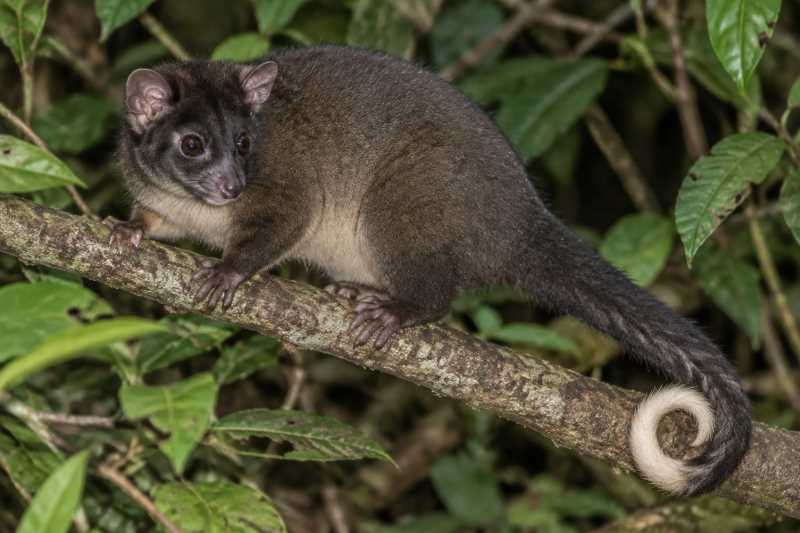
The Reclusive Ring-tailed Possum is a medium-sized marsupial, distinctively recognized by its thick, soft fur and a striking ringed tail. An average adult possum measures approximately 30 to 38 centimeters in body length, with the tail extending to a similar length, enhancing its tree-dwelling capabilities. The possum’s fur exhibits a rich mix of greenish-brown hues, providing excellent camouflage within the dense foliage of its rainforest habitat.
The face of the Reclusive Ring-tailed Possum is often marked by a lighter, cream-colored fur around the eyes and nose, accentuating its large, expressive eyes. These eyes are adapted for nocturnal vision, allowing the possum to navigate its arboreal environment effectively under the cover of darkness. Its ears are relatively small and rounded, contributing to its overall streamlined appearance.
One of the most remarkable features of the Reclusive Ring-tailed Possum is its prehensile tail, which is not only adorned with rings but also highly flexible and capable of grasping branches. This adaptation is crucial for maintaining balance and stability as the possum traverses the forest canopy.
Range and Habitat
The Reclusive Ring-tailed Possum is predominantly found in the montane and lowland rainforests of Papua New Guinea. These environments offer the possum a rich tapestry of flora and fauna, essential for its survival. The species is known to inhabit elevations ranging from 500 to 2,500 meters above sea level, where the climate is humid, and the vegetation is dense.
Within these forests, the possum favors areas with abundant tree cover, particularly those dominated by fig and eucalyptus species. These trees not only provide food resources but also serve as shelter and protection from predators. The possum’s preference for high-altitude forests underscores its adaptability to cooler temperatures and its reliance on specific ecological niches.
Behavior and Diet
The Reclusive Ring-tailed Possum leads a predominantly nocturnal lifestyle, emerging from its daytime resting places at dusk to forage for food. This behavior minimizes the risk of predation and competition for resources. The possum is primarily herbivorous, with a diet consisting of leaves, fruits, flowers, and occasionally, small insects.
One of the key dietary staples for the possum is the leaves of the eucalyptus tree, which provides essential nutrients and moisture. Additionally, the possum has been observed feeding on the fruits of the fig tree, which are rich in carbohydrates and sugars, offering a quick energy boost.
Socially, the Reclusive Ring-tailed Possum is solitary, with individuals maintaining distinct territories. However, during the breeding season, which typically occurs during the warmer months, males and females come together for mating. After a gestation period of approximately 16 to 18 days, the female gives birth to a single joey, which remains in her pouch for several months before venturing out to explore the world.
Identification Tips (Field Recognition Cues)
Identifying the Reclusive Ring-tailed Possum in the wild can be challenging due to its elusive nature and preference for dense forest habitats. However, several field recognition cues can aid in its identification:
- Tail Rings: The possum’s tail is adorned with distinct black and white rings, a feature that is often visible even in low-light conditions.
- Greenish-brown Fur: The fur color blends seamlessly with the surrounding foliage, but its unique hue can be a distinguishing factor.
- Nocturnal Activity: The possum is most active during the night, so sightings are more likely during evening or early morning hours.
- Vocalizations: Listen for the possum’s soft, cooing calls, which are often heard during mating season or when communicating with offspring.
- Tree-dwelling Behavior: Look for movement in the higher branches of trees, as the possum rarely descends to the ground.
Conservation Status (with Threats and Protections)
The Reclusive Ring-tailed Possum is currently classified as Near Threatened on the IUCN Red List. This status reflects the ongoing threats to its habitat and population numbers. The primary threats facing the possum include:
- Habitat Destruction: Deforestation due to logging and agricultural expansion poses the most significant threat to the possum’s natural habitat.
- Climate Change: Alterations in temperature and precipitation patterns can affect the availability of food resources and suitable habitats.
- Hunting: Although less common, hunting for bushmeat and the pet trade can impact local populations.
Conservation efforts are crucial to safeguarding the future of the Reclusive Ring-tailed Possum. These efforts include:
- Establishing protected areas within its natural range to preserve critical habitats.
- Implementing sustainable forestry practices to minimize habitat destruction.
- Raising awareness and promoting community involvement in conservation initiatives.
Frequently Asked Questions
1. What do Reclusive Ring-tailed Possums eat?
Reclusive Ring-tailed Possums primarily eat leaves, fruits, and flowers. They have a particular preference for eucalyptus leaves, which provide essential nutrients and moisture. Occasionally, they may also consume small insects.
2. Where can I find Reclusive Ring-tailed Possums in the wild?
These possums are native to the montane and lowland rainforests of Papua New Guinea. They prefer areas with dense tree cover and can be found at elevations ranging from 500 to 2,500 meters above sea level.
3. How do Reclusive Ring-tailed Possums communicate?
These possums communicate through a series of vocalizations, including soft cooing calls. These sounds are often used during the mating season or when interacting with offspring.
4. Are Reclusive Ring-tailed Possums endangered?
The species is currently classified as Near Threatened on the IUCN Red List. The primary threats to their survival include habitat destruction, climate change, and hunting.
5. What adaptations help Reclusive Ring-tailed Possums survive?
Key adaptations include their prehensile tail for navigating the forest canopy, nocturnal lifestyle to avoid predators, and a diet that takes advantage of the abundant foliage in their environment.
Related posts