The Majestic Black Inca: A Jewel of the Andes
The Black Inca (Coeligena prunellei) is a spectacular hummingbird species that captivates ornithologists and bird enthusiasts alike with its striking appearance and fascinating behaviors. Endemic to the cloud forests of Colombia, this avian gem is a testament to the rich biodiversity of the Andean region. As we explore the habitat, physical characteristics, behavior, and conservation status of the Black Inca, it becomes evident why this bird is considered a treasure among the avian community.
Habitat and Distribution
The Black Inca is predominantly found in the subtropical and tropical moist montane forests of Colombia’s eastern Andes. Specifically, it inhabits the regions of Cundinamarca and Boyacá, thriving in altitudes ranging from 1,200 to 3,400 meters above sea level. These cloud forests provide the cool, humid environment essential for the Black Inca’s survival. The dense foliage and diverse flora not only offer abundant feeding opportunities but also provide shelter from predators.
Unfortunately, due to its limited range and habitat specificity, the Black Inca is vulnerable to environmental changes. Deforestation, agriculture expansion, and urban development pose significant threats to its habitat, leading to a decline in population. Conservation efforts are crucial to ensure the preservation of these unique ecosystems and the species that depend on them.
Physical Characteristics
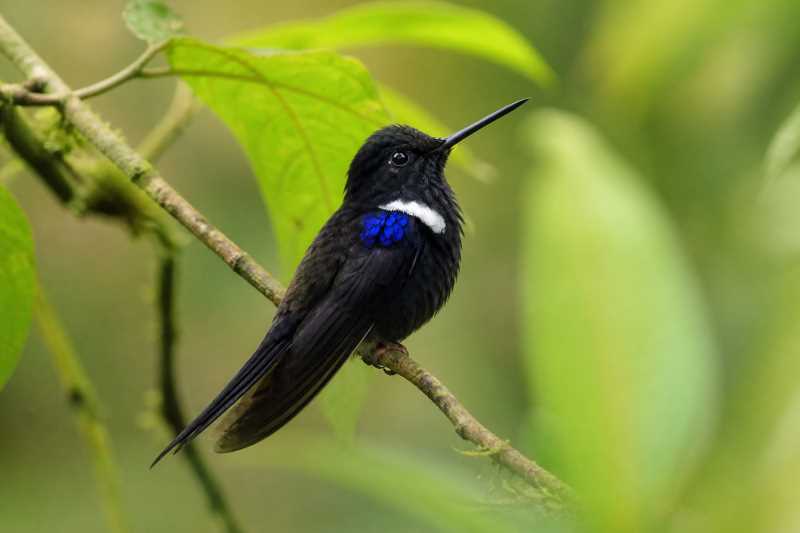
The Black Inca is renowned for its stunning plumage, which sets it apart from other hummingbirds. True to its name, the bird exhibits predominantly black feathers with a subtle iridescent bluish sheen, particularly visible under direct sunlight. This feature gives the Black Inca a regal and elegant appearance. The crown and upperparts are deep velvety black, while the underparts showcase a contrasting white patch on the breast, adding to its distinctive look.
Adding to its colorful palette, the Black Inca sports a vivid emerald green patch on its throat, known as a gorget, which can appear to change hues depending on the angle of light. This iridescence is not just for show; it plays a crucial role in communication and courtship, allowing individuals to recognize and attract mates.
Behavior and Diet
As with many hummingbirds, the Black Inca is highly territorial and displays aggressive behavior when defending its feeding grounds. Its diet primarily consists of nectar, which it extracts from a variety of flowering plants native to its habitat. The bird’s long, specialized bill and extendable tongue are perfectly adapted for reaching deep into flowers to access nectar, while also playing a vital role in pollination.
In addition to nectar, the Black Inca supplements its diet with small insects and spiders, providing essential proteins for its high-energy lifestyle. This dietary flexibility helps sustain the bird during periods when nectar is scarce.
Breeding and Nesting
The breeding season of the Black Inca coincides with the flowering period of its preferred plants, ensuring a steady food supply for raising chicks. Females are solely responsible for nest building and care of the young. They construct small, cup-shaped nests using plant fibers, moss, and spider silk, typically positioning them on thin branches or in sheltered areas to protect against predators and adverse weather conditions.
Once the nest is complete, the female lays two tiny white eggs and incubates them for about two weeks. After hatching, the chicks remain in the nest for several weeks, during which the female feeds them a regurgitated mixture of nectar and insects to ensure rapid growth.
Conservation Status
The Black Inca is currently classified as Vulnerable on the IUCN Red List, primarily due to habitat loss and fragmentation. The ongoing deforestation in the Andes poses a significant threat to its survival, as it reduces available nesting sites and food resources. Conservation organizations are actively working to mitigate these threats by promoting sustainable land use practices and establishing protected areas within the bird’s range.
Efforts to raise awareness about the Black Inca’s plight are also underway, emphasizing the importance of preserving Colombia’s cloud forests not just for this species, but for the myriad of other flora and fauna that share this unique habitat. Community-based conservation initiatives and ecotourism are being encouraged to support local economies while fostering a sense of stewardship for the environment.
Conclusion
The Black Inca is a remarkable example of the extraordinary biodiversity found in the Andean cloud forests. Its striking appearance and unique adaptations make it a fascinating subject of study and admiration. However, without concerted conservation efforts, this beautiful species faces an uncertain future. Protecting its habitat and promoting sustainable practices are essential steps in ensuring that the Black Inca continues to grace the forests of Colombia for generations to come.
Related posts