Introduction
The Pichi (Zaedyus pichiy) is a small, captivating armadillo species native to the arid and semi-arid regions of South America. Known for its unique ability to roll into a partial ball as a defense mechanism, the Pichi is an intriguing subject for both researchers and wildlife enthusiasts. This article delves into the fascinating world of the Pichi, exploring its physical characteristics, habitat preferences, behavior, and more.
Physical Description
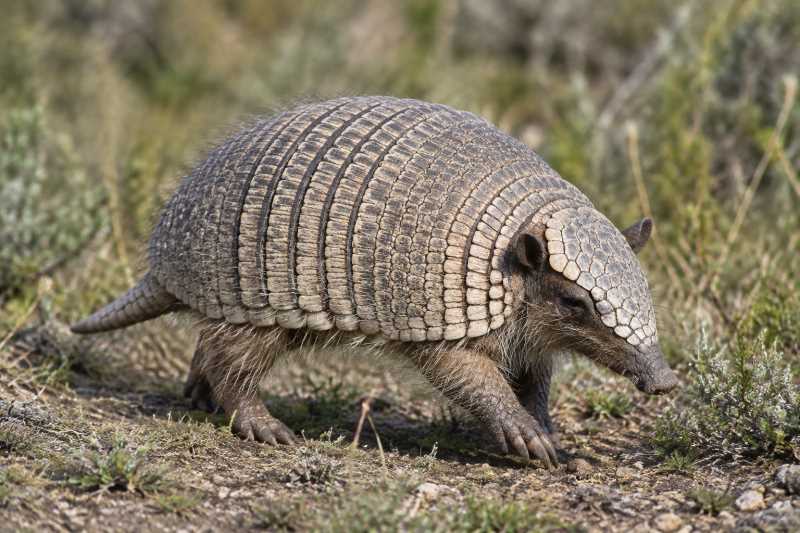
The Pichi is one of the smaller armadillo species, with an average length of 25-33 cm (10-13 inches) and a weight ranging from 0.8 to 1.5 kg (1.8 to 3.3 pounds). Its body is covered with a protective shell made up of bony plates, known as scutes, which are arranged in transverse bands. This feature provides flexibility, allowing the Pichi to roll into a partial ball when threatened. The shell’s coloration ranges from light brown to dark gray, helping it blend into its environment.
The Pichi’s head is small and pointed, with a distinctively long snout that aids in foraging for food. It has small eyes and ears, and its limbs are short but strong, equipped with sharp claws ideal for digging.
Range and Habitat
The Pichi is endemic to South America, primarily found in Argentina and Chile. Its range includes the Patagonian steppes, Monte Desert, and the Pampas region. The species thrives in arid and semi-arid environments, favoring sandy or loose soils that facilitate burrowing.
The Pichi’s habitat is characterized by sparse vegetation, including shrubs and grasses, which provide cover from predators. These environments are often subject to extreme temperatures and low rainfall, conditions to which the Pichi is well-adapted.
Behavior and Diet
Pichis are solitary and primarily nocturnal creatures, although they may be active during the day in cooler weather. They are excellent diggers, creating burrows that serve as shelters from predators and extreme weather conditions.
Their diet is omnivorous, consisting of insects, small vertebrates, plant material, and carrion. The Pichi’s long snout and sharp claws make it adept at foraging for food beneath the soil surface.
During the colder months, Pichis enter a state of torpor, a hibernation-like condition that allows them to conserve energy when food is scarce.
Identification Tips (Field Recognition Cues)
Identifying a Pichi in the wild can be a rewarding experience. Here are some tips:
- Look for their distinctive shell with transverse bands.
- Note their small size and pointed snout.
- Pichis are often seen foraging during dusk and dawn.
- Listen for rustling sounds in sandy or loose soil areas.
Conservation Status (with Threats and Protections)
The Pichi is currently classified as Near Threatened on the IUCN Red List. The primary threats to the species include habitat destruction due to agricultural expansion, hunting for their meat and shell, and predation by domestic dogs.
Conservation efforts are underway to protect the Pichi’s habitat and reduce hunting pressures. Protected areas and wildlife reserves within their range offer some refuge, and local education programs aim to raise awareness about the species’ ecological importance.
Frequently Asked Questions
1. Where can I find Pichis in the wild? Pichis are found in the arid and semi-arid regions of Argentina and Chile, particularly in the Patagonian steppes and the Monte Desert.
2. What do Pichis eat? Pichis are omnivorous; their diet includes insects, small vertebrates, plants, and carrion.
3. How do Pichis protect themselves from predators? Pichis use their protective shells to shield themselves and can roll into a partial ball to reduce exposure to predators.
4. Are Pichis endangered? Pichis are classified as Near Threatened, facing threats from habitat loss and hunting.
5. Can Pichis be kept as pets? It is not advisable to keep Pichis as pets due to their specific habitat needs and conservation status.
Related posts