Introduction
Peyrieras’s Woolly Lemur, scientifically known as Avahi peyrierasi, is a fascinating primate species endemic to the island of Madagascar. This nocturnal lemur is part of the Indriidae family, which includes some of the largest lemur species. Unraveling the mysteries of this elusive creature provides insight into Madagascar’s rich biodiversity and the ecological challenges it faces.
Madagascar, renowned for its unique flora and fauna, serves as the only home to a variety of lemur species, each with distinct adaptations that enable them to thrive in specific habitats. Peyrieras’s Woolly Lemur is no exception, showcasing remarkable features and behaviors that intrigue scientists and nature enthusiasts alike.
Physical Description
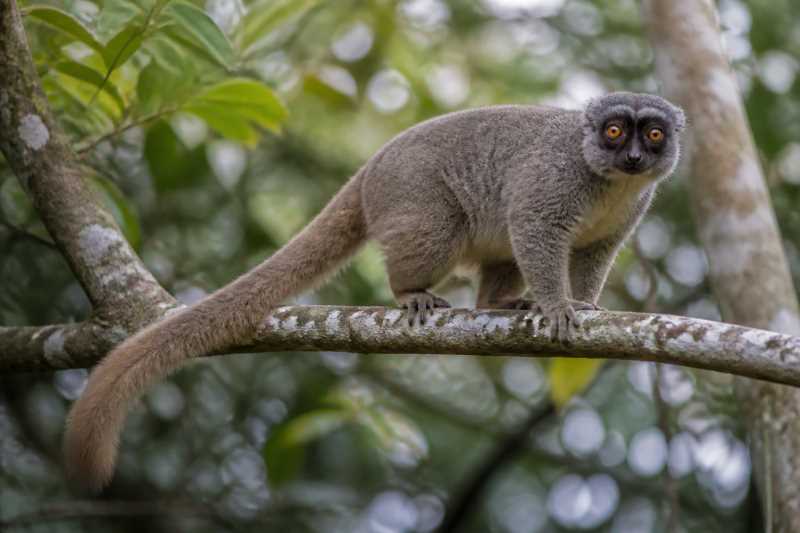
Peyrieras’s Woolly Lemur exhibits a plush, woolly coat that serves as its most distinctive physical characteristic. The fur ranges from a light gray to a brownish hue, providing effective camouflage against the tree trunks and foliage of its forest habitat. This lemur typically measures between 25 to 30 centimeters in body length, with a tail that adds an additional 30 to 35 centimeters. The average weight is around 1 to 1.2 kilograms, making it a medium-sized lemur.
The head of Peyrieras’s Woolly Lemur is rounded, with large, expressive eyes adapted for nocturnal vision. Its ears are small and round, often hidden beneath the thick fur. The limbs are adapted for a life in the trees, with long, powerful legs that facilitate vertical clinging and leaping between branches. The hands and feet possess gripping pads and opposable thumbs, aiding in their arboreal lifestyle.
Range and Habitat
Peyrieras’s Woolly Lemur is endemic to the eastern rainforests of Madagascar. This region is characterized by humid, dense forests that offer abundant foliage and a complex canopy structure. The lemurs are primarily found in lowland and mid-altitude rainforests, from sea level up to approximately 1,500 meters.
These forests provide a rich diversity of plant life, which is essential for the lemur’s diet and shelter. The availability of tall trees and dense understory vegetation creates an ideal environment for these lemurs to carry out their nocturnal activities, ensuring they remain well-hidden from predators during the day.
Behavior and Diet
Peyrieras’s Woolly Lemur is a nocturnal and arboreal creature, spending the majority of its life in the trees. It is primarily a folivorous species, with a diet consisting mainly of leaves. However, it also consumes flowers, fruits, and buds when available, allowing it to adapt to seasonal changes in food availability.
Socially, this lemur is known to live in small family groups, often consisting of a monogamous pair and their offspring. They communicate through a series of vocalizations, scent markings, and tactile interactions. The vocal repertoire includes calls used to maintain contact between group members and to warn of potential threats.
Due to their nocturnal nature, Peyrieras’s Woolly Lemurs are rarely seen by humans, adding to the mystery surrounding their behavior and lifestyle. They spend their nights foraging and resting, while daytime hours are reserved for sleeping in the safety of dense foliage.
Identification Tips (Field Recognition Cues)
Identifying Peyrieras’s Woolly Lemur in the wild requires a keen eye and an understanding of their habitat and behaviors. Here are some tips for recognizing this elusive species:
- Nocturnal Activity: Look for them at night as they are primarily active after sunset.
- Distinctive Calls: Listen for their unique vocalizations, which are often used to communicate within family groups.
- Fur Texture and Color: Note the woolly, dense fur that ranges in color from light gray to brown, blending with the forest environment.
- Large Eyes: Their large, reflective eyes are adapted for night vision and can be spotted in the darkness with a flashlight.
- Vertical Clinging and Leaping: Observe their movement patterns; they are adept at vertical clinging and leaping between trees.
Conservation Status (With Threats and Protections)
Peyrieras’s Woolly Lemur is currently listed as Endangered on the IUCN Red List. The primary threats to their survival include habitat destruction due to agriculture, logging, and human settlement expansion. Additionally, the illegal pet trade poses a significant risk, as these lemurs are sometimes captured and sold.
Conservation efforts are crucial to ensuring the survival of Peyrieras’s Woolly Lemur. Protected areas within Madagascar, such as national parks and reserves, offer some refuge from habitat destruction. Conservation organizations are working to raise awareness and promote sustainable land-use practices that benefit both the local communities and wildlife.
To further protect this species, it is essential to enforce existing wildlife protection laws and support reforestation projects that restore and connect fragmented habitats.
Frequently Asked Questions
1. What is the diet of Peyrieras’s Woolly Lemur?
Peyrieras’s Woolly Lemur primarily feeds on leaves, but it also consumes flowers, fruits, and buds when available. This diet makes them folivorous, with adaptations for efficient digestion of fibrous plant material.
2. Where can Peyrieras’s Woolly Lemur be found?
This species is endemic to the eastern rainforests of Madagascar, inhabiting lowland and mid-altitude regions that provide dense foliage and a complex canopy for shelter and foraging.
3. Why is Peyrieras’s Woolly Lemur endangered?
The primary threats to this species include habitat destruction due to deforestation, agriculture, and human encroachment, as well as the illegal pet trade. Conservation efforts are needed to mitigate these threats and protect their natural habitat.
4. How do Peyrieras’s Woolly Lemurs communicate?
These lemurs communicate using vocalizations, scent markings, and tactile interactions. Vocal calls are used to maintain group cohesion and alert others to potential dangers.
5. Are Peyrieras’s Woolly Lemurs social animals?
Yes, they are social creatures that typically live in small family groups consisting of a monogamous pair and their offspring. This social structure aids in cooperative care of the young and protection against predators.
Related posts