Panamint Chipmunk (Neotamias panamintinus)
Introduction
The Panamint Chipmunk, scientifically known as Neotamias panamintinus, is a captivating species of chipmunk native to the western United States. Recognized for its agility and distinctive markings, this small mammal thrives in the arid landscapes and rugged terrains of the desert regions. The Panamint Chipmunk plays a vital role in its ecosystem, contributing to the dispersal of seeds and serving as prey for various predators. In this comprehensive article, we will explore the physical characteristics, habitat preferences, behavior, and conservation status of this intriguing species.
Physical Description
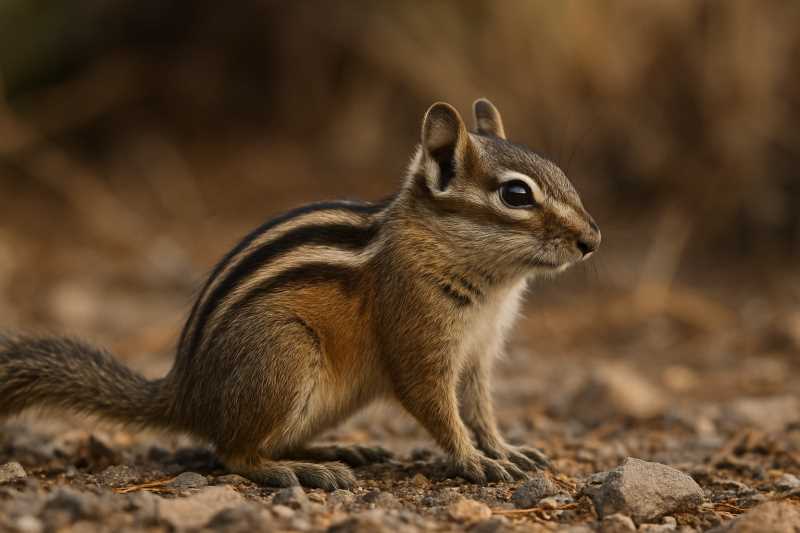
The Panamint Chipmunk is a small, agile rodent that is easily distinguishable by its striking fur pattern and size. It typically measures about 8 to 10 inches in total length, including its bushy tail, which accounts for nearly half of its length. The fur of the Panamint Chipmunk is soft and dense, providing insulation against the temperature extremes of its native habitat.
Its coloration is a blend of grayish-brown tones, interspersed with distinctive dark and light stripes running longitudinally along its back. These stripes serve as effective camouflage against the rocky and sandy backgrounds of its environment. The face of the Panamint Chipmunk features prominent dark stripes running through the eyes, which are almond-shaped and alert, enhancing its field of vision.
Range and Habitat
The Panamint Chipmunk is primarily found in the southwestern United States, with its range extending across parts of California and Nevada. This species thrives in arid and semi-arid environments, favoring rocky slopes, canyons, and high-altitude desert scrublands. The chipmunk’s habitat is characterized by sparse vegetation, including sagebrush, junipers, and various desert shrubs that provide both food and shelter.
The adaptability of the Panamint Chipmunk to harsh desert conditions is remarkable. It is capable of surviving in areas with limited water sources, demonstrating an array of behavioral and physiological adaptations that reduce water loss and maximize hydration.
Behavior and Diet
Panamint Chipmunks are diurnal creatures, meaning they are most active during daylight hours. Their daily activities include foraging for food, social interactions, and maintaining their burrow systems. These chipmunks are highly territorial and exhibit a range of vocalizations and body language to communicate with one another and deter intruders.
The diet of the Panamint Chipmunk is largely herbivorous, consisting of seeds, nuts, fruits, and vegetation. They are particularly fond of pine nuts and seeds from various desert plants. Occasionally, they may consume insects to supplement their diet with protein. The chipmunks play a crucial ecological role by dispersing seeds, which helps maintain the biodiversity of their habitat.
Identification Tips (Field Recognition Cues)
Identifying the Panamint Chipmunk in the field can be challenging due to its similarities with other chipmunk species. However, there are key distinguishing features to look out for:
- Stripes: Look for the characteristic dark and light stripes running along the back and through the eyes.
- Size: The Panamint Chipmunk is relatively small, with a total length of 8 to 10 inches, including the tail.
- Habitat: This species is found in rocky, arid environments, often at higher elevations.
- Behavior: Look for their quick, darting movements and listen for their distinctive chirping calls, which are often used to communicate with other chipmunks.
Conservation Status (with Threats and Protections)
As of the latest assessments, the Panamint Chipmunk is not currently listed as endangered or threatened. However, like many wildlife species, it faces challenges from habitat loss and environmental changes. Urban development, mining activities, and climate change pose significant threats to its natural habitat, potentially impacting food availability and burrow sites.
Conservation efforts for the Panamint Chipmunk focus on habitat preservation and restoration. Protected areas such as national parks and wildlife reserves play a critical role in safeguarding the ecosystems these chipmunks inhabit. Further research and monitoring are essential to ensure the long-term survival of this species amidst changing environmental conditions.
Frequently Asked Questions
What do Panamint Chipmunks eat in the wild?
Panamint Chipmunks primarily feed on seeds, nuts, and fruits native to their desert habitat. They also consume insects occasionally to supplement their diet.
How can I identify a Panamint Chipmunk?
Look for the characteristic dark and light stripes along their back and through their eyes, and observe their behavior and habitat preferences for accurate identification.
Where do Panamint Chipmunks live?
Panamint Chipmunks inhabit the arid regions of California and Nevada, particularly in rocky slopes, canyons, and high-altitude desert scrublands.
Are Panamint Chipmunks endangered?
Currently, Panamint Chipmunks are not listed as endangered, but they do face threats from habitat loss and environmental changes.
How do Panamint Chipmunks contribute to their ecosystem?
They play a vital role in seed dispersal, which helps maintain plant diversity and supports the overall health of their desert ecosystem.
Related posts