The Streak-backed Oriole: A Vibrant Jewel of the Americas
Introduction
The Streak-backed Oriole (Icterus pustulatus) is a captivating bird species that graces the landscapes of Central and North America with its vibrant plumage and melodious song. As a member of the Icteridae family, this oriole has captured the attention of ornithologists and bird enthusiasts alike due to its striking appearance and intriguing behaviors. In this article, we will delve into the various aspects of the Streak-backed Oriole, including its habitat, behavior, diet, and conservation status.
Habitat and Distribution
The Streak-backed Oriole is predominantly found in the tropical and subtropical regions of Mexico, with its range extending into parts of Central America, including Guatemala, El Salvador, Honduras, and Nicaragua. Occasionally, it can be observed as far north as the southwestern United States, particularly in Arizona and New Mexico. The preferred habitats of this oriole include open woodlands, thorn forests, and edge habitats near agricultural areas. It is often seen in semi-arid regions where it can find abundant resources for foraging and nesting.
Physical Characteristics
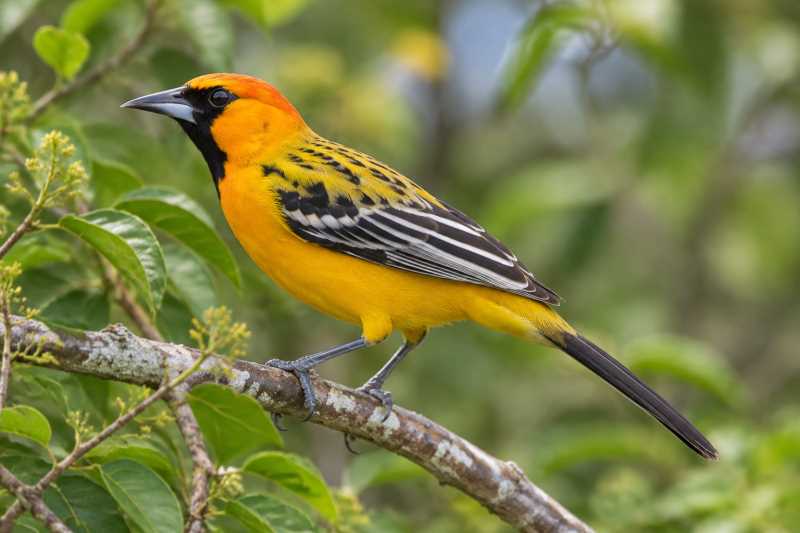
The Streak-backed Oriole is a medium-sized bird, measuring approximately 20–24 cm (8–9.5 inches) in length and weighing around 35–40 grams (1.2–1.4 ounces). Its most distinguishing feature is its bright orange-yellow plumage, contrasted by a black mask that extends from the beak through the eyes, giving it a distinctive and striking appearance. The back is streaked with black, hence the name "Streak-backed." The wings and tail are also primarily black, featuring white wing bars that add to its distinctive look.
Sexual dimorphism is not particularly pronounced in this species, although males tend to exhibit slightly brighter plumage compared to females. Juveniles are generally duller in color, with more muted orange and brownish tones, gradually acquiring the adult plumage as they mature.
Behavior and Vocalizations
Streak-backed Orioles are known for their lively and active behavior. They are often seen foraging for food in the upper and middle canopies of trees, where they use their sharp bills to probe flowers and foliage for insects and nectar. These orioles are also adept at extracting food from narrow crevices and are known to visit hummingbird feeders to sip on sugar water.
Their vocalizations are as vibrant as their plumage, consisting of a series of melodious whistles and chatter. The song of the Streak-backed Oriole is complex and varied, with both males and females participating in singing. This vocal repertoire plays a crucial role in communication between mates and in defending their territory from intruders.
Diet
The diet of the Streak-backed Oriole is diverse and adaptable, allowing it to thrive in various habitats. It primarily consists of insects, spiders, and other arthropods, which provide essential protein for its diet. In addition to insects, this oriole feeds on nectar from flowers, fruit, and occasionally, small vertebrates such as lizards.
The ability to exploit multiple food sources is advantageous, particularly in areas where food availability may fluctuate seasonally. This dietary flexibility ensures that the Streak-backed Oriole can maintain its energy requirements throughout the year.
Breeding and Nesting
The breeding season for the Streak-backed Oriole varies depending on its geographic location but generally occurs from March to July. During this time, the male performs elaborate displays and sings to attract a mate. Once a pair has formed, they work together to build a nest, which is typically a hanging structure woven from plant fibers, grasses, and other materials. The nest is often suspended from the tips of tree branches, providing protection from predators.
A female Streak-backed Oriole typically lays between 2 to 4 eggs, which she incubates for approximately 12 to 14 days. Both parents are involved in feeding and caring for the chicks, which fledge after about two weeks. The cooperative breeding behavior ensures high survival rates for the offspring.
Conservation Status
Currently, the Streak-backed Oriole is listed as a species of Least Concern by the International Union for Conservation of Nature (IUCN). Despite facing some threats from habitat loss and fragmentation, particularly in parts of its range where agricultural expansion is prominent, this species continues to maintain stable populations.
Conservation efforts aimed at preserving natural habitats and mitigating the impacts of deforestation and agricultural encroachment are essential for the long-term survival of the Streak-backed Oriole. Birdwatching and ecotourism also play a role in raising awareness and support for the conservation of this and other native bird species.
Conclusion
The Streak-backed Oriole is a remarkable bird that enriches the biodiversity of the regions it inhabits. Its vibrant colors, diverse diet, and melodic songs make it a favorite among birdwatchers and a valuable species for ecological studies. As we continue to explore and appreciate the natural world, the Streak-backed Oriole serves as a reminder of the intricate beauty and complexity of avian life. Through continued conservation efforts and habitat protection, we can ensure that this stunning species continues to thrive for generations to come.
Related posts