Introduction
The Northern Treeshrew (Tupaia belangeri) is an intriguing small mammal that captivates both scientists and nature enthusiasts. Despite its name, this creature is not a true shrew but belongs to the order Scandentia, which has its own distinct characteristics. These animals are often mistaken for rodents or insectivores due to their appearance and feeding habits, but they are more closely related to primates. Found predominantly in Southeast Asia, the Northern Treeshrew plays a crucial role in its ecosystem, acting as both prey and predator. This article delves into the fascinating world of the Northern Treeshrew, exploring its physical attributes, habitat preferences, behavioral tendencies, and conservation status.
Physical Description
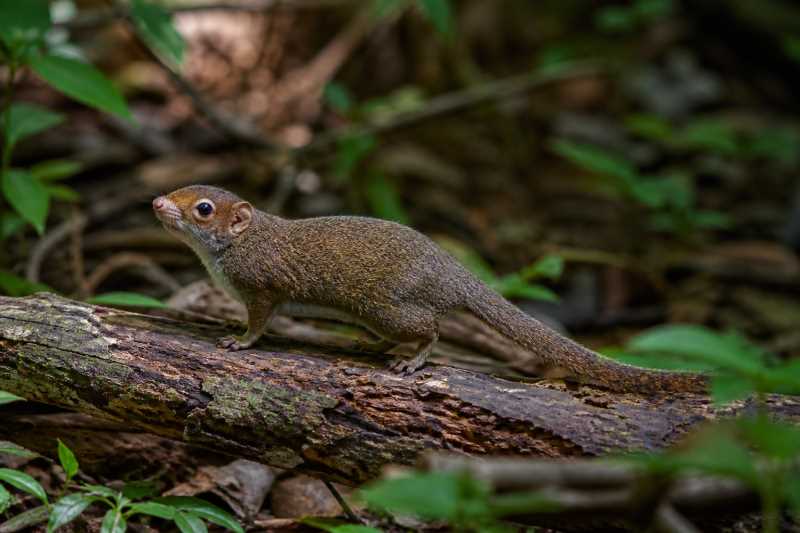
The Northern Treeshrew is a small, agile mammal with a body length ranging from 16 to 20 centimeters, and a tail length of about 16 to 21 centimeters, which is often as long as or longer than its body. Weighing between 150 to 270 grams, these creatures have a slender and elongated body that aids in their arboreal lifestyle. Their fur is typically dense and soft, varying in color from olive-brown to reddish-brown on their back, with a paler hue on their underbelly. A noticeable feature is their elongated snout, which assists in foraging for insects. Their ears are small and rounded, and they possess sharp claws that are ideal for climbing.
Range and Habitat
The Northern Treeshrew is native to Southeast Asia, with its range extending across countries such as Myanmar, Thailand, Laos, Vietnam, Cambodia, and parts of China. They thrive in tropical and subtropical forests, both evergreen and deciduous, and can also be found in secondary forests and cultivated areas. These treeshrews prefer dense, humid forests but are adaptable and can survive in disturbed habitats as long as there is sufficient vegetation cover.
Behavior and Diet
Northern Treeshrews are predominantly diurnal, meaning they are active during the day and rest at night. They are solitary animals, except during the breeding season, and are known for their territorial behavior. Each individual maintains a territory that it marks with scent glands located near its snout. Treeshrews are agile climbers and spend a significant amount of their time foraging for food in the trees.
Their diet is omnivorous, consisting primarily of insects, fruits, and small vertebrates. They have a particular preference for ants and termites, which they extract from bark crevices using their elongated snouts. Fruits are also an important part of their diet, providing essential nutrients. This varied diet makes them important seed dispersers in their ecosystem.
Identification Tips (Field Recognition Cues)
Identifying a Northern Treeshrew in the wild requires careful observation of several key characteristics:
- Size and Shape: Look for a small, squirrel-like creature with an elongated body and long tail.
- Fur Color: Note the olive-brown to reddish-brown fur on the back and paler underbelly.
- Snout: Observe the distinctive elongated snout, which is a key feature for foraging.
- Behavior: Watch for swift, agile movement in trees and on the ground during daytime hours.
- Sounds: Listen for their high-pitched, chirping vocalizations, which they use for communication.
Conservation Status (With Threats and Protections)
The conservation status of the Northern Treeshrew is currently listed as Least Concern by the IUCN Red List. However, like many species, they face threats from habitat loss due to deforestation and land conversion for agriculture. In some areas, they are also hunted for food, although this is not a widespread practice.
Conservation efforts for the Northern Treeshrew include habitat protection and restoration. Many of their habitats overlap with protected areas, which afford them some level of protection from human activities. Continued efforts to curb deforestation and protect forested areas are crucial for the long-term survival of this species. Additionally, raising awareness about the ecological role of treeshrews can help garner support for their conservation.
Frequently Asked Questions
What is the lifespan of a Northern Treeshrew?
Northern Treeshrews typically live for about 2 to 3 years in the wild. However, in captivity, they can live up to 9 years due to the absence of predators and the presence of a consistent food supply.
How do Northern Treeshrews communicate?
Northern Treeshrews communicate using a series of high-pitched chirps and whistles. These vocalizations serve various purposes, including marking territory, mating calls, and alerting others to the presence of predators.
Are Northern Treeshrews endangered?
Currently, the Northern Treeshrew is not considered endangered and is listed as Least Concern on the IUCN Red List. However, they face threats from habitat loss, and continued conservation efforts are necessary to ensure their survival.
What is the diet of a Northern Treeshrew?
The diet of a Northern Treeshrew is omnivorous, consisting mainly of insects like ants and termites, fruits, and occasionally small vertebrates. They play a role in seed dispersal within their ecosystem.
Where can Northern Treeshrews be found?
Northern Treeshrews are found in Southeast Asia, including Myanmar, Thailand, Laos, Vietnam, Cambodia, and parts of China. They inhabit tropical and subtropical forests and can adapt to secondary forests and cultivated areas.
Related posts