Introduction
The North Pacific Right Whale (Eubalaena japonica) is one of the rarest and most enigmatic marine mammals on the planet. Known for its immense size, distinctive callosities, and heart-shaped blow, this whale species is a vital component of the marine ecosystem in the North Pacific Ocean. Historically, these whales were heavily hunted, leading to a dramatic decline in their population. Today, they are critically endangered, with conservation efforts focusing on understanding and mitigating human-induced threats. This article delves into the physical characteristics, habitat, behavior, and conservation status of the North Pacific Right Whale, highlighting the urgent need for protective measures to ensure their survival.
Physical Description
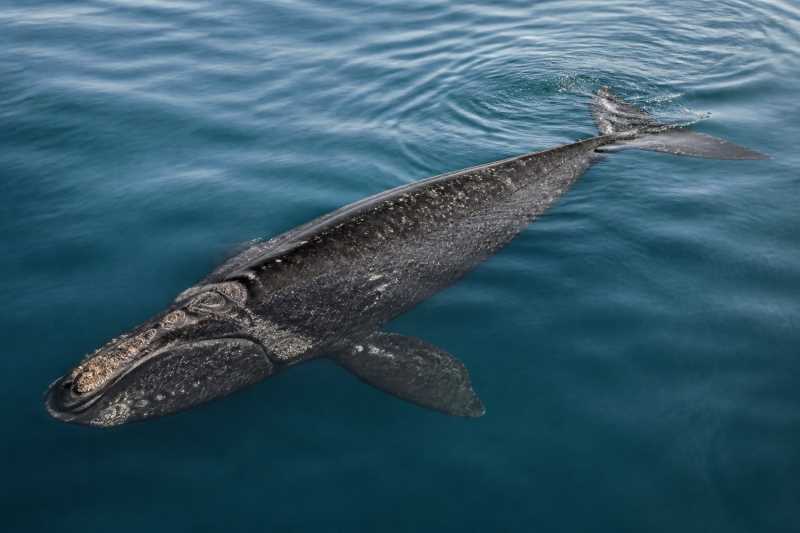
The North Pacific Right Whale is a massive creature, with adults reaching lengths of 45 to 60 feet (14 to 18 meters) and weighing up to 100 tons. They have a robust, stocky body with a large head that accounts for about one-third of their total length. One of the most distinctive features of these whales is their callosities—rough, white patches of skin found on their heads. These callosities are unique to each individual, much like a human fingerprint, and are often inhabited by small crustaceans called whale lice.
Unlike other whale species, the North Pacific Right Whale lacks a dorsal fin, which makes them easily distinguishable. They have broad, paddle-shaped flippers and a deeply notched fluke, or tail, which they use to propel themselves through the water. Their skin is predominantly black, although some individuals may have white patches on their undersides.
The blow of a North Pacific Right Whale is another identifying feature, as it forms a distinctive V-shape due to the widely spaced blowholes located on the top of their heads. This characteristic blow can reach heights of up to 16 feet (5 meters), making it visible from a considerable distance.
Range and Habitat
Historically, the North Pacific Right Whale ranged widely across the North Pacific Ocean, from the coastal waters of Japan and Russia to Alaska and even as far south as California. Today, their range is significantly reduced, with sparse populations primarily found in two regions: the Bering Sea and the Gulf of Alaska, as well as off the coasts of Russia in the Sea of Okhotsk.
These whales prefer cold, temperate waters and are often found in areas with high concentrations of zooplankton, their primary food source. During the summer months, they migrate to feeding grounds in the northern parts of their range, while in the winter, they may move to more temperate waters, although their exact wintering grounds remain largely unknown.
The habitat of the North Pacific Right Whale is characterized by deep, offshore waters as well as coastal regions. They are often found in areas with significant upwellings, which bring nutrient-rich waters to the surface, supporting abundant plankton populations.
Behavior and Diet
North Pacific Right Whales are filter feeders, primarily consuming zooplankton such as copepods and krill. They feed by skimming through dense patches of plankton with their mouths open, using baleen plates to filter out their prey from the water. This method of feeding is known as "skim feeding," and it allows them to consume large quantities of food in a relatively short amount of time.
These whales are generally solitary or found in small groups, often consisting of a mother and her calf. However, they may congregate in larger numbers in areas with abundant food resources. North Pacific Right Whales are known for their slow and deliberate swimming style, often spending a significant amount of time at or near the surface.
Vocalizations play an essential role in the social interactions of North Pacific Right Whales. They produce a variety of sounds, including moans, groans, and belches, which are thought to facilitate communication between individuals, particularly during mating seasons.
Identification Tips (Field Recognition Cues)
- Callosities: Unique, rough patches of skin on their heads, used for individual identification.
- Blow: Distinctive V-shaped blow, visible from a distance.
- Lack of Dorsal Fin: Unlike many other whales, they do not have a dorsal fin.
- Broad Flippers and Notched Fluke: Their flippers are paddle-shaped, and their tail is deeply notched.
- Size and Shape: Large, robust body with a disproportionately large head.
Conservation Status (With Threats and Protections)
The North Pacific Right Whale is classified as "Critically Endangered" by the International Union for Conservation of Nature (IUCN). With an estimated population of fewer than 500 individuals, their survival is precarious, primarily due to human activities.
Threats
- Historical Whaling: Intense hunting in the 19th and early 20th centuries drastically reduced their population.
- Ship Strikes: Collisions with vessels pose a significant threat, particularly in areas with heavy shipping traffic.
- Entanglement in Fishing Gear: Accidental entanglement in fishing gear can cause injury or death.
- Climate Change: Changes in sea temperature and food availability can impact their feeding and migration patterns.
Protections
- International Whaling Commission (IWC): Banned commercial whaling of right whales in the 1930s.
- Endangered Species Act: Provides legal protection in the United States.
- Marine Protected Areas: Designated areas to safeguard critical habitats.
- Shipping Regulations: Measures to reduce ship strikes, such as speed restrictions and rerouting.
Frequently Asked Questions
What are the primary threats to North Pacific Right Whales?
The primary threats include ship strikes, entanglement in fishing gear, historical whaling impacts, and climate change, which affects their habitat and food sources.
How can you identify a North Pacific Right Whale?
They can be identified by their large size, lack of a dorsal fin, distinctive V-shaped blow, callosities on their head, broad flippers, and notched fluke.
Where do North Pacific Right Whales live?
They inhabit the North Pacific Ocean, primarily in the Bering Sea, Gulf of Alaska, and the Sea of Okhotsk, preferring cold, nutrient-rich waters.
What do North Pacific Right Whales eat?
Their diet consists mainly of zooplankton, such as copepods and krill, which they filter from the water using their baleen plates.
Why are North Pacific Right Whales endangered?
They are endangered due to past commercial whaling, current threats from ship strikes, entanglement in fishing gear, and the impacts of climate change on their habitats and food sources.
Related posts