Introduction
The New Guinea Glider, scientifically known as Petaurus papuanus, is a fascinating marsupial species native to the lush, tropical forests of New Guinea. Known for its agile movements and nocturnal lifestyle, this glider is an essential part of the ecosystem, contributing to seed dispersal and pollination. As an arboreal creature, the New Guinea Glider has adapted to life high in the canopy, using its gliding membrane to navigate the dense forest environment. Despite its elusive nature, it has captured the interest of researchers and wildlife enthusiasts alike, who are keen to learn more about its habits and ecological role.
Physical Description
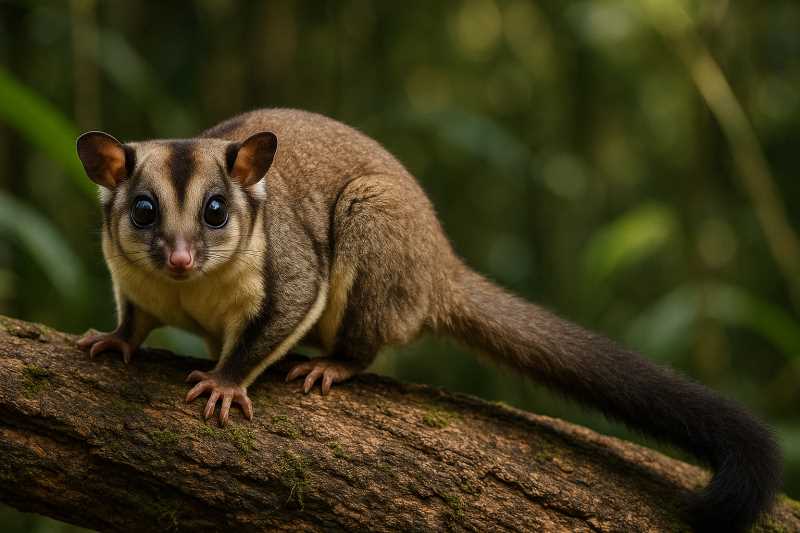
The New Guinea Glider is a small to medium-sized marsupial, with a body length ranging from 180 to 230 mm and a tail that extends another 220 to 300 mm. This glider typically weighs between 100 and 160 grams. Its most distinctive feature is the patagium, a gliding membrane that stretches from the wrist to the ankle, allowing it to glide distances of up to 50 meters between trees. The fur of the New Guinea Glider is soft and dense, primarily grey with a lighter underbelly. A notable feature is the dark stripe that runs from the nose to the tail, which is characteristic of the Petaurus genus.
Range and Habitat
The New Guinea Glider is endemic to the island of New Guinea, found in both Papua New Guinea and the Indonesian region of West Papua. It inhabits a range of forest types, from lowland rainforests to montane forests up to 3,000 meters above sea level. These gliders are particularly associated with primary forests, where they have access to a rich diversity of food sources and ample opportunities for gliding. However, they can occasionally be found in secondary forests, especially when primary forests are disturbed.
Behavior and Diet
Nocturnal by nature, the New Guinea Glider emerges at dusk to forage for food. Its diet is primarily omnivorous, consisting of nectar, pollen, insects, and small vertebrates. The glider plays a crucial role in the ecosystem as a pollinator and seed disperser, feeding on the flowers of various tree species. Socially, New Guinea Gliders are known to live in small family groups, often sharing nests made of leaves and bark in tree hollows. Communication between individuals is facilitated by a range of vocalizations and scent markings.
Identification Tips (Field Recognition Cues)
Identifying the New Guinea Glider in the wild requires attention to several key characteristics. Look for a small, arboreal animal with a distinctive gliding membrane. The dark dorsal stripe and grey fur are also significant identifiers. Observers might notice their swift, gliding movements between trees, typically during dusk or nighttime. Listening for their calls, which range from soft chirps to high-pitched squeals, can also assist in locating these elusive creatures.
Conservation Status (with Threats and Protections)
Currently, the New Guinea Glider is listed as Near Threatened on the IUCN Red List. The primary threat to its survival is habitat destruction due to logging, agriculture, and mining activities. Additionally, hunting and the pet trade pose significant threats to their population. Conservation efforts are focused on habitat protection and restoration, alongside community education programs to reduce hunting pressures. Protected areas within New Guinea play a crucial role in preserving the natural habitat of these gliders.
Frequently Asked Questions
What is the New Guinea Glider’s role in the ecosystem?
The New Guinea Glider is vital for pollination and seed dispersal, helping maintain the health and diversity of New Guinea’s forests.
How far can a New Guinea Glider glide?
Thanks to its well-developed patagium, the New Guinea Glider can glide distances of up to 50 meters between trees.
Are New Guinea Gliders endangered?
They are currently classified as Near Threatened due to habitat loss and other anthropogenic pressures.
What do New Guinea Gliders eat?
They have an omnivorous diet, including nectar, pollen, insects, and small vertebrates.
How do New Guinea Gliders communicate?
Communication among New Guinea Gliders involves vocalizations and scent markings to establish territory and social bonds.
Related posts