Introduction
The Mount Oku Wood Mouse, scientifically known as Hylomyscus grandis, is a small, elusive rodent endemic to the mountainous regions of Cameroon, specifically Mount Oku. This species belongs to the family Muridae, which includes other mice and rats. Despite its small size, the Mount Oku Wood Mouse plays a vital role in its ecosystem, contributing to seed dispersal and serving as prey for various predators.
Physical Description
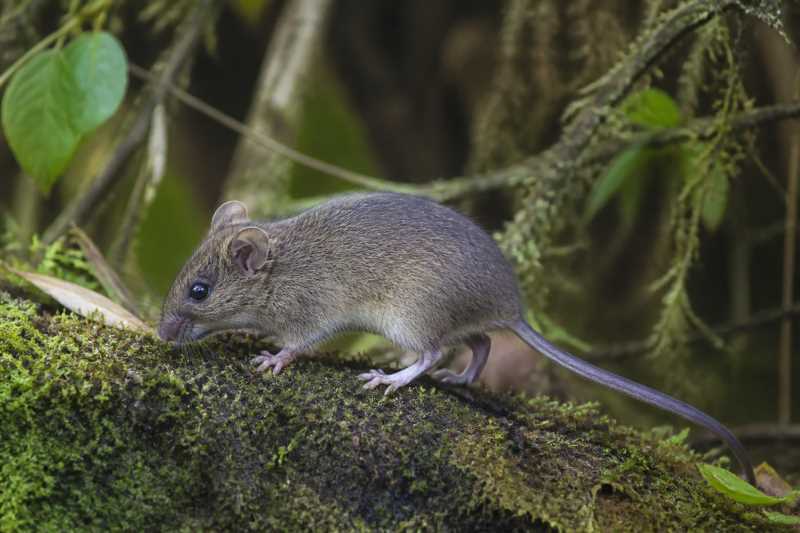
The Mount Oku Wood Mouse is a small rodent characterized by its soft, dense fur, which provides insulation against the cooler temperatures of its montane habitat. Typically, the fur is a rich brown color on the dorsal side, transitioning to a lighter, whitish hue on the ventral side. This coloration offers camouflage among the forest floor’s leaves and debris.
Adults of this species generally weigh between 20 to 35 grams and have a body length ranging from 8 to 12 centimeters, with a tail length of approximately 10 to 15 centimeters. The tail is prehensile, aiding in balance and movement through the dense underbrush. The ears are relatively large and rounded, providing acute hearing, which is crucial for detecting predators.
Range and Habitat
The Mount Oku Wood Mouse is exclusively found in the montane forests of Mount Oku in Cameroon. This region is part of the Cameroon Volcanic Line, known for its rich biodiversity and unique flora and fauna. The habitat of the Mount Oku Wood Mouse is primarily within altitudes ranging from 2,000 to 3,000 meters above sea level.
These forests are characterized by high humidity and dense vegetation, offering ample cover and food resources. The understory of these forests provides a complex habitat with abundant leaf litter and fallen logs, ideal for foraging and nesting.
Behavior and Diet
The Mount Oku Wood Mouse is primarily nocturnal, emerging at night to forage for food. Its diet consists mainly of seeds, fruits, and small invertebrates. Its role as a seed disperser is crucial for maintaining the forest’s biodiversity.
Socially, this species is relatively solitary, with individuals establishing and defending territories. Communication is facilitated through a series of high-pitched calls and scent marking. The reproductive cycle is influenced by the seasonal availability of food, with breeding usually occurring during the wetter months when resources are plentiful.
Identification Tips (Field Recognition Cues)
Identifying the Mount Oku Wood Mouse in the field can be challenging due to its elusive nature and the dense forest habitat it occupies. However, there are several characteristics that can aid in its identification:
- Size and Shape: Look for small rodents with a body length of about 8 to 12 centimeters and a prehensile tail that is slightly longer than the body.
- Fur Color: Note the brown dorsal fur and lighter ventral side, which helps them blend into the forest floor.
- Ears and Tail: Observe the large, rounded ears and the distinctive tail, often carried in a curved manner.
- Behavior: Watch for their nocturnal activity and listen for high-pitched calls during the night.
Conservation Status (with threats and protections)
The Mount Oku Wood Mouse is currently classified as "Vulnerable" by the International Union for Conservation of Nature (IUCN). The primary threat to this species is habitat loss due to deforestation for agriculture and human settlement expansion. The unique montane forest ecosystem on Mount Oku is under constant pressure from logging and land conversion.
Conservation efforts are focused on habitat protection and restoration. The establishment of protected areas and community-based conservation initiatives are crucial to preserving the remaining forest cover. Additionally, raising awareness among local communities about the importance of biodiversity can aid in reducing deforestation rates.
Frequently Asked Questions
1. What does the Mount Oku Wood Mouse eat?
The Mount Oku Wood Mouse primarily feeds on seeds, fruits, and small invertebrates. Its diet is influenced by the seasonal availability of these resources, playing a key role in seed dispersal within its habitat.
2. Why is the Mount Oku Wood Mouse endangered?
The primary threat to the Mount Oku Wood Mouse is habitat loss due to deforestation for agriculture and human settlement. Conservation efforts are focused on protecting its montane forest habitat.
3. Where can the Mount Oku Wood Mouse be found?
This species is endemic to the montane forests of Mount Oku in Cameroon, typically residing at altitudes between 2,000 to 3,000 meters.
4. How can you identify a Mount Oku Wood Mouse?
Look for a small rodent with brown dorsal fur, a lighter ventral side, large rounded ears, and a prehensile tail. Nocturnal behavior and high-pitched calls are also indicative.
5. What role does the Mount Oku Wood Mouse play in its ecosystem?
The Mount Oku Wood Mouse plays a crucial role in seed dispersal and serves as prey for various predators, contributing to the ecological balance of its montane forest habitat.
Related posts