Mount Kahuzi African Climbing Mouse: A Comprehensive Guide
Introduction
The Mount Kahuzi African Climbing Mouse (Dendromus kahuziensis) is a fascinating yet little-known small mammal that inhabits the high-altitude regions of Mount Kahuzi in the Democratic Republic of Congo. This species, belonging to the family Nesomyidae, is a prime example of the diverse and rich biodiversity that Central Africa has to offer. As we delve deeper into the unique characteristics of this elusive rodent, we aim to shed light on its behavior, habitat, and conservation status, while also providing valuable identification tips for enthusiasts and researchers alike.
Physical Description
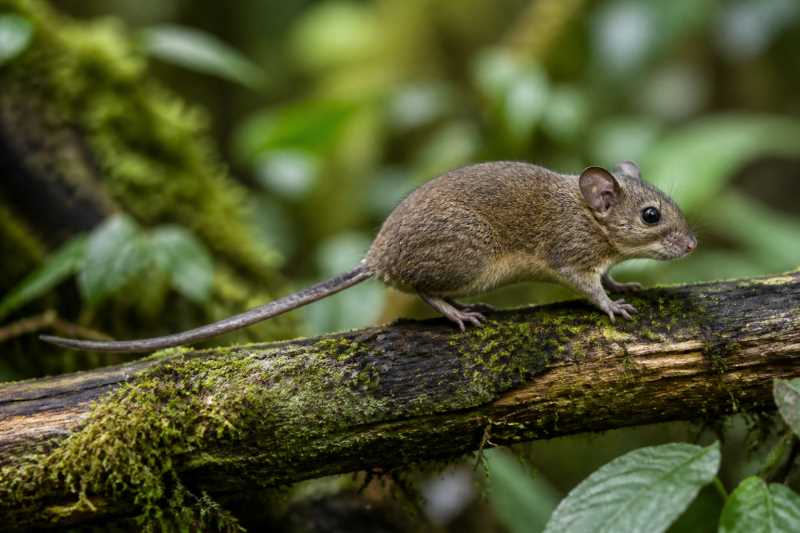
The Mount Kahuzi African Climbing Mouse is a small, agile rodent characterized by its distinct morphological features. Typically measuring between 5 to 7 cm in body length with a tail extending up to 10 cm, this species is well adapted to its arboreal lifestyle. Its fur is a soft, dense coat of brownish-gray, providing excellent camouflage against the bark and foliage. The underbelly is usually lighter, with shades ranging from white to pale gray. The mouse’s large, rounded ears and prominent, dark eyes are indicative of its nocturnal nature, while its sharp claws and prehensile tail facilitate adept climbing through the dense forest canopy.
Range and Habitat
Endemic to the high-altitude regions of Mount Kahuzi, the climbing mouse occupies a niche within the montane forests of the Albertine Rift. These forests, characterized by high humidity and dense vegetation, provide the perfect environment for the species to thrive. The region’s unique microclimate, influenced by its elevation and proximity to the equator, supports a diverse array of flora and fauna. Dendromus kahuziensis is primarily found at elevations ranging from 2,000 to 3,000 meters, where it inhabits the thick undergrowth and treetops, often utilizing the tangled vines and branches as pathways.
Behavior and Diet
The Mount Kahuzi African Climbing Mouse exhibits a number of intriguing behavioral traits. As a nocturnal creature, it is most active during the night when it forages for food and navigates its arboreal territory. Its diet is predominantly herbivorous, consisting mainly of seeds, fruits, and leaves. However, like many rodents, it may occasionally consume insects and other small invertebrates, providing a source of protein.
Socially, these mice are relatively solitary, coming together primarily for mating purposes. Their breeding habits, although not extensively documented, are thought to align with the seasonal availability of food resources, which are influenced by the region’s wet and dry seasons.
Identification Tips
Identifying the Mount Kahuzi African Climbing Mouse in the field requires attention to several key characteristics:
- Tail Length and Usage: The tail is notably longer than the body and is used for balance and grasping, which is essential for navigating the forest canopy.
- Ear Size and Shape: Look for large, rounded ears that are adapted for detecting sounds during night-time activity.
- Fur Coloration: The brownish-gray fur with a lighter underbelly helps in distinguishing this species from other small rodents in the area.
- Climbing Behavior: Observing the mouse’s ability to climb effortlessly through the trees can be a strong indicator of its identity.
Conservation Status
Currently, the Mount Kahuzi African Climbing Mouse is classified as Data Deficient by the IUCN Red List due to the lack of comprehensive studies on its population and distribution. However, it is believed to face several threats that could impact its survival. Habitat loss due to deforestation, driven by agriculture and logging, poses a significant risk. Additionally, climate change could alter the delicate ecosystem of the montane forests, further threatening the species’ habitat.
Efforts to protect this species are in place, with Mount Kahuzi being part of the Kahuzi-Biega National Park, a UNESCO World Heritage Site. Conservation initiatives focus on habitat preservation and biodiversity studies to better understand and mitigate the looming threats.
Frequently Asked Questions
What is the habitat of the Mount Kahuzi African Climbing Mouse?
The Mount Kahuzi African Climbing Mouse inhabits the montane forests of Mount Kahuzi, thriving at elevations between 2,000 to 3,000 meters where dense vegetation provides ample food and shelter.
How does the Mount Kahuzi African Climbing Mouse adapt to its environment?
This species is adapted to its arboreal environment through physical traits like a prehensile tail, sharp claws, and excellent climbing abilities, allowing it to navigate the forest canopy efficiently.
What threats does the Mount Kahuzi African Climbing Mouse face?
The primary threats include habitat destruction due to deforestation and climate change, which alter the montane ecosystem and limit the availability of resources necessary for its survival.
Are there any conservation efforts in place for this species?
Yes, the Mount Kahuzi African Climbing Mouse benefits from conservation efforts within the Kahuzi-Biega National Park, focusing on habitat preservation and ecological research.
How can researchers identify the Mount Kahuzi African Climbing Mouse in the wild?
Researchers can identify this species by observing its distinct physical features such as long tails, large ears, and climbing behavior, along with its habitat preferences in the high-altitude forests.
Related posts