Introduction
Merriam’s Deermouse (Peromyscus merriami) is a small, nocturnal rodent that is a member of the Cricetidae family. Named after the American zoologist Clinton Hart Merriam, this species is one of the many deermice found in North America. Known for its adaptability and resilience, Merriam’s Deermouse inhabits a variety of environments, ranging from arid deserts to lush forests. This article delves into the physical characteristics, habitat preferences, and behavior of this intriguing mammal, offering insights into its ecological role and conservation status.
Physical Description
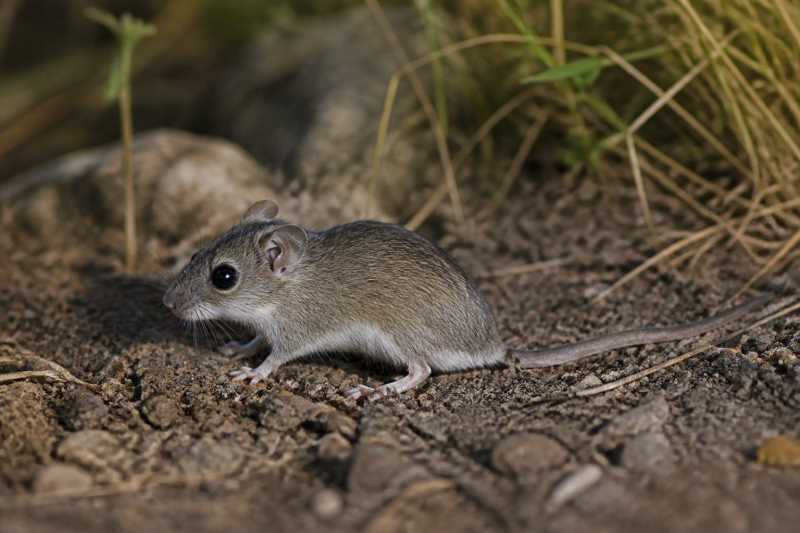
Merriam’s Deermouse is a small rodent, typically measuring between 7 to 9 cm in body length, with a tail that adds an additional 6 to 10 cm. Its weight ranges from 15 to 25 grams. The species exhibits a soft, dense fur that is generally grayish-brown on the dorsal side and white on the ventral side. This coloration provides effective camouflage in its natural habitat. The large, dark eyes and prominent ears of Merriam’s Deermouse are adaptations for its nocturnal lifestyle, enhancing its ability to navigate and forage at night.
The tail of the deermouse is distinctly bicolored, with a dark upper side and a lighter underside, adding to its identification markers. Its whiskers, or vibrissae, are long and sensitive, serving as essential sensory tools that aid in spatial awareness and food detection.
Range and Habitat
Merriam’s Deermouse is primarily found in the southwestern United States and northern Mexico. Its range includes states like Arizona, New Mexico, Texas, and parts of California. The species thrives in a variety of habitats, from desert scrublands and grasslands to woodlands and rocky outcrops.
This adaptability to different environments is one of the reasons for its widespread distribution. In desert regions, Merriam’s Deermouse often inhabits areas with dense vegetation or rocky crevices, which provide shelter and protection from predators. In forested areas, it can be found nesting in tree hollows or under fallen logs.
Behavior and Diet
Merriam’s Deermouse is primarily nocturnal, spending most of its active hours foraging for food during the night. It is an omnivorous species, feeding on a diverse diet that includes seeds, fruits, insects, and small invertebrates. This dietary flexibility allows it to thrive in various habitats, adapting its feeding habits according to the availability of resources.
The deermouse is a solitary creature, although it may share its territory with other individuals during the breeding season. Breeding typically occurs in spring and summer, with females producing multiple litters per year, each consisting of 2 to 6 young. The young are born blind and hairless but develop rapidly, becoming independent within a few weeks.
Identification Tips
Field recognition of Merriam’s Deermouse can be challenging due to its similarity to other Peromyscus species. However, there are several distinguishing features to look for:
- Bicolored Tail: The distinct dark upper side and light underside of the tail are key identification markers.
- Large Ears and Eyes: These features are prominent compared to other small rodents, aiding in nighttime foraging.
- Coloration: Look for the grayish-brown dorsal fur and white ventral fur, which can help differentiate it from other species.
- Size: Its relatively small size, compared to other deermice, is another identifying characteristic.
Conservation Status
As of the latest assessments, Merriam’s Deermouse is classified as a species of Least Concern by the International Union for Conservation of Nature (IUCN). This classification is due to its wide distribution and presumed large population size. However, like many species, it faces threats from habitat destruction due to urbanization, agriculture, and climate change.
Conservation efforts for Merriam’s Deermouse include habitat protection and monitoring population trends to ensure its continued survival. Maintaining the ecological integrity of its habitat is crucial, as it supports not only the deermouse but also numerous other species in the ecosystem.
Frequently Asked Questions
What is the primary habitat of Merriam’s Deermouse?
Merriam’s Deermouse primarily inhabits the southwestern United States and northern Mexico, thriving in desert scrublands, grasslands, woodlands, and rocky areas.
How can I identify Merriam’s Deermouse in the wild?
Look for its bicolored tail, large ears, and eyes, along with its grayish-brown dorsal fur and white ventral fur. Its small size compared to other deermice is also a distinguishing feature.
What do Merriam’s Deermice eat?
They are omnivorous, feeding on seeds, fruits, insects, and small invertebrates, adapting their diet based on the availability of resources.
Are Merriam’s Deermice endangered?
Currently, they are classified as Least Concern by the IUCN, but they face threats from habitat destruction and climate change.
How do Merriam’s Deermice reproduce?
Breeding typically occurs in spring and summer, with females producing multiple litters per year, each consisting of 2 to 6 young.
Related posts