Lyle’s Flying Fox: A Comprehensive Guide
Introduction
Lyle’s Flying Fox, scientifically known as Pteropus lylei, is a fascinating species of megabat that belongs to the family Pteropodidae. These large fruit bats are integral components of their ecosystems, primarily due to their role in pollination and seed dispersion. Found in Southeast Asia, Lyle’s Flying Fox has garnered attention not just for its ecological importance but also for the conservation challenges it faces. In this comprehensive guide, we explore various aspects of this intriguing species, from physical characteristics and habitat preferences to behavior, diet, and conservation status.
Physical Description
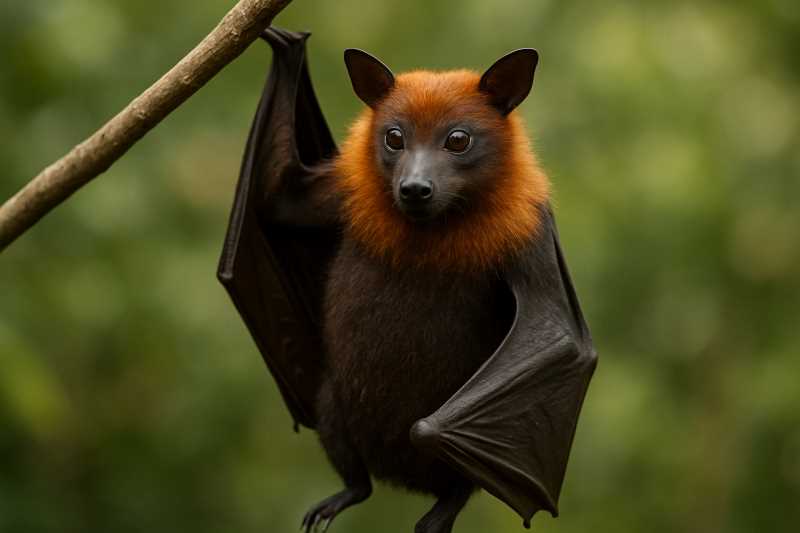
Lyle’s Flying Fox is an impressive mammal, notable for its large size and distinctive appearance. Adults typically measure between 220 to 250 millimeters in length, with a wingspan that can extend up to 1.2 meters. These bats can weigh between 450 to 500 grams. The species is characterized by its fox-like face, large eyes, and long snout, which contribute to its excellent vision and olfactory senses.
The fur of Lyle’s Flying Fox is dense and varies in color. The head and body are predominantly covered in dark brown or black fur, while the lower back and sides exhibit a lighter, often golden-brown hue. The fur around the neck is usually a striking orange or golden color, which can serve as an identifying feature. Their wings are hairless and leathery, providing the necessary structure for efficient flight.
Range and Habitat
Lyle’s Flying Fox is native to Southeast Asia, with its range spanning several countries including Thailand, Cambodia, and Vietnam. These bats prefer habitats that offer abundant food sources, typically choosing to reside in areas with plenty of fruit-bearing trees. They are commonly found in lowland forests, mangroves, and agricultural areas.
These bats are known to roost in large colonies, often in tall trees near water sources. The selection of roosting sites is influenced by factors such as availability of food and safety from predators. Lyle’s Flying Foxes are also known to adapt to urban environments, where they may roost in park trees or other green spaces.
Behavior and Diet
Lyle’s Flying Fox is primarily nocturnal, becoming active at dusk to forage for food. Their diet consists mainly of fruit, nectar, and flowers. They play a pivotal role in their ecosystems by aiding in the pollination of flowers and the dispersal of seeds. Some of their preferred food sources include bananas, figs, and mangoes.
These bats are social animals, often found in large colonies that can number in the thousands. Within these colonies, social structures and hierarchies are observed. Communication among colony members is achieved through a variety of vocalizations and body language.
Identification Tips (Field Recognition Cues)
Identifying Lyle’s Flying Fox in the field requires attention to several key characteristics:
- Size and Wingspan: Look for their large size and expansive wingspan, which can reach up to 1.2 meters.
- Coloration: Note the distinctive orange or golden neck fur, contrasting with the darker body and head.
- Facial Features: Their fox-like face, with large eyes and a long snout, is a definitive feature.
- Roosting Behavior: Spot them in large colonies in tall trees, often near water.
- Flight Pattern: Observe their steady, gliding flight during the evening as they forage.
Conservation Status (With Threats and Protections)
The International Union for Conservation of Nature (IUCN) currently lists Lyle’s Flying Fox as Near Threatened. This status is primarily due to habitat loss, hunting, and disturbances caused by human activities. Deforestation for agriculture and urban development has significantly reduced their natural habitats.
Hunting poses a serious threat as these bats are often targeted for their meat and perceived as pests by farmers. Additionally, they face threats from climate change, which can affect food availability and roosting sites.
Efforts to protect Lyle’s Flying Fox include habitat conservation, legal protections, and public awareness campaigns to highlight their ecological importance. Protected areas have been established in some regions, and there are ongoing efforts to reduce hunting pressures through community engagement and education.
Frequently Asked Questions
What do Lyle’s Flying Foxes eat?
Lyle’s Flying Foxes primarily eat fruit, nectar, and flowers. They are important pollinators and seed dispersers, contributing to the health of their ecosystems.
Where can Lyle’s Flying Foxes be found?
These bats are native to Southeast Asia, particularly in Thailand, Cambodia, and Vietnam, where they inhabit forests, mangroves, and sometimes urban areas.
How do Lyle’s Flying Foxes communicate?
They use a range of vocalizations and body language to communicate within their colonies, which can consist of thousands of individuals.
What threats do Lyle’s Flying Foxes face?
Major threats include habitat loss due to deforestation, hunting for meat, and disturbances from human activities. Climate change also poses a risk by affecting their food sources.
How can we help conserve Lyle’s Flying Foxes?
Conservation efforts include habitat protection, legal measures against hunting, and raising public awareness about the ecological role of these bats.
Related posts