Introduction
Kozlov’s Pygmy Jerboa, scientifically known as Salpingotus kozlovi, is one of the most intriguing yet lesser-known members of the rodent family. This minute mammal is part of the Dipodidae family, which is renowned for its diverse species of jerboas. Found primarily in the arid regions of Central Asia, Kozlov’s Pygmy Jerboa is a fascinating subject of scientific study due to its unique adaptations and behaviors. This article delves into the various aspects of this elusive creature, from its physical characteristics to its habitat preferences, and offers insights into its conservation status.
Physical Description
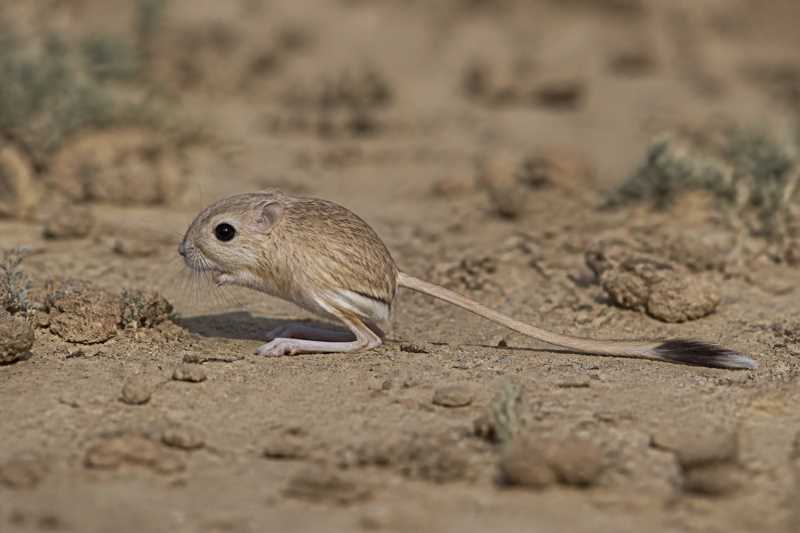
Kozlov’s Pygmy Jerboa is aptly named for its diminutive size and distinctive physical features. It measures approximately 4 to 5 centimeters in body length, with a tail that can be nearly twice as long, reaching up to 9 centimeters. This elongated tail is not merely decorative; it plays a crucial role in balancing and maneuvering through its desert habitat.
The Pygmy Jerboa’s fur is typically a sandy or greyish-brown on the dorsal side, blending seamlessly with its arid surroundings. The ventral side is usually lighter, providing a subtle contrast. One of the most striking features of Kozlov’s Pygmy Jerboa is its disproportionately large hind legs, which enable it to hop with remarkable agility and speed, reminiscent of a miniature kangaroo.
Its head is characterized by a short snout, large eyes, and long whiskers, adaptations that are essential for nocturnal activity. The ears are relatively large and rounded, aiding in acute hearing, which is vital for detecting predators in the vast, open landscapes it inhabits.
Range and Habitat
Kozlov’s Pygmy Jerboa is endemic to parts of Central Asia, with its range primarily encompassing regions within Mongolia and China. It shows a preference for the semi-arid to arid environments, such as deserts and dry steppe areas, where vegetation is sparse.
The jerboa’s habitat is typically characterized by sandy soils or loose gravel, which are ideal for burrowing. These rodents construct intricate burrow systems that serve as refuge from extreme temperatures and predation. The burrows are usually simple, with one or two entrances, and are often situated near sparse vegetation that provides both cover and food resources.
Behavior and Diet
Kozlov’s Pygmy Jerboa is primarily nocturnal, venturing out of its burrow during the cooler night hours to forage for food. Its diet mainly consists of seeds, grains, and occasionally insects, which provide the necessary hydration in their arid habitat where water is scarce.
The jerboa is a solitary creature, with each individual occupying its own territory. It communicates through a series of vocalizations and possibly through scent-marking, although detailed studies on its communication methods are sparse. Its remarkable speed and agility, facilitated by its powerful hind legs, make it adept at evading predators such as snakes, owls, and foxes.
Identification Tips (field recognition cues)
Identifying Kozlov’s Pygmy Jerboa in the field can be challenging due to its elusive nature and the vastness of its habitat. However, there are several cues that can aid in its identification:
- Size and Movement: Look for a very small rodent with a hopping gait, similar to a miniature kangaroo. This distinctive movement is a clear indicator of a jerboa.
- Tail Length: Note the disproportionately long tail compared to the body, often used to balance during rapid movements.
- Hind Legs: Observe the long hind legs, which are significantly larger than the forelimbs.
- Fur Color: The sandy or greyish-brown coloration blends with the desert environment, but the lighter underbelly can provide contrast if viewed from the side.
- Nocturnal Activity: The best time to observe this species is at night, as it is predominantly nocturnal.
Conservation Status (with threats and protections)
The conservation status of Kozlov’s Pygmy Jerboa is currently listed as ‘Least Concern’ by the International Union for Conservation of Nature (IUCN). However, its population trends are not well documented, and it faces several potential threats.
Threats:
- Habitat Degradation: Expansion of agricultural activities and infrastructure development pose significant threats to its natural habitat.
- Climate Change: Changes in climate patterns could alter the delicate balance of its arid habitat, affecting food availability and habitat suitability.
- Predation: Natural predators continue to pose a threat, although this is a natural part of its ecosystem.
Protections:
Currently, there are no specific conservation measures in place for Kozlov’s Pygmy Jerboa. However, its presence in several protected areas within its range offers some level of habitat protection.
Frequently Asked Questions
1. What is the typical lifespan of Kozlov’s Pygmy Jerboa?
The lifespan of Kozlov’s Pygmy Jerboa in the wild is not extensively documented, but similar species typically live for about 2 to 3 years under natural conditions.
2. How does Kozlov’s Pygmy Jerboa adapt to its desert habitat?
Kozlov’s Pygmy Jerboa adapts to its desert habitat through nocturnal behavior, burrowing to escape heat, and a diet that provides necessary hydration without needing direct water sources.
3. Are there any conservation efforts in place for Kozlov’s Pygmy Jerboa?
As of now, there are no targeted conservation programs for this species. However, its habitat falls within some protected regions, offering indirect protection.
4. Why is Kozlov’s Pygmy Jerboa important to its ecosystem?
Kozlov’s Pygmy Jerboa plays a crucial role in its ecosystem as both a seed disperser and a prey species, contributing to ecological balance by supporting predator populations and aiding in plant propagation.
5. Can Kozlov’s Pygmy Jerboa be kept as a pet?
Due to its specific habitat needs and the challenges in replicating its natural environment, Kozlov’s Pygmy Jerboa is not suitable for domestication or as a pet.
Related posts