Kitti’s Hog-nosed Bat: A Comprehensive Guide
Introduction
Kitti’s Hog-nosed Bat, scientifically known as Craseonycteris thonglongyai, holds the distinction of being not only the world’s smallest bat but also one of the smallest mammals by size. Commonly referred to as the bumblebee bat due to its diminutive stature, this fascinating creature is native to specific regions in Southeast Asia and has garnered significant interest from researchers and conservationists alike. This article delves into the various aspects of Kitti’s Hog-nosed Bat, including its physical description, range and habitat, behavior and diet, identification tips, and conservation status.
Physical Description
Kitti’s Hog-nosed Bat is a marvel of miniature biology. It weighs a mere 2 grams and has a wingspan of approximately 5.7 inches (14.5 centimeters). The bat’s body length is about 1.1 to 1.3 inches (2.8 to 3.3 centimeters), making it comparable in size to a large bumblebee, hence its nickname.
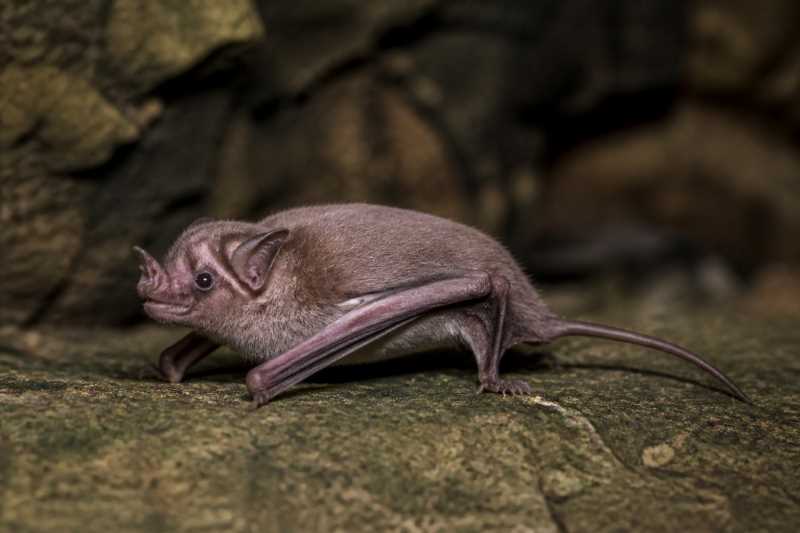
The bat’s distinctive nose resembles that of a hog, characterized by a pig-like snout with wide nostrils, which is a unique feature among bats. Its fur is fine and dark gray or red-brown, providing excellent camouflage against the rocky surfaces of its natural habitat. Its wings, though delicate-looking, are robust and adapted for rapid flight, allowing the bat to maneuver skillfully in its environment.
Range and Habitat
Kitti’s Hog-nosed Bat is found primarily in limestone caves along riverine areas in parts of Thailand and Myanmar. In Thailand, the bat is most commonly associated with the Sai Yok National Park in Kanchanaburi Province, where it resides in limestone caves. In Myanmar, its presence has been recorded in the Tanintharyi Region.
The bat’s habitat preference includes areas that offer a combination of limestone caves, which are essential for roosting, and proximity to water bodies that attract insects, providing ample feeding opportunities. These bats prefer caves with multiple chambers and narrow crevices, which offer protection from predators and environmental elements.
Behavior and Diet
Kitti’s Hog-nosed Bat is a nocturnal mammal, emerging from its roost at dusk to embark on foraging flights. Its diet consists primarily of small insects, including flies, beetles, and wasps, which it catches mid-flight using echolocation. This sophisticated sonar system allows the bat to navigate and hunt in complete darkness, emitting high-frequency sounds that bounce off objects and return as echoes, helping it to locate prey.
The bat exhibits a crepuscular feeding pattern, with peak activity occurring just after sunset and before sunrise. During the day, the bats roost in colonies that can range from a single individual to groups of up to 100 bats. These colonies are crucial for maintaining body temperature and providing protection from predators.
Identification Tips
Identifying Kitti’s Hog-nosed Bat in the field can be challenging due to its small size and elusive nature. However, certain key characteristics can aid in recognition:
- Size: Look for a bat no bigger than a bumblebee, with a body length of approximately 1.1 to 1.3 inches.
- Snout: The distinctive pig-like snout with wide nostrils is a unique feature to spot.
- Fur Color: Observe the bat’s dark gray or red-brown fur, which blends well with rocky surfaces.
- Flight Pattern: Note the rapid, agile flight, typical of bats hunting for insects.
- Echolocation Calls: Listen for high-pitched echolocation clicks, which are often the first indication of presence in an area.
Conservation Status (with threats and protections)
Kitti’s Hog-nosed Bat is classified as "Near Threatened" on the IUCN Red List. The primary threats to its survival include habitat loss due to deforestation, limestone quarrying, and human disturbance in caves. These activities not only reduce available roosting sites but also disrupt the delicate ecosystem balance required for the bat’s feeding.
Conservation efforts are in place to protect the remaining populations, particularly in Thailand. These include the designation of protected areas such as the Sai Yok National Park and the enforcement of regulations to minimize disturbances in known roosting sites. Additionally, awareness campaigns are conducted to educate local communities about the ecological importance of these bats and the need to preserve their habitats.
Frequently Asked Questions
What adaptations help Kitti’s Hog-nosed Bat survive in its environment?
Kitti’s Hog-nosed Bat has developed several adaptations, including echolocation for hunting insects in the dark, a small size for maneuverability and energy efficiency, and the ability to roost in narrow crevices for protection.
How does the Kitti’s Hog-nosed Bat contribute to its ecosystem?
As insectivores, Kitti’s Hog-nosed Bats play a critical role in controlling insect populations, thereby benefiting agriculture and reducing the spread of insect-borne diseases.
Are there any specific conservation programs for Kitti’s Hog-nosed Bat?
Yes, conservation programs focus on habitat preservation, research, and community engagement to ensure the survival of Kitti’s Hog-nosed Bat, particularly in Thailand’s protected areas like Sai Yok National Park.
What is the biggest threat to Kitti’s Hog-nosed Bat?
The most significant threat to Kitti’s Hog-nosed Bat is habitat destruction caused by limestone quarrying and deforestation, which reduces their roosting and feeding grounds.
How can local communities help in conserving Kitti’s Hog-nosed Bat?
Local communities can aid conservation by respecting protected areas, participating in eco-tourism, and supporting initiatives that promote habitat preservation and biodiversity.
Related posts