Introduction
The Black-throated Saltator, scientifically named Saltatricula atricollis, is a captivating bird species that belongs to the family Thraupidae. Native to South America, this striking bird is known for its distinctive black throat and melodious songs, which have captured the attention of ornithologists and bird watchers alike. Despite its relatively obscure status in the world of avian diversity, the Black-throated Saltator plays a significant role in its ecosystem and provides intriguing insights into the complexity of bird life in the Neotropics.
Taxonomy and Classification
The Black-throated Saltator is a member of the genus Saltatricula, which includes a few other closely related species. This genus is part of the larger family Thraupidae, commonly known as tanagers. Despite being grouped with tanagers, the Black-throated Saltator exhibits some characteristics that are more similar to those of grosbeaks or cardinals, particularly in its robust bill designed for seed eating.
Physical Description
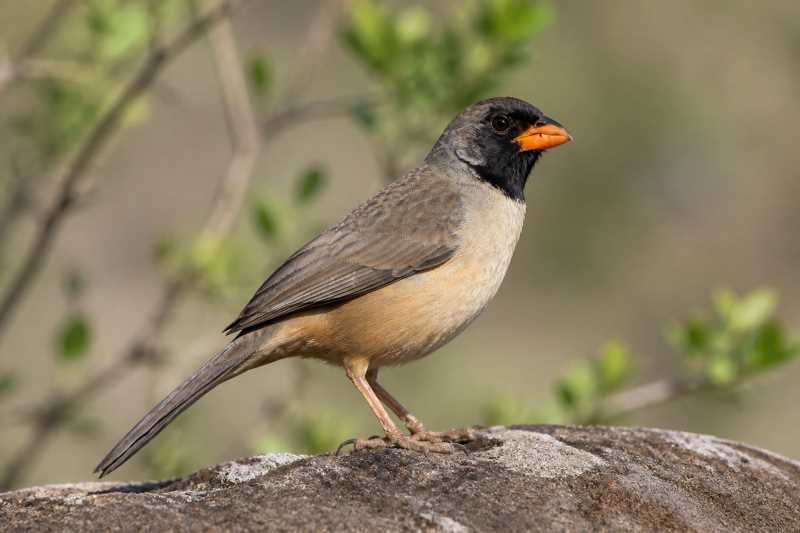
One of the most distinctive features of the Black-throated Saltator is its striking appearance. As its name suggests, the bird boasts a prominent black throat and upper chest, which contrasts sharply with its pale gray body and white belly. This distinctive coloration makes it relatively easy to identify in its natural habitat. The bird also features a robust, conical bill, which is perfectly adapted for cracking seeds, its primary food source.
Adult Black-throated Saltators typically measure about 20 cm in length and weigh between 40 to 50 grams. Their wings are compact, aiding in short flights through dense vegetation. The tail is relatively long and rounded, providing balance and agility.
Habitat and Distribution
The Black-throated Saltator is mainly found in the subtropical and tropical dry shrublands and lowland forests of South America. It has a widespread distribution that covers parts of Brazil, Bolivia, Paraguay, and northern Argentina. Within these regions, the bird is often seen in open areas with scattered trees or shrubs, such as savannas and forest edges.
These habitats provide the ideal environment for the Black-throated Saltator to forage and breed. The availability of seeds, fruits, and insects in these regions supports their dietary needs, while the dense vegetation offers protection from predators and harsh weather conditions.
Diet and Feeding Behavior
The Black-throated Saltator primarily feeds on seeds, which they skillfully crack open with their strong bills. Their diet is supplemented by fruits and insects, especially during the breeding season when protein demand increases. The bird’s feeding behavior is characterized by methodical searching through foliage and on the ground, often in pairs or small groups.
Their foraging strategy is highly adaptive, allowing them to exploit a variety of food sources depending on seasonal availability. This adaptability is crucial for survival in the fluctuating environments of their habitats.
Vocalizations
The Black-throated Saltator is renowned for its rich and melodious song. Its vocalizations consist of a series of whistles and chirps that are both complex and pleasing to the ear. These songs play a crucial role in territory establishment and mate attraction, with males often engaging in song duets to strengthen pair bonds.
The bird’s song also acts as a deterrent to potential intruders, signaling the presence of a territorial individual. Bird watchers and researchers have noted that the song variations can differ slightly between populations, indicating potential regional dialects.
Breeding and Reproduction
The breeding season for the Black-throated Saltator varies depending on its geographical location but generally occurs during the rainy season when food is abundant. The species is monogamous, with pairs often maintaining long-term bonds.
Nests are typically built in low shrubs or trees, constructed from twigs and grasses. The female lays a clutch of 2 to 3 eggs, which she incubates for about two weeks. Both parents participate in feeding and caring for the hatchlings until they are ready to fledge, usually after about two to three weeks.
Conservation Status
Currently, the Black-throated Saltator is not considered to be at risk of extinction and is classified as Least Concern by the International Union for Conservation of Nature (IUCN). However, habitat destruction and fragmentation pose potential threats to certain populations, particularly in regions where agriculture and urbanization are expanding.
Conservation efforts aimed at preserving natural habitats and promoting sustainable land-use practices are essential for ensuring the long-term survival of this and other species within the same ecosystem.
Conclusion
The Black-throated Saltator is a remarkable example of the rich biodiversity found within South America’s avian communities. Its distinctive appearance, captivating song, and ecological role make it a subject of interest for both scientific research and bird-watching enthusiasts. Continued study and conservation of this species will provide valuable insights into the dynamics of tropical ecosystems and the challenges they face in a rapidly changing world.
Related posts