Jentink’s Duiker: A Rare Gem of the African Forest
Introduction
Jentink’s Duiker (Cephalophus jentinki) is a captivating yet elusive mammal species that roams the dense forests of West Africa. Known for its striking appearance and secretive nature, this duiker is one of the least studied large mammals in its habitat. It was first described in 1884 by the Dutch zoologist Fredericus Anna Jentink, and since then, it has intrigued wildlife enthusiasts and researchers alike. Despite its obscurity, conservationists consider Jentink’s Duiker a species of significant ecological importance. This article delves into the various aspects of Jentink’s Duiker, from its physical characteristics to its conservation status.
Physical Description
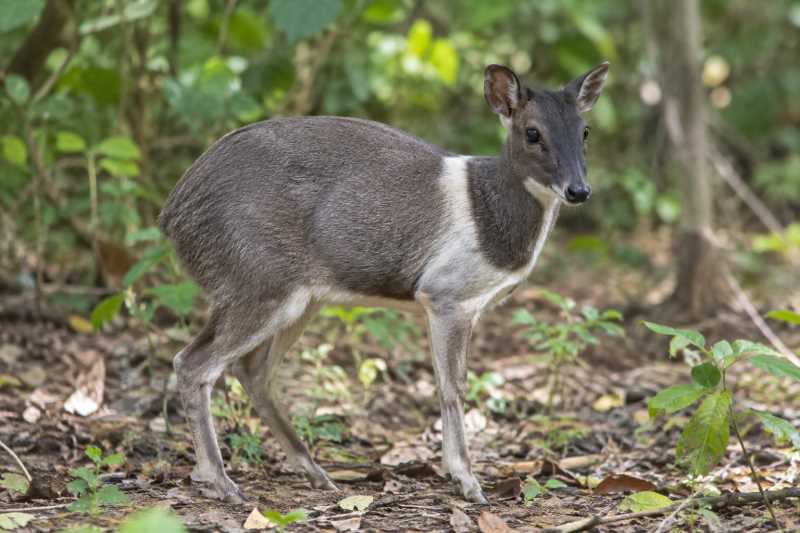
Jentink’s Duiker is one of the larger members of the duiker family, with adults typically weighing between 55 to 80 kilograms (121 to 176 pounds). It stands at about 80 to 90 centimeters (31 to 35 inches) at the shoulder, making it a substantial presence in its forest habitat. The species is easily recognizable due to its distinctive coloration—a slate-gray body with a conspicuous white band running from the shoulders to the haunches. The duiker’s face is adorned with a striking black blaze that extends from the forehead to the nose, and its horns, although short, are sharp and slightly curved.
What sets Jentink’s Duiker apart from other duikers is its elongated body and relatively long legs, adaptations that aid in maneuvering through thick underbrush. Its coat is dense and coarse, providing protection against the elements and thorny vegetation.
Range and Habitat
Jentink’s Duiker is endemic to the Upper Guinean forests of West Africa, specifically in countries like Liberia, Sierra Leone, and Côte d’Ivoire. These duikers are highly dependent on dense, primary rainforests, which provide both cover and food. They inhabit lowland forests up to elevations of about 1,500 meters (4,921 feet), although they are most commonly found at lower altitudes.
The duiker’s range is fragmented due to habitat destruction, and its population is mostly confined to protected areas or remote forest regions. The species’ preference for undisturbed forests makes it particularly vulnerable to human encroachment and deforestation.
Behavior and Diet
Jentink’s Duiker is primarily solitary and nocturnal, although it may be active during early morning or late afternoon. The species is known for its secretive and elusive nature, often retreating into dense underbrush at the slightest hint of danger. This behavior, combined with its preference for remote habitats, makes it a challenging animal to study in the wild.
The diet of Jentink’s Duiker mainly consists of fruits, seeds, and leaves, with a particular preference for fallen fruits. As a frugivore, it plays a crucial role in seed dispersal, contributing to the health and regeneration of its forest ecosystem. Occasionally, it may consume fungi or small amounts of animal matter.
Identification Tips
Field recognition of Jentink’s Duiker can be challenging due to its secretive nature and the dense habitats it occupies. However, the following cues can aid in identification:
- Coloration: Look for the unique slate-gray body with a white band on the sides and a black facial blaze.
- Size: Note its relatively large size compared to other duikers.
- Behavior: Observe its solitary, cautious movements and preference for dense cover.
- Tracks: Identify its tracks, which are cloven-hoofed and similar to those of other antelopes but larger.
Conservation Status
Jentink’s Duiker is listed as Endangered on the IUCN Red List, with its population trend decreasing. The primary threats to its survival are habitat loss due to logging and agricultural expansion, as well as hunting for bushmeat. The species’ reliance on intact forest ecosystems makes it particularly vulnerable to these threats.
Conservation efforts are focused on habitat protection and anti-poaching measures. Several national parks and reserves within its range offer some degree of protection, but enforcement is often inconsistent. International conservation organizations are working with local governments to strengthen these initiatives and raise awareness about the duiker’s plight.
Frequently Asked Questions
What makes Jentink’s Duiker different from other duikers?
Jentink’s Duiker is distinguished by its larger size, unique coloration, and preference for dense, primary forests. Unlike other duiker species, it has a distinctive white band along its flanks and a prominent black facial blaze.
Where can I see Jentink’s Duiker in the wild?
Jentink’s Duiker is best observed in protected areas within its range, such as Gola Rainforest National Park in Sierra Leone or Sapo National Park in Liberia. However, sightings are rare due to its elusive nature.
What efforts are being made to conserve Jentink’s Duiker?
Conservation efforts include habitat protection, anti-poaching initiatives, and community engagement programs. International and local organizations are collaborating to improve enforcement in protected areas and promote sustainable land-use practices.
How does Jentink’s Duiker contribute to its ecosystem?
As a frugivore, Jentink’s Duiker plays a vital role in seed dispersal, aiding in forest regeneration and biodiversity maintenance. Its feeding habits help maintain the health of its forest habitat.
Why is Jentink’s Duiker considered endangered?
The species is endangered due to habitat destruction, hunting pressures, and its limited range. Conservation measures are crucial to prevent further population declines and ensure its survival.
Related posts