Introduction
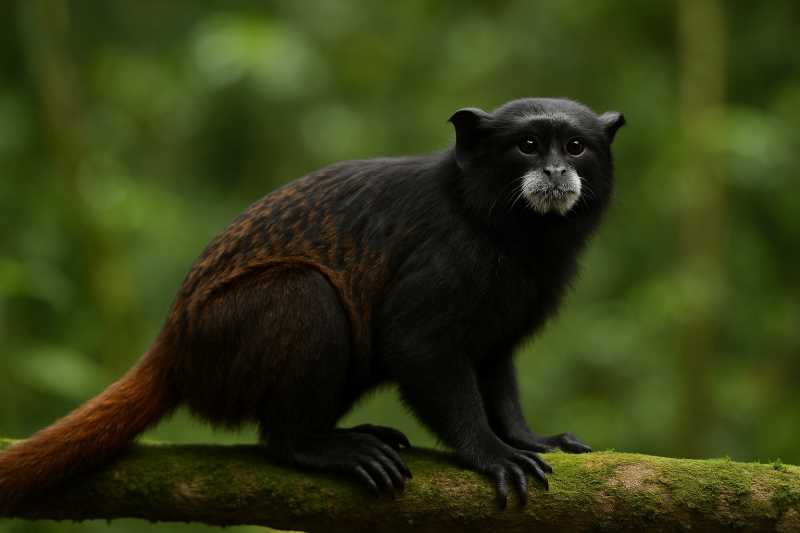
The Black-mantled Tamarin, scientifically known as Saguinus nigricollis, is a captivating primate species belonging to the Callitrichidae family. Recognized for its distinctive black mantle, this small monkey inhabits the lush rainforests of South America, primarily in regions of the Amazon Basin. As a species of tamarin, these primates play a crucial role in the ecological balance of their habitat, contributing to seed dispersal and forest regeneration. This article provides an in-depth exploration of the Black-mantled Tamarin’s physical characteristics, habitat preferences, behavior, diet, and the conservation challenges it faces.
Physical Description
The Black-mantled Tamarin is a small primate, with adults typically weighing between 350 to 400 grams. Its body length ranges from 22 to 28 centimeters, complemented by a tail measuring approximately 33 to 42 centimeters. True to its name, the Black-mantled Tamarin is characterized by a striking black mantle of fur that covers its back and shoulders. Its face is predominantly bare, featuring a pinkish hue, with small, expressive eyes that convey a sense of curiosity and intelligence.
The rest of its body is covered in a mixture of darker and lighter fur, offering an attractive contrast that aids in camouflage within the dense foliage of its forest home. The species exhibits little sexual dimorphism, meaning males and females are similar in appearance, although females can be slightly larger. The tamarin’s digits are elongated and equipped with sharp claws rather than nails, assisting in adept climbing and foraging.
Range and Habitat
The Black-mantled Tamarin is indigenous to the neotropical forests of South America, with its range extending across several countries, including Peru, Brazil, and Colombia. These tamarins thrive in diverse habitats, ranging from lowland rainforests to seasonally flooded forests and terra firme forests. They are primarily arboreal, spending most of their lives in the forest canopy, which offers both food resources and protection from predators.
Their habitat preference leans towards areas with dense understory and ample fruit availability, crucial for their diet. Due to their reliance on specific forest structures for nesting and foraging, Black-mantled Tamarins are sensitive to habitat changes, making them vulnerable to deforestation and habitat fragmentation.
Behavior and Diet
Black-mantled Tamarins are diurnal, meaning they are active during the day. They are highly social animals, living in groups that typically consist of 4 to 15 individuals. These groups are structured around a single breeding pair and their offspring, with cooperative care of young being a prominent feature of their social behavior. Communication within the group is facilitated through a range of vocalizations, body postures, and facial expressions.
The diet of the Black-mantled Tamarin is primarily frugivorous, with a strong preference for ripe fruits. However, they are also opportunistic feeders, supplementing their diet with insects, small vertebrates, flowers, and nectar. Their role as seed dispersers is vital for the maintenance of their ecosystem, as they aid in the propagation of several plant species.
Identification Tips (Field Recognition Cues)
Identifying the Black-mantled Tamarin in the wild can be an exciting challenge for enthusiasts and researchers alike. Key recognition cues include:
- Distinctive Black Mantle: Look for the characteristic black fur covering the back and shoulders.
- Size and Build: Note their small size and proportional body to tail length.
- Facial Features: Observe the bare, pinkish face and small, alert eyes.
- Vocalizations: Listen for their high-pitched calls, often used for communication within the group.
- Habitat: Spot them in the upper canopy of dense forests, often in small, active groups.
Conservation Status (With Threats and Protections)
The Black-mantled Tamarin is currently listed as Least Concern by the International Union for Conservation of Nature (IUCN). However, this status does not imply that the species is free from threats. The primary threat facing these tamarins is habitat destruction, driven by deforestation for agriculture, logging, and urban development. Habitat fragmentation results in isolated populations, which can lead to decreased genetic diversity and increased vulnerability to environmental changes.
Conservation efforts focus on habitat preservation and restoration, alongside legal protection of their natural environments. In some regions, protected areas and reserves have been established to safeguard their habitats. Additionally, research into their ecology and behavior supports conservation strategies by providing insights into their habitat needs and population dynamics.
Frequently Asked Questions
1. What does the Black-mantled Tamarin eat?
The Black-mantled Tamarin’s diet primarily consists of fruits, but they are also known to eat insects, small vertebrates, flowers, and nectar. This varied diet supports their nutritional needs and plays a crucial role in seed dispersal within their ecosystem.
2. Where can I find Black-mantled Tamarins in the wild?
Black-mantled Tamarins are native to the Amazon Basin, with populations in Peru, Brazil, and Colombia. They inhabit lowland rainforests, seasonally flooded forests, and terra firme forests, typically residing in the canopy.
3. How do Black-mantled Tamarins communicate?
These tamarins communicate through a combination of vocalizations, body language, and facial expressions. High-pitched calls are common, especially for maintaining group cohesion and alerting others to potential threats.
4. Are Black-mantled Tamarins endangered?
Currently, the Black-mantled Tamarin is classified as Least Concern by the IUCN. However, habitat destruction poses a significant threat, emphasizing the need for continued conservation efforts.
5. How do Black-mantled Tamarins contribute to their ecosystem?
As frugivores, Black-mantled Tamarins play a critical role in seed dispersal. By consuming fruits and spreading seeds, they help maintain plant diversity and forest regeneration, which are essential for a healthy ecosystem.
Related posts