The Virginia Rail: An Elusive Marshland Resident
The Virginia Rail (Rallus limicola) is a small, secretive bird that inhabits the dense marshes and wetlands of North America. Known for its distinctive vocalizations and elusive behavior, this bird is a fascinating subject for ornithologists and bird watchers alike. Despite its shyness, the Virginia Rail plays a crucial role in its ecosystem, contributing to the biodiversity and health of wetland environments.
Physical Description
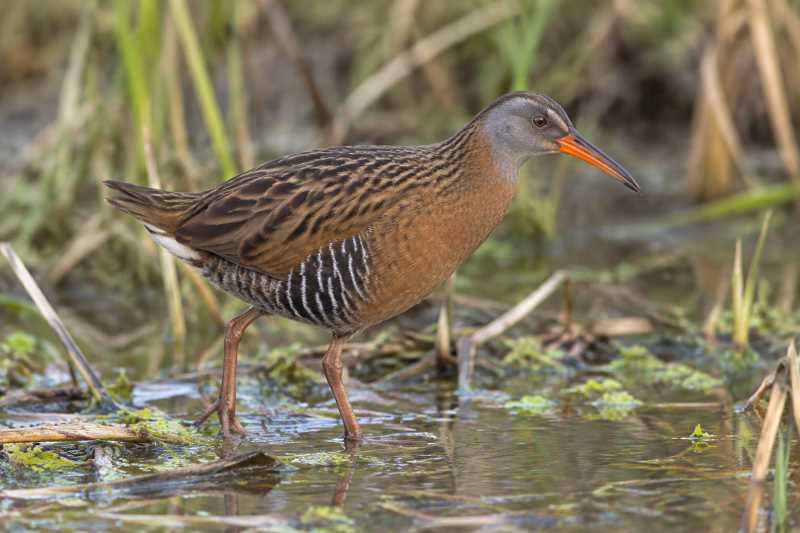
The Virginia Rail is a medium-sized bird, measuring approximately 20 to 27 centimeters in length, with a wingspan ranging from 25 to 30 centimeters. It is characterized by its compact body, long toes, and short tail, which are well-adapted for navigating through dense reeds and marsh vegetation. Its plumage is a blend of rich browns and grays, with a distinctive orange-brown on its face and a slightly curved bill that is reddish at the base. This coloration provides excellent camouflage, allowing the rail to blend seamlessly into its marshy surroundings.
Habitat and Distribution
Virginia Rails are typically found in freshwater and brackish marshes across North America. Their range extends from the southern parts of Canada down through the United States and into Central America during the winter months. They prefer habitats with dense cattails, bulrushes, and sedges, which offer both cover and a rich supply of invertebrates for feeding.
The secretive nature of the Virginia Rail makes it challenging to observe in its natural habitat. These birds are more often heard than seen, as they tend to stay hidden within thick marsh vegetation. Their presence is usually indicated by their distinctive vocalizations, including a series of grunting "kidik" sounds and a harsh "kicker-kicker-kicker" call.
Behavior and Diet
Virginia Rails are solitary and territorial birds, especially during the breeding season. They are most active during dawn and dusk, using their long toes to walk effortlessly across floating vegetation and soft mud. Their diet primarily consists of aquatic invertebrates, such as insects, crustaceans, and snails. They also consume small fish, amphibians, and occasionally plant material.
The foraging behavior of Virginia Rails is fascinating. They use their sensitive bills to probe the mud and shallow water for prey, often flicking aside debris with their feet. This method of feeding is not only efficient but also minimizes the risk of detection by predators.
Breeding and Reproduction
The breeding season for Virginia Rails typically begins in late spring, with pairs forming monogamous bonds. Males are known for their elaborate courtship displays, which include a variety of calls and postures to attract a mate. Once paired, both male and female work collaboratively to construct a nest in dense vegetation, usually above water level to avoid flooding.
The nest is a well-concealed cup made of grasses and reeds. Females lay a clutch of 5 to 13 eggs, which are incubated by both parents for about 18 to 20 days. The chicks are precocial, meaning they are relatively mature and mobile shortly after hatching. Both parents are involved in feeding and caring for the young, guiding them through the marsh and teaching them essential survival skills.
Conservation Status
Currently, the Virginia Rail is listed as a species of Least Concern by the International Union for Conservation of Nature (IUCN). However, like many wetland-dependent species, it faces threats from habitat loss and degradation. The draining of wetlands for agriculture, urban development, and water pollution are significant challenges that impact their habitat.
Conservation efforts are crucial to ensuring the survival of Virginia Rails and the ecosystems they inhabit. Protection and restoration of wetland habitats are vital, as these areas support a wide array of wildlife and provide important ecological services, such as water filtration and flood control.
The Importance of Wetland Conservation
Wetlands are among the most productive ecosystems on Earth, supporting a diverse range of plant and animal species. For the Virginia Rail, wetlands provide essential resources for breeding, feeding, and protection from predators. The conservation of these habitats not only benefits the Virginia Rail but also countless other species that rely on wetlands for survival.
Efforts to conserve wetland habitats include policy measures, land acquisition for protected areas, and restoration projects that aim to return degraded wetlands to their natural state. Public awareness and education about the importance of wetlands can also play a significant role in conservation efforts, encouraging communities to engage in sustainable practices and support conservation initiatives.
Conclusion
The Virginia Rail is a remarkable bird, perfectly adapted to its marshland habitat. Its elusive behavior and unique adaptations make it a symbol of the intricate balance of wetland ecosystems. By protecting and preserving these vital habitats, we ensure the continued survival of the Virginia Rail and the myriad of other species that call the wetlands home. Understanding and appreciating the role of the Virginia Rail in its environment underscores the importance of ongoing conservation efforts to protect our planet’s natural heritage.
Related posts