Impala (Aepyceros melampus): Nature’s Graceful Antelope
Introduction
The impala, scientifically known as Aepyceros melampus, is one of Africa’s most iconic antelope species. Renowned for their agility and grace, these creatures are a common sight in the savannahs and woodlands of sub-Saharan Africa. Despite their prevalence, impalas continue to captivate wildlife enthusiasts with their impressive leaping abilities and fascinating social structures. This article delves into the various aspects of impala life, from their physical characteristics to their behavior and conservation status.
Physical Description
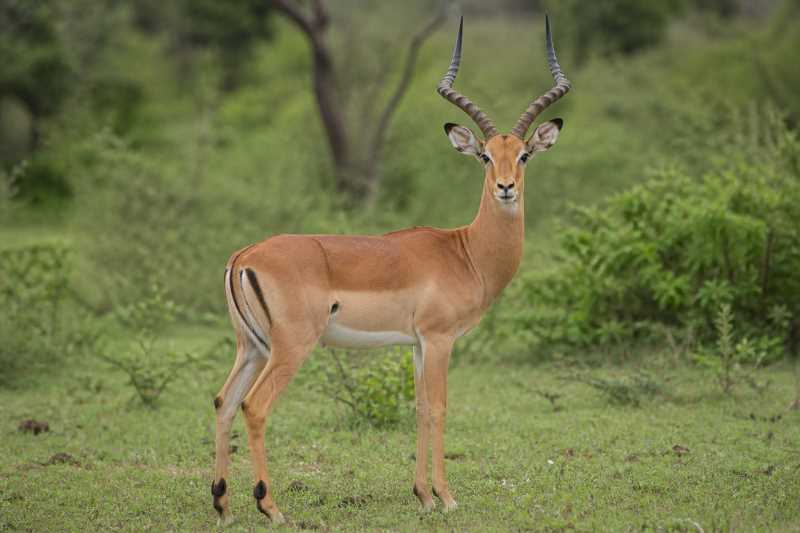
Impalas are medium-sized antelopes, standing about 90 centimeters (35 inches) at the shoulder and weighing between 40 to 75 kilograms (88 to 165 pounds). Males are generally larger than females and are easily distinguished by their impressive lyre-shaped horns, which can grow up to 90 centimeters (35 inches) long. These horns are ridged, adding to their formidable appearance.
The coat of an impala is a striking reddish-brown, providing excellent camouflage against the dry grass and bush of their natural habitat. The underbelly and the underside of the chin are lighter in color, often white, while a distinctive black stripe runs along each flank. Their sleek, glossy coat is not only a visual asset but also helps in thermoregulation by reflecting sunlight.
Range and Habitat
Impalas are native to eastern and southern Africa. Their range extends from Kenya and Uganda in the north to South Africa and Namibia in the south. They are highly adaptable creatures, thriving in a variety of habitats, including savannahs, woodlands, and floodplains. However, they prefer areas with good grass cover and proximity to water sources, as these are critical for their survival.
The availability of water is a significant determinant of impala distribution. During the dry season, they may venture closer to permanent water sources, while the rainy season allows them to spread out across more extensive areas as temporary water holes become available.
Behavior and Diet
Impalas are social animals, living in herds that can range from a few individuals to over a hundred. These herds are typically divided into three social structures: territorial males, bachelor herds, and female herds. During the breeding season, known as the rut, males become highly territorial and engage in intense battles for dominance and mating rights.
Their diet is mixed, consisting of both grazing and browsing, which allows impalas to adapt to varying environmental conditions. They primarily feed on grasses, fruits, and acacia pods, but will also consume shrubs and herbs when grass is scarce. This dietary flexibility is one of the reasons for their widespread presence across Africa.
Impalas are also known for their remarkable agility. They can leap as high as 3 meters (10 feet) and cover distances of up to 10 meters (33 feet) in a single bound. This ability is crucial for escaping predators such as lions, leopards, and hyenas.
Identification Tips (Field Recognition Cues)
Identifying impalas in the wild can be a rewarding experience for wildlife observers. Here are some tips to help you recognize them:
- Horn Shape: Males have distinctive lyre-shaped horns that curve gracefully backward, while females lack horns entirely.
- Coloration: Look for the reddish-brown coat with lighter underparts and a distinct black stripe along each flank.
- White Belly: The contrasting white underbelly is a key feature that aids in identification.
- Behavior: Observe their graceful leaping ability and social behavior in herds.
- Habitat: Impalas are often found near water sources in savannah and woodland areas.
Conservation Status (with Threats and Protections)
The International Union for Conservation of Nature (IUCN) currently classifies the impala as a species of Least Concern. Their population is stable, with an estimated 2 million individuals spread across their range. However, certain localized threats could impact specific populations.
Threats
- Habitat Loss: Agricultural expansion and urban development have led to habitat fragmentation in some regions.
- Poaching: While impalas are not the primary target for poachers, they are sometimes hunted for bushmeat.
- Climate Change: Altered rainfall patterns and prolonged droughts can affect water availability and food resources.
Protections
- Protected Areas: Many impalas reside within national parks and reserves, where they are afforded protection from hunting and habitat destruction.
- Conservation Programs: Initiatives focusing on habitat restoration and anti-poaching efforts contribute to their conservation.
- Community Involvement: Engaging local communities in conservation efforts has proven effective in several regions.
Frequently Asked Questions
How fast can impalas run?
Impalas are capable of reaching speeds of up to 60 kilometers per hour (37 miles per hour). This speed, combined with their leaping ability, makes them adept at evading predators.
What is the lifespan of an impala in the wild?
In the wild, impalas typically live for about 12 to 15 years. Predation and environmental factors can influence their lifespan, as can diseases and competition for resources.
Do impalas migrate?
Impalas do not undertake long migrations like some other African herbivores. However, they may move locally within their range in response to seasonal changes in water and food availability.
How do impalas communicate?
Impalas communicate through a range of vocalizations, body language, and scent marking. They use alarm calls to alert the herd of predators and engage in grooming as a social behavior.
Are impalas endangered?
No, impalas are not endangered. They are currently classified as Least Concern by the IUCN, thanks to their stable population numbers and wide distribution.
Related posts