Introduction
The giant anteater, scientifically known as Myrmecophaga tridactyla, is a unique and fascinating mammal renowned for its specialized diet and distinctive appearance. As the largest of the four anteater species, the giant anteater plays a crucial role in the ecosystems it inhabits. It is a solitary creature, often seen roaming the grasslands and forests of Central and South America in search of its primary food source—ants and termites. This article delves into the various aspects of the giant anteater’s life, from its physical characteristics to its conservation status, offering a comprehensive overview of this remarkable species.
Physical Description
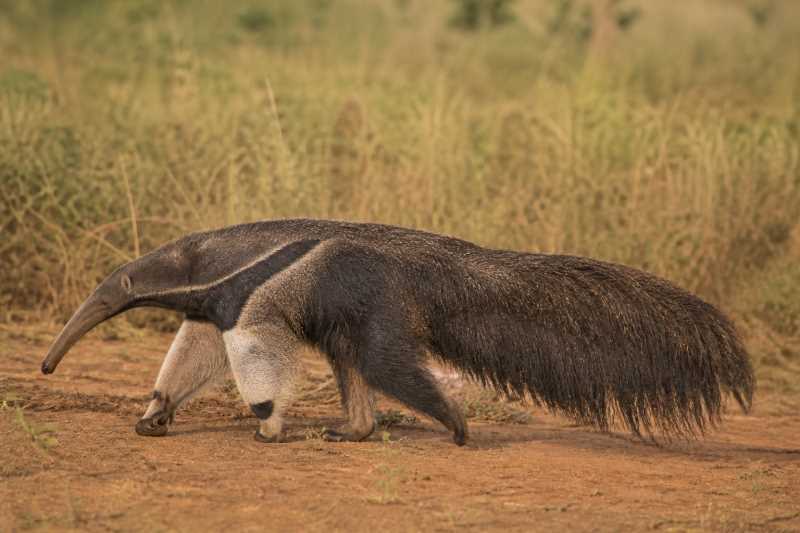
The giant anteater is an extraordinary animal, notable for its elongated snout, bushy tail, and distinct coloration. Adult giant anteaters can reach a length of up to 7 feet (2.1 meters) from nose to tail tip, with males generally larger than females. They weigh between 40 to 100 pounds (18 to 45 kilograms), though some individuals may exceed this weight range.
A defining feature of the giant anteater is its long, tubular snout, which houses a small mouth and a sticky tongue that can extend up to 2 feet (60 centimeters). This adaptation is crucial for their insectivorous diet, allowing them to extract ants and termites from their nests with ease. The anteater’s tongue can flick in and out up to 150 times per minute, a testament to its specialization in ant and termite consumption.
The fur of the giant anteater is coarse and dense, providing protection against insect bites. Its coloration is a striking combination of gray, brown, and black, with a distinctive black and white stripe running from the chest to the back. The forelimbs are equipped with long, curved claws, essential tools for breaking into insect nests and for defense against predators.
Range and Habitat
Giant anteaters are native to Central and South America, with their range extending from Honduras in the north to northern Argentina in the south. They inhabit a variety of ecosystems, including savannas, grasslands, and rainforests, but they are most commonly found in open areas where ants and termites are plentiful.
These mammals are highly adaptable and can thrive in both dry and moist environments. Despite their adaptability, giant anteaters are primarily terrestrial and are rarely seen climbing trees, unlike some of their smaller relatives. They are known to cover large distances within their home range, which can vary in size depending on factors such as food availability and habitat quality.
Behavior and Diet
Giant anteaters are solitary creatures, except during mating season or when a mother is caring for her young. They are mostly diurnal, although they can exhibit nocturnal behavior in areas with high human activity. Their daily routine involves foraging for food, resting, and grooming.
The diet of a giant anteater is highly specialized, consisting almost exclusively of ants and termites. They use their keen sense of smell to locate insect nests, which they then rip open with their powerful claws. Once the nest is breached, the anteater uses its long tongue to consume thousands of insects in a single feeding session. Despite their voracious appetite, giant anteaters spend only a few minutes at each nest to avoid getting bitten by the insects or attracting predators.
Identification Tips (Field Recognition Cues)
Identifying a giant anteater in the wild can be an exciting experience. Here are some tips to help with field recognition:
- Size and Shape: Look for a large, elongated body with a prominent bushy tail. The unique body shape of the giant anteater is unmistakable.
- Snout and Tongue: Notice the long, tubular snout, which is used for probing insect nests. If you observe it feeding, you may glimpse its rapid, flicking tongue.
- Fur Pattern: The giant anteater’s distinctive black and white stripe running from the chest to the back is a key identification marker.
- Claws: Observe the long, curved claws on the forelimbs, which are used for digging and defense.
- Behavior: Giant anteaters are typically slow-moving and solitary. They may be seen foraging on the ground or resting in shaded areas.
Conservation Status (With Threats and Protections)
The giant anteater is currently classified as Vulnerable on the International Union for Conservation of Nature (IUCN) Red List. This status reflects the species’ declining population, primarily due to habitat loss, road mortality, and hunting.
Threats:
- Habitat Destruction: Deforestation for agriculture and urban development poses a significant threat to the giant anteater’s natural habitat.
- Road Mortality: As human infrastructure expands, roadkills have become a major cause of death for giant anteaters.
- Hunting: In some regions, giant anteaters are hunted for their meat and claws.
Protections:
- Protected Areas: Several national parks and reserves across their range provide refuge for giant anteaters.
- Conservation Programs: Efforts are underway to monitor populations, reduce roadkills, and rehabilitate injured individuals.
- Public Awareness: Education initiatives aim to raise awareness about the importance of conserving this unique species.
Frequently Asked Questions
1. What do giant anteaters eat besides ants and termites?
While ants and termites make up the bulk of their diet, giant anteaters occasionally consume other insects and larvae. However, their digestive system is highly specialized for processing ant and termite exoskeletons, so other food sources are rare.
2. How do giant anteaters protect themselves from predators?
Giant anteaters rely on their formidable claws for defense. When threatened, they can deliver powerful swipes with their claws. Additionally, their size and tough hide offer some protection against predators.
3. How long do giant anteaters live in the wild?
In the wild, giant anteaters typically live for about 14 years. In captivity, they can live up to 25 years due to the absence of threats and ample availability of food.
4. Are giant anteaters endangered?
Giant anteaters are classified as Vulnerable, not endangered. However, their population is declining, and conservation efforts are crucial to prevent further decline.
5. Can giant anteaters climb trees?
Unlike some smaller anteater species, giant anteaters are primarily terrestrial and not adept at climbing. They spend most of their time on the ground, foraging for ants and termites.
Related posts