Introduction
The Bolivian Woolly Mouse Opossum, scientifically known as Marmosa rapposa, is a small marsupial that captivates researchers and wildlife enthusiasts alike with its charming appearance and unique ecological role. Endemic to Bolivia, this elusive species is a part of the Didelphidae family, which includes various opossums known for their adaptability and diverse habitats. Understanding the biological and ecological aspects of the Bolivian Woolly Mouse Opossum not only enhances our knowledge of South American wildlife but also underscores the importance of conserving such species, which play vital roles in their ecosystems.
Physical Description
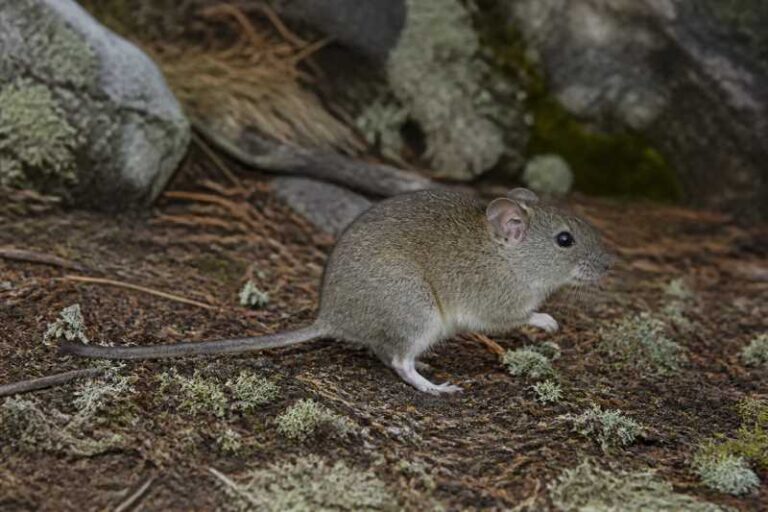
The Bolivian Woolly Mouse Opossum is a small marsupial, typically measuring about 10 to 15 centimeters in body length, with a tail that can be as long or longer than its body. This species is characterized by its soft, dense fur, which varies in color from grayish-brown to a more reddish hue, providing effective camouflage in its natural habitat. The fur’s woolly texture is a distinctive feature, from which the species derives its common name.
Its face is adorned with large, dark eyes that are well-adapted for nocturnal activity. The opossum’s ears are prominent and rounded, enhancing its auditory capabilities. Its prehensile tail is not only essential for balance but also aids in grasping branches and other objects as it navigates through its arboreal environment. The feet of the Bolivian Woolly Mouse Opossum are equipped with sharp claws, which facilitate efficient climbing and handling of food.
Range and Habitat
Marmosa rapposa is native to the lowland tropical forests of Bolivia, particularly thriving in regions like the Amazonian and subtropical forests. These opossums prefer habitats that offer dense vegetation, which provides ample cover from predators and supports a rich supply of food resources.
The species is typically found in areas with a high degree of humidity and dense canopy cover. Such environments not only offer protection and food but also the microclimatic conditions necessary for their survival. The opossum’s range is limited to specific ecological zones within Bolivia, making it an important indicator of environmental health and biodiversity in these regions.
Behavior and Diet
The Bolivian Woolly Mouse Opossum is primarily nocturnal, spending the majority of its active hours foraging for food at night. Its diet is omnivorous, consisting of fruits, insects, small vertebrates, and occasionally bird eggs. This dietary flexibility allows it to adapt to varying food availability in its habitat.
Behaviorally, this opossum exhibits solitary tendencies, except during mating or when a mother is caring for her young. The species is arboreal, spending most of its time in the trees, where it utilizes its prehensile tail for balance and movement. These opossums are also known for their ability to remain motionless as a defense mechanism, blending seamlessly with their surroundings to avoid detection by predators.
Identification Tips
Field recognition of the Bolivian Woolly Mouse Opossum can be achieved through several key features:
- Fur Texture and Color: Look for the characteristic woolly fur, which ranges from grayish-brown to reddish.
- Size and Tail: Note the small size of the body, approximately 10 to 15 centimeters, and a long prehensile tail.
- Facial Features: Large, dark eyes and rounded ears are prominent on the opossum’s face.
- Habitat: Often found in lowland tropical forests with dense vegetation.
By focusing on these attributes, researchers and wildlife enthusiasts can accurately identify the Bolivian Woolly Mouse Opossum in the field.
Conservation Status
The conservation status of the Bolivian Woolly Mouse Opossum is currently not well-documented, primarily due to its elusive nature and the lack of comprehensive studies. However, like many wildlife species in the Amazon, it is likely affected by habitat destruction and fragmentation due to deforestation and agricultural expansion.
Primary threats to this species include:
- Deforestation: Logging and land conversion for agriculture reduce viable habitats.
- Climate Change: Alters the delicate balance of their microhabitats, affecting food supply and habitat conditions.
Conservation efforts should focus on habitat preservation and the implementation of sustainable land-use practices. Protecting the forests and maintaining biodiversity corridors are crucial steps in ensuring the survival of this species.
Frequently Asked Questions
What is the habitat of the Bolivian Woolly Mouse Opossum?
The Bolivian Woolly Mouse Opossum inhabits lowland tropical forests in Bolivia, preferring dense, humid environments that offer ample food resources and protection from predators.
How does the Bolivian Woolly Mouse Opossum adapt to its environment?
This species adapts through its arboreal lifestyle, nocturnal behavior, and omnivorous diet, allowing it to exploit various resources while minimizing predation risks.
What threats face the Bolivian Woolly Mouse Opossum?
The primary threats include habitat destruction due to deforestation and climate change, which impact their natural environment and food availability.
How can we identify the Bolivian Woolly Mouse Opossum in the field?
Identifying features include its woolly fur, long prehensile tail, large eyes, and rounded ears. It is often found in dense tropical forest habitats.
Why is conservation important for the Bolivian Woolly Mouse Opossum?
Conservation is vital to preserve the species and its role in the ecosystem, as well as to maintain the biodiversity and health of tropical forests in Bolivia.
Related posts