Introduction
The Dinagat Bushy-tailed Cloud Rat, scientifically known as Crateromys australis, is a fascinating species of rodent that is endemic to the Philippines. This elusive creature is part of the cloud rat family, which is characterized by its unique appearance and arboreal lifestyle. First described scientifically in 1975, the Dinagat Bushy-tailed Cloud Rat has since piqued the interest of biologists and conservationists alike due to its limited distribution and the environmental threats it faces. This article delves into the various aspects of this intriguing mammal, from its physical description and habitat preferences to its behavior, diet, and conservation status.
Physical Description
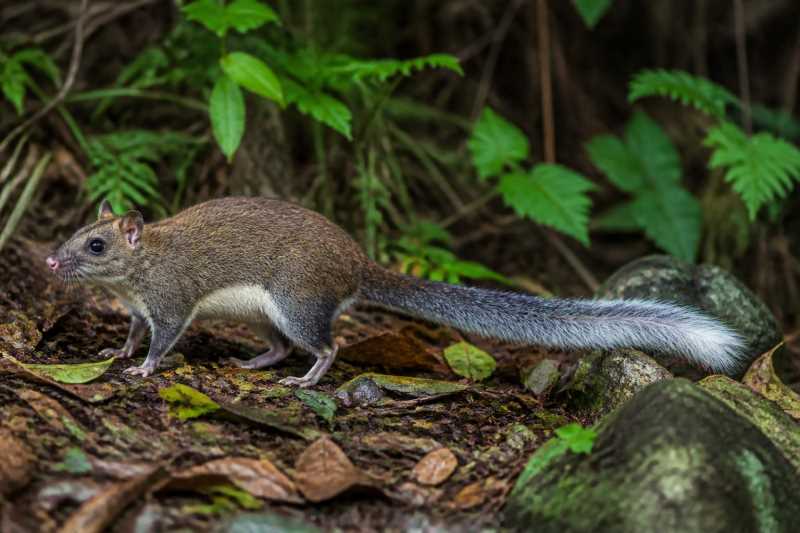
The Dinagat Bushy-tailed Cloud Rat is notably recognized for its distinctive bushy tail, which is often longer than its head and body combined. Adult individuals typically measure about 30 to 40 centimeters in body length, with tails ranging from 35 to 45 centimeters. This species possesses a dense and soft fur coat that varies in color but generally includes hues of gray, brown, and black, providing excellent camouflage in its natural habitat.
Its large, expressive eyes are adapted for nocturnal activity, and its small, rounded ears are well-suited for detecting predators in the dense forest canopy. The robust limbs and sharp claws of the Dinagat Bushy-tailed Cloud Rat facilitate adept climbing and foraging among the trees, where it spends much of its life.
Range and Habitat
As its name suggests, the Dinagat Bushy-tailed Cloud Rat is found exclusively on Dinagat Island, part of the Philippines’ Caraga region. The island’s tropical rainforest ecosystem provides the ideal environment for this arboreal rodent. The species typically inhabits primary and secondary forests, where it can find ample food sources and nesting sites.
The dense canopy of the rainforest offers shelter and protection, allowing the Dinagat Bushy-tailed Cloud Rat to thrive despite its restricted range. However, habitat destruction due to logging, mining, and agricultural expansion poses significant threats to its continued survival.
Behavior and Diet
The Dinagat Bushy-tailed Cloud Rat is primarily nocturnal, spending the daylight hours resting in tree hollows or nests made of leaves and twigs. At night, it becomes active, foraging for food throughout the forest canopy. Its diet is predominantly herbivorous, consisting of leaves, fruits, seeds, and occasionally small insects.
This species is known for its solitary nature, although it may occasionally form loose associations with others during feeding or nesting. Communication among these cloud rats is believed to involve a range of vocalizations, as well as scent markings left on trees and foliage.
Identification Tips (field recognition cues)
Identifying the Dinagat Bushy-tailed Cloud Rat in the wild can be challenging due to its elusive nature and nocturnal habits. However, there are several key features to look for:
- Bushy Tail: The most striking feature is its long, bushy tail, which is often longer than its body.
- Fur Coloration: Look for the distinctive gray, brown, and black fur that blends well with the forest environment.
- Large Eyes: Its large eyes are adapted for night vision, a key adaptation for its nocturnal lifestyle.
- Arboreal Movement: Observing its movement in the trees can also be a good indicator; it is an agile climber.
Conservation Status (with threats and protections)
The Dinagat Bushy-tailed Cloud Rat is classified as Critically Endangered on the IUCN Red List. The primary threats to its survival are habitat loss and fragmentation caused by logging, mining, and agricultural activities. As its habitat continues to shrink, the species faces increased risk of extinction.
Efforts to protect the Dinagat Bushy-tailed Cloud Rat include the establishment of protected areas on Dinagat Island and community-based conservation programs aimed at preserving the island’s unique biodiversity. Local and international conservation organizations are also working to raise awareness about the plight of this species and to promote sustainable land use practices.
Frequently Asked Questions
1. What is the primary diet of the Dinagat Bushy-tailed Cloud Rat?
The Dinagat Bushy-tailed Cloud Rat primarily feeds on leaves, fruits, and seeds. It may occasionally consume small insects, but its diet is largely herbivorous.
2. Why is the Dinagat Bushy-tailed Cloud Rat considered critically endangered?
The species is considered critically endangered due to severe habitat loss and fragmentation on Dinagat Island, driven primarily by logging, mining, and agricultural expansion.
3. How can you identify a Dinagat Bushy-tailed Cloud Rat in the wild?
Key identification features include its long, bushy tail, distinctive coloration of gray, brown, and black fur, large nocturnal eyes, and its arboreal movement patterns.
4. Where can the Dinagat Bushy-tailed Cloud Rat be found?
This species is endemic to Dinagat Island in the Philippines, where it inhabits primary and secondary tropical rainforests.
5. What conservation efforts are in place for the Dinagat Bushy-tailed Cloud Rat?
Conservation efforts include the creation of protected areas on Dinagat Island, community-based conservation programs, and advocacy for sustainable land use to preserve the species’ habitat.
Related posts