Introduction
The Bhutan Giant Flying Squirrel (Petaurista nobilis) is a fascinating member of the Sciuridae family, known for its impressive size and remarkable gliding abilities. As one of the largest flying squirrels in the world, this species captivates wildlife enthusiasts and researchers alike. Its presence in the biodiverse regions of the Himalayas adds to the ecological richness of these areas. This article delves into the intriguing aspects of the Bhutan Giant Flying Squirrel, from its physical characteristics to its conservation status.
Physical Description
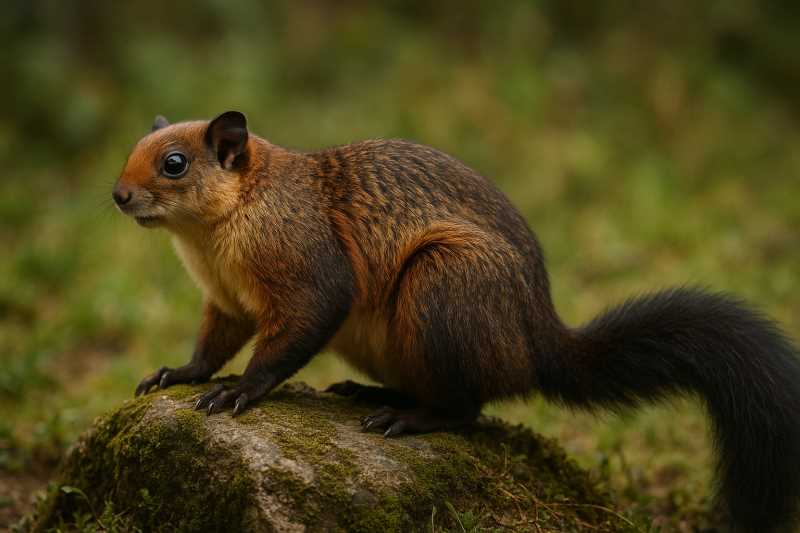
The Bhutan Giant Flying Squirrel is distinguished by its substantial size and unique adaptations that facilitate its arboreal lifestyle. Adults can weigh between 1.5 to 2 kilograms (3.3 to 4.4 pounds) and measure approximately 90 to 120 centimeters (35 to 47 inches) from head to tail. The body is covered in dense, soft fur that varies in color from deep brown to a reddish hue, providing effective camouflage amidst the forest canopy.
A defining feature of the Bhutan Giant Flying Squirrel is its patagium—a skin membrane stretching from the forelimbs to the hindlimbs. This structure is essential for gliding, allowing the squirrel to traverse significant distances between trees. The tail is long and bushy, serving as a stabilizer during flights. Its large, round eyes are adapted for nocturnal activity, enhancing its ability to navigate and forage in low light conditions.
Range and Habitat
The Bhutan Giant Flying Squirrel inhabits the temperate and subtropical forests of the eastern Himalayas, primarily in Bhutan, but also extending into parts of northeastern India and southern Tibet. These regions are characterized by dense forest canopies and a diverse mix of flora, providing ample food sources and nesting sites.
This species prefers altitudes ranging from 1,500 to 3,500 meters (4,900 to 11,500 feet), where it thrives in both primary and secondary forests. The abundance of old-growth trees with extensive branches is crucial for the squirrel’s gliding locomotion and nesting behaviors. The presence of water bodies within these habitats also contributes to their suitability, offering hydration and additional food resources.
Behavior and Diet
The Bhutan Giant Flying Squirrel is primarily nocturnal, emerging from its tree cavities or constructed nests at dusk. Its nocturnal habits are complemented by a highly developed sense of smell and hearing, aiding in predator avoidance and foraging activities.
This species follows an omnivorous diet, with a strong preference for plant material. Its diet consists of leaves, fruits, flowers, and bark, along with occasional insects and small invertebrates. The ability to digest tough plant fibers is facilitated by a specialized cecum that aids in fermentation.
The gliding ability of the Bhutan Giant Flying Squirrel is both a survival and foraging strategy, enabling it to escape predators and access food resources across wide areas without descending to the forest floor. Gliding distances can reach up to 100 meters (328 feet), facilitated by its aerodynamic body and tail.
Identification Tips (Field Recognition Cues)
Identifying the Bhutan Giant Flying Squirrel in the wild can be a rewarding experience for naturalists and wildlife observers. Here are some tips to help you recognize this elusive mammal:
- Size and Color: Look for a large squirrel with a robust body covered in reddish-brown or dark brown fur.
- Tail: The long, bushy tail is a prominent feature, often used for balancing during glides.
- Eyes and Ears: Note the large, round eyes and small, rounded ears, which are adaptations for nocturnal life.
- Patagium: Observe the presence of the skin membrane stretching between the limbs, a key adaptation for gliding.
- Habitat: Search in high-altitude forests with dense canopies and old-growth trees, especially at dusk or dawn.
Conservation Status (With Threats and Protections)
The Bhutan Giant Flying Squirrel currently holds a conservation status of Least Concern according to the International Union for Conservation of Nature (IUCN). However, it faces several threats that could impact its population dynamics in the future.
Threats:
- Habitat Loss: Deforestation due to agricultural expansion, logging, and infrastructure development is a primary threat, reducing available habitat and food resources.
- Climate Change: Alterations in temperature and precipitation patterns can affect the availability of suitable habitats and food sources.
- Hunting: Although not a widespread threat, local hunting for bushmeat in some regions poses a risk to isolated populations.
Protections:
- Protected Areas: Many of the squirrel’s habitats fall within national parks and protected reserves, providing some level of security against habitat destruction.
- Conservation Programs: Initiatives focusing on habitat preservation and reforestation efforts contribute to maintaining ecological balance and supporting wildlife populations.
- Awareness Campaigns: Educating local communities about the importance of biodiversity and sustainable practices can mitigate human impact on these ecosystems.
Frequently Asked Questions
What is the primary diet of the Bhutan Giant Flying Squirrel?
The Bhutan Giant Flying Squirrel primarily consumes a diet rich in plant material, including leaves, fruits, flowers, and bark. It occasionally supplements this with insects and small invertebrates.
Where can I observe the Bhutan Giant Flying Squirrel in its natural habitat?
To observe the Bhutan Giant Flying Squirrel, visit the temperate and subtropical forests of Bhutan, northeastern India, or southern Tibet, particularly in areas with dense canopies and old-growth trees. Dusk and dawn are ideal times for sightings.
How does the Bhutan Giant Flying Squirrel glide?
The squirrel uses its patagium, a skin membrane stretching between its limbs, to glide through the air. This adaptation allows it to travel distances up to 100 meters (328 feet) between trees.
Are Bhutan Giant Flying Squirrels endangered?
Currently, the Bhutan Giant Flying Squirrel is listed as Least Concern by the IUCN. However, it faces threats such as habitat loss and climate change, which could impact its conservation status in the future.
What are the main threats to the Bhutan Giant Flying Squirrel?
The main threats include habitat loss due to deforestation, climate change affecting habitat and food availability, and localized hunting for bushmeat.
Related posts