Introduction
The Basilan Flying Squirrel (Petinomys crinitus) is a distinctive and fascinating member of the sciurid family, primarily known for its unique gliding capabilities. Native to the Philippines, this enigmatic creature is less studied compared to its flying squirrel counterparts in other parts of the world. Despite being lesser-known, the Basilan Flying Squirrel plays a critical role in its ecosystem, contributing to seed dispersal and forest dynamics. This article delves into various aspects of the Basilan Flying Squirrel, exploring its physical description, habitat, behavior, and conservation status.
Physical Description
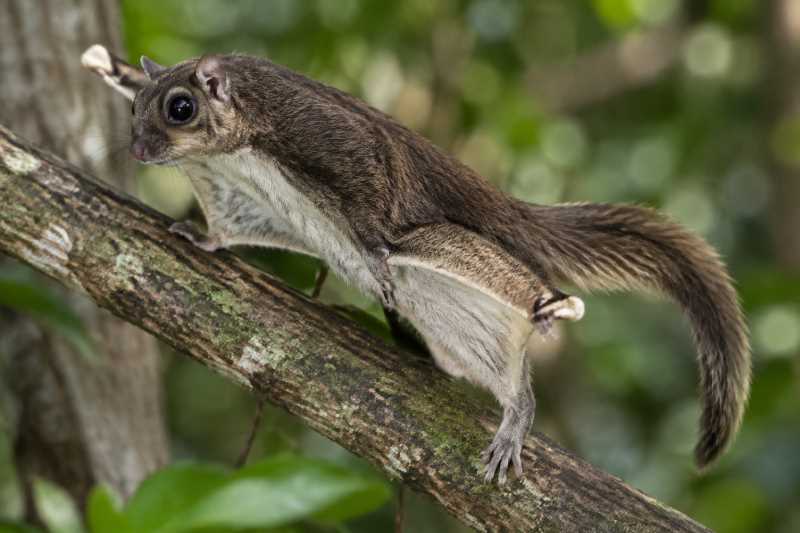
Petinomys crinitus, commonly known as the Basilan Flying Squirrel, exhibits the typical characteristics of flying squirrels, with specialized adaptations for its arboreal lifestyle. It possesses a patagium, a membrane stretching from wrist to ankle, which it uses to glide between trees. This gliding adaptation not only aids in escaping predators but also in foraging for food across vast forested areas.
The Basilan Flying Squirrel is relatively small, with a body length ranging from 20 to 25 centimeters, excluding its bushy tail, which can be as long as its body. Its fur is dense and soft, providing insulation and aiding in camouflage within its natural habitat. Typically, its coloration is a mix of grays and browns, with a lighter underbelly, allowing it to blend seamlessly with the bark of trees.
Range and Habitat
Endemic to the Philippines, the Basilan Flying Squirrel is predominantly found on the island of Basilan, from which it derives its name. The island’s tropical climate, characterized by high humidity and dense, evergreen forests, provides an ideal environment for this species. These squirrels prefer primary and secondary forests where they can take advantage of the dense canopy and abundant food sources.
Their habitat is often threatened by human activities such as logging and agricultural expansion, which lead to habitat fragmentation. However, the squirrels have shown some adaptability, occasionally venturing into secondary forest growths and plantation areas.
Behavior and Diet
The Basilan Flying Squirrel is primarily nocturnal, spending the daylight hours in tree hollows or dense foliage. Its nocturnal nature allows it to avoid daytime predators and take advantage of the cooler temperatures at night.
Their diet is omnivorous, consisting mainly of fruits, nuts, seeds, and occasionally insects. They play an essential role in their ecosystem by aiding in seed dispersal, which facilitates forest regeneration. These squirrels are known for their agility and precision when gliding, often covering distances of up to 50 meters in a single glide.
Socially, they are relatively solitary creatures, although they may be seen in small family groups or pairs during the breeding season. Communication is primarily through vocalizations and scent markings.
Identification Tips (Field Recognition Cues)
Identifying the Basilan Flying Squirrel in the wild can be challenging due to its nocturnal habits and elusive nature. However, there are several key features to look for:
- Patagium: Look for the distinct gliding membrane that stretches between its limbs.
- Tail: Observe the long, bushy tail, which is used for balance during gliding.
- Size and Coloration: Note the small size and the gray-brown fur with a lighter underside.
- Behavior: Watch for gliding movements at dusk or dawn, as this is when they are most active.
Conservation Status (With Threats and Protections)
The conservation status of the Basilan Flying Squirrel is currently not well-documented due to limited research. However, like many species in the Philippines, it faces threats from habitat loss and deforestation. Illegal logging, agricultural expansion, and urban development have led to significant habitat fragmentation.
Despite these threats, some conservation efforts are in place to protect the remaining forest habitats on Basilan Island. Protected areas and wildlife sanctuaries offer some refuge for the Basilan Flying Squirrel. However, increased conservation awareness and research are needed to better understand and protect this unique species.
Frequently Asked Questions
1. What is the Basilan Flying Squirrel’s primary diet?
The Basilan Flying Squirrel primarily feeds on fruits, nuts, seeds, and occasionally insects. This omnivorous diet helps them play a vital role in seed dispersal, contributing to forest regeneration.
2. How far can the Basilan Flying Squirrel glide?
The Basilan Flying Squirrel can glide distances of up to 50 meters. This remarkable ability is facilitated by the patagium, which allows them to move efficiently between trees.
3. What are the main threats to the Basilan Flying Squirrel?
The main threats to the Basilan Flying Squirrel include habitat loss due to deforestation, illegal logging, and agricultural expansion. These activities lead to fragmentation of their natural habitat, making survival challenging.
4. Are Basilan Flying Squirrels social animals?
Basilan Flying Squirrels are relatively solitary but may be observed in small family groups or pairs during breeding seasons. They communicate through vocalizations and scent markings.
5. Where can the Basilan Flying Squirrel be found in the wild?
The Basilan Flying Squirrel is endemic to Basilan Island in the Philippines. It inhabits primary and secondary forests, preferring areas with dense canopy cover.
Related posts