African Brush-tailed Porcupine (Atherurus africanus): A Comprehensive Guide
Introduction
The African Brush-tailed Porcupine (Atherurus africanus) is a fascinating mammal species that captivates wildlife enthusiasts and researchers alike. Known for its unique appearance and intriguing behaviors, this porcupine species is an integral part of the biodiversity in its native habitats across Africa. Despite being less known than its New World counterparts, the African Brush-tailed Porcupine plays a crucial role in its ecosystem, contributing to seed dispersal and maintaining ecological balance.
Physical Description
The African Brush-tailed Porcupine is a medium-sized rodent characterized by its distinctive body structure and quills. Adults typically measure between 40 to 50 centimeters in body length, with a tail length of around 10 to 15 centimeters. The species weighs between 1.5 to 3 kilograms, making it a sizable member of the Hystricidae family.
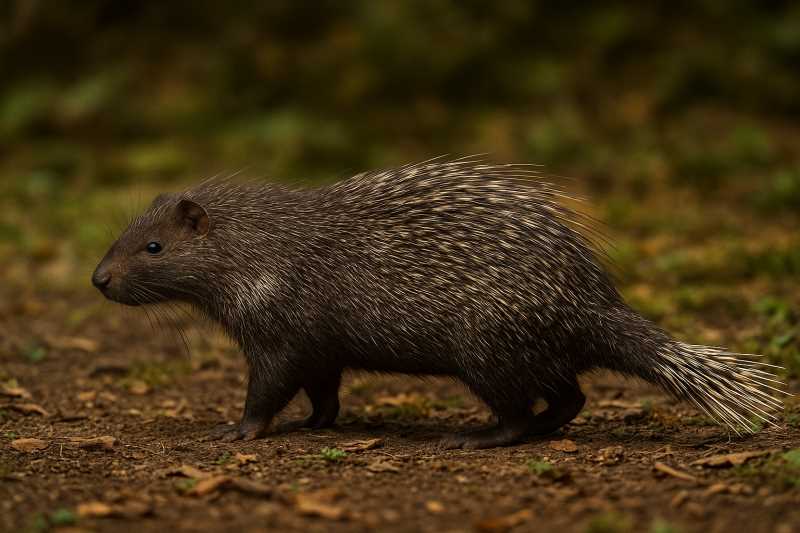
One of the most notable features of the African Brush-tailed Porcupine is its quills. These are not as long or as pronounced as those of the Old World porcupines but serve as effective defense mechanisms against predators. The quills are sharp, hollow, and can detach easily when the porcupine feels threatened. The animal’s fur is coarse, with a color palette ranging from dark brown to black, providing effective camouflage in its natural habitat.
The brush-tailed porcupine has a distinctive tail that is covered in scales and ends in a tuft of bristles, resembling a brush, which is unique among porcupines and aids in species identification.
Range and Habitat
The African Brush-tailed Porcupine is native to the tropical and subtropical forests of Central and West Africa. Its range spans several countries, including Nigeria, Cameroon, Gabon, and the Democratic Republic of Congo. This species thrives in dense, humid forest environments but is also known to inhabit secondary forests and wooded savannas.
Being nocturnal, the African Brush-tailed Porcupine prefers habitats that offer ample cover and concealment during the day. They often reside in burrows, which they dig themselves or repurpose from other animals. These burrows provide protection from predators and extreme weather conditions.
Behavior and Diet
African Brush-tailed Porcupines are primarily nocturnal, meaning they are most active during the night. They are solitary creatures, although they can sometimes be found in small family groups. Their nocturnal habits help them avoid predators and human contact.
The diet of the African Brush-tailed Porcupine is predominantly herbivorous. They feed on a variety of plant materials, including fruits, roots, tubers, and bark. Their strong teeth are adapted to gnawing through tough plant materials, which is essential for their survival in the wild. They play an important role in seed dispersal, contributing to forest regeneration.
Identification Tips (Field Recognition Cues)
Identifying the African Brush-tailed Porcupine in the wild can be challenging due to its nocturnal nature and preference for dense habitats. However, there are several key features to look for:
- Quills and Fur: Look for the characteristic short, sharp quills and coarse, dark fur.
- Tail: The brush-like appearance of the tail is a distinguishing feature.
- Tracks: Their tracks can be identified by the large hind feet and smaller front feet marks.
- Feeding Signs: Look for gnawed vegetation and evidence of rooting behavior.
- Sounds: They are known to make a variety of vocalizations, especially when threatened.
Conservation Status (With Threats and Protections)
The African Brush-tailed Porcupine is currently listed as Least Concern by the International Union for Conservation of Nature (IUCN) due to its wide distribution and presumed large population. However, like many wildlife species, it faces several threats that could impact its numbers in the future.
Threats
- Habitat Destruction: Deforestation for agriculture and logging poses a significant threat to their habitat.
- Hunting and Poaching: They are hunted for bushmeat and traditional medicine.
- Human-Wildlife Conflict: As human populations expand, conflicts arise due to crop damage by porcupines.
Protections
Conservation efforts are essential to ensure the survival of this species. Protected areas and national parks within their range offer some level of habitat preservation. Education and awareness campaigns about the ecological role of porcupines can also help reduce hunting pressures.
Frequently Asked Questions
- What do African Brush-tailed Porcupines eat?
African Brush-tailed Porcupines have a primarily herbivorous diet, feeding on fruits, roots, tubers, and bark. They use their strong teeth to gnaw through tough plant materials, which is crucial for their survival.
- Where do African Brush-tailed Porcupines live?
These porcupines are found in the tropical and subtropical forests of Central and West Africa, including countries like Nigeria, Cameroon, and Gabon. They prefer dense forest environments but can also inhabit secondary forests and wooded savannas.
- How do African Brush-tailed Porcupines defend themselves?
The primary defense mechanism of African Brush-tailed Porcupines is their sharp quills, which can detach easily to deter predators. Additionally, they may use vocalizations and their strong teeth to fend off threats.
- Are African Brush-tailed Porcupines endangered?
Currently, the African Brush-tailed Porcupine is listed as Least Concern by the IUCN. However, habitat destruction and hunting pressures could pose future risks to their population.
- How can I identify an African Brush-tailed Porcupine in the wild?
Look for their distinctive short quills, dark coarse fur, and brush-like tail. Their tracks and signs of feeding, such as gnawed plants, can also help in identification.
Related posts