Introduction
The Yellow-chinned Spinetail (Certhiaxis cinnamomeus) is a small but captivating bird that belongs to the family Furnariidae, a diverse group of passerine birds known for their intricate nesting habits and adaptability to various environments. This species, with its distinctive yellow throat and lively demeanor, is a remarkable example of avian adaptation and survival in the diverse ecosystems of South America.
Taxonomy and Classification
The Yellow-chinned Spinetail is classified under the order Passeriformes, which is the largest order of birds and includes over half of all bird species. This order is commonly referred to as perching birds or songbirds. Within this order, the family Furnariidae comprises species that are predominantly found in Central and South America, showcasing a great variety of forms and ecological niches.
Scientific Classification:
- Kingdom: Animalia
- Phylum: Chordata
- Class: Aves
- Order: Passeriformes
- Family: Furnariidae
- Genus: Certhiaxis
- Species: Certhiaxis cinnamomeus
The genus Certhiaxis includes two species: the Yellow-chinned Spinetail and its close relative, the Red-and-white Spinetail. These birds are often found in similar habitats but are distinguished by their unique coloration and vocalizations.
Physical Description
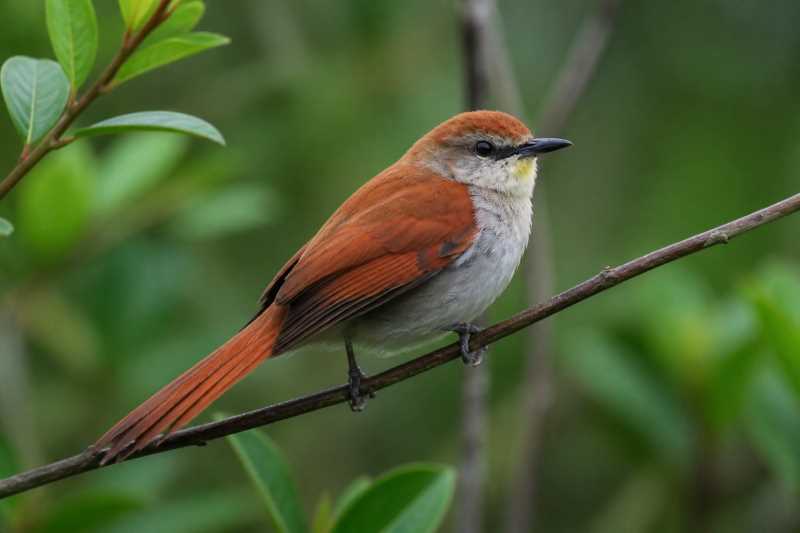
The Yellow-chinned Spinetail is a small bird, measuring about 14 centimeters (5.5 inches) in length, and weighing approximately 12 grams. Its plumage is predominantly a rich cinnamon-brown, which provides excellent camouflage against the earthy tones of its habitat. The bird’s most distinguishing feature is its bright yellow chin and throat, which contrast sharply with its otherwise muted coloration.
The wings and tail of the Yellow-chinned Spinetail are relatively short, an adaptation for maneuvering through dense vegetation. Its tail is often held upright, a characteristic feature of spinetails. The bird’s beak is slender and slightly curved, ideal for gleaning insects from foliage and other surfaces.
Habitat and Distribution
The Yellow-chinned Spinetail is native to South America, with its range extending across several countries, including Brazil, Argentina, Paraguay, Uruguay, and Bolivia. It is typically found in lowland regions, often inhabiting marshes, swamps, and the edges of rivers and lakes.
This species thrives in areas with abundant aquatic vegetation, such as reeds and sedges, which provide both food and nesting material. The presence of dense, tangled vegetation is crucial for the spinetail’s survival, as it offers protection from predators and harsh weather conditions.
Behavior and Ecology
Yellow-chinned Spinetails are known for their energetic and restless behavior. They are often seen flitting through vegetation, rarely staying in one place for long. Despite their small size, these birds are quite vocal, using a repertoire of sharp calls and trills to communicate with one another.
Diet: The diet of the Yellow-chinned Spinetail consists mainly of insects and other small invertebrates. They are adept at foraging in dense vegetation, often seen probing leaves and stems for hidden prey. In addition to insects, they may occasionally consume seeds and plant material.
Breeding and Nesting: The breeding season of the Yellow-chinned Spinetail varies depending on its geographical location but generally occurs during the wet season when food is abundant. These birds are monogamous, forming long-term pair bonds.
Nesting is a key aspect of spinetail behavior. The Yellow-chinned Spinetail constructs elaborate nests made of grass, reeds, and other plant materials. These nests are typically spherical or oblong, with a narrow entrance tunnel leading to a well-concealed chamber. The nests are often anchored among reeds or other sturdy vegetation, providing stability and protection.
Females lay between two to four eggs, which are incubated by both parents. The chicks are altricial, meaning they are born blind and helpless, requiring substantial parental care. Both parents are involved in feeding and protecting the young until they fledge.
Conservation Status
According to the International Union for Conservation of Nature (IUCN), the Yellow-chinned Spinetail is currently listed as a species of "Least Concern." This classification indicates that the species is not facing any immediate threat of extinction. However, like many birds that inhabit wetland environments, it is potentially vulnerable to habitat loss due to drainage, agriculture, and urban development.
Efforts to conserve wetland habitats are crucial for the continued survival of the Yellow-chinned Spinetail and other species that rely on these ecosystems. Protecting areas of natural vegetation, regulating water use, and restoring degraded wetlands are important conservation strategies.
Cultural Significance and Human Interaction
While the Yellow-chinned Spinetail may not be as well-known as some other South American birds, it plays a significant role in the ecosystems it inhabits. As an insectivore, it helps control insect populations, contributing to the balance of its habitat.
In some regions, the presence of the Yellow-chinned Spinetail is considered an indicator of healthy wetland environments. Birdwatchers and naturalists often seek out this species, appreciating its vibrant behavior and the challenge of spotting it among dense vegetation.
Research and Study
The Yellow-chinned Spinetail, like many species in the Furnariidae family, is of interest to ornithologists studying avian adaptation and evolution. Its specialized nesting behavior, vocalizations, and ecological role provide valuable insights into the complexity and diversity of bird life in South America.
Research into the Yellow-chinned Spinetail also contributes to broader studies on the impacts of environmental changes on bird populations. Understanding how these birds adapt to habitat alterations can inform conservation strategies not only for spinetails but for other wetland-dependent species.
Conclusion
The Yellow-chinned Spinetail is a testament to the adaptability and resilience of birds in diverse ecosystems. With its striking appearance, unique behavior, and important ecological role, this species highlights the intricate web of life in South America’s wetlands. Protecting the habitats of the Yellow-chinned Spinetail ensures the preservation of biodiversity and the health of these vital ecosystems for future generations.
References
- BirdLife International. (2021). Certhiaxis cinnamomeus. The IUCN Red List of Threatened Species 2021.
- Remsen, J. V., Jr., & Parker, T. A. (1984). Spinetails of the genus Certhiaxis. Wilson Bulletin, 96(1), 14-24.
- Ridgely, R. S., & Tudor, G. (2009). Field Guide to the Songbirds of South America: The Passerines. University of Texas Press.
Related posts