White-throated Redstart: A Jewel of the Himalayas
The White-throated Redstart (Phoenicurus schisticeps) is a captivating avian species that graces the montane forests and shrublands of the Himalayas. Known for its striking plumage and melodious song, this bird has piqued the interest of ornithologists and bird enthusiasts alike. This article delves into the fascinating world of the White-throated Redstart, exploring its habitat, behavior, and conservation status.
Habitat and Distribution
The White-throated Redstart is predominantly found in the high-altitude regions of the Himalayas, spanning countries such as Nepal, Bhutan, India, and parts of China. It thrives in temperate forests and alpine meadows, typically at elevations ranging from 2,500 to 4,500 meters. These habitats offer the bird ample food resources and nesting sites, allowing it to flourish in these challenging environments.
The redstart’s preference for high-altitude regions means it is often seen in areas with dense undergrowth, where it can forage for insects and other small invertebrates. During the breeding season, it descends slightly to areas with more abundant resources, but it is generally a resident species, rarely migrating over long distances.
Physical Characteristics
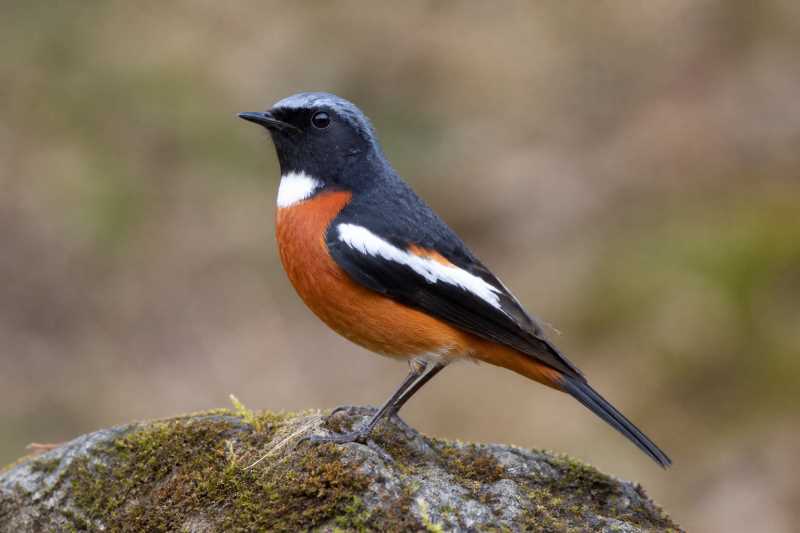
The White-throated Redstart is easily identifiable by its vibrant plumage. Males boast a striking combination of deep blue upperparts and a fiery red belly, which contrasts with their conspicuous white throats. Their tails are black with white edges, a feature that becomes particularly noticeable during flight. Females, while more subdued in coloration, retain the distinctive white throat, accompanied by olive-brown upperparts and a reddish-orange belly.
This sexual dimorphism not only aids in identification but also plays a role in their mating rituals, where visual displays are crucial. The bird’s compact size, typically measuring about 14-15 cm in length, allows it to navigate the dense foliage of its habitat with ease.
Behavior and Diet
White-throated Redstarts are known for their lively and energetic behavior. They are often seen flitting between branches, their tails flicking up and down in characteristic fashion. This behavior is not merely for display; it is believed to help in startling insects, making them easier to catch.
Their diet consists primarily of insects and other small invertebrates, which they forage from the forest floor and low vegetation. During the breeding season, their dietary intake increases to meet the demands of raising young. In addition to insects, they may occasionally consume berries and other small fruits when available.
Breeding and Nesting
The breeding season for the White-throated Redstart typically occurs between May and July. During this time, males engage in elaborate displays to attract females, showcasing their vibrant plumage and singing complex melodies.
Nesting sites are usually located in crevices or on ledges, where the nests are constructed from grass, moss, and feathers. The female lays a clutch of 3-5 eggs, which she incubates for about two weeks. Once hatched, both parents share the responsibility of feeding and caring for the chicks until they fledge, which occurs approximately 15-18 days post-hatching.
Conservation Status
Currently, the White-throated Redstart is listed as a species of Least Concern by the IUCN Red List. However, like many high-altitude species, it faces potential threats from habitat loss and climate change. The encroachment of agriculture and human development into its natural habitat could pose significant risks in the future.
Conservation efforts in the region are crucial to ensure the survival of this and other species that rely on the delicate Himalayan ecosystem. Protected areas and national parks offer some refuge, but continued monitoring and research are essential to understand the full impact of environmental changes on their populations.
Cultural Significance
In some Himalayan cultures, the White-throated Redstart is considered a harbinger of spring, its arrival signaling the end of winter. Its vibrant colors and cheerful song have also inspired local folklore and art, further cementing its place in the tapestry of Himalayan biodiversity.
Conclusion
The White-throated Redstart is a remarkable bird that embodies the beauty and resilience of high-altitude life. Its presence in the Himalayas is not only vital for the ecological balance but also enriches the cultural heritage of the region. As we continue to study and admire this species, it is imperative to support conservation efforts to preserve its natural habitat and ensure that future generations can experience the wonder of the White-throated Redstart.
Through understanding and appreciation, we can contribute to the ongoing protection of these avian gems, ensuring they remain a vibrant part of our world’s biodiversity.
Related posts