The Plain-brown Woodcreeper: An Unassuming Marvel of the Neotropical Forests
In the lush, biodiversity-rich forests of Central and South America, a subtle yet intriguing bird can be found weaving its way through the understory. The Plain-brown Woodcreeper (Dendrocincla fuliginosa) may not boast the vibrant plumage of some of its avian counterparts, but its understated beauty and ecological importance make it a subject worthy of attention. This article explores the characteristics, behavior, habitat, and conservation status of this fascinating species.
Physical Characteristics
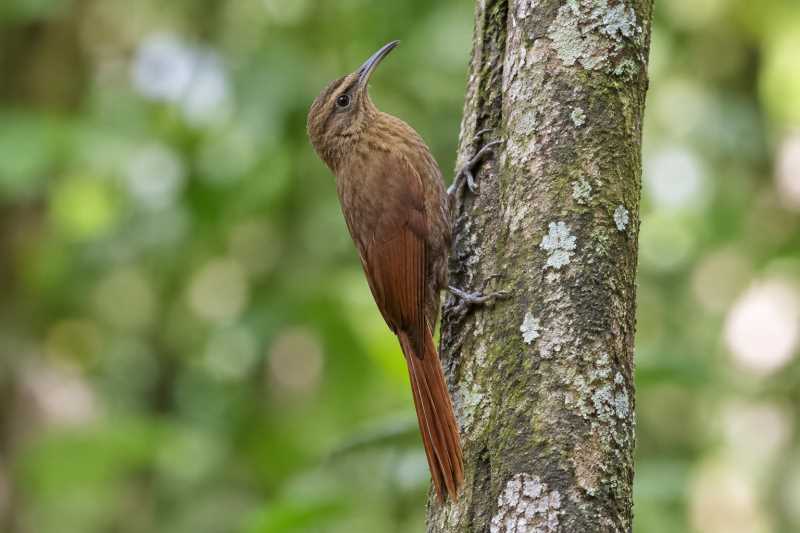
The Plain-brown Woodcreeper is aptly named for its unadorned appearance. Adults typically measure between 18 to 21 centimeters in length, with a wingspan that extends to about 30 centimeters. True to its name, its plumage is predominantly a plain brown, with subtle shading that helps it blend seamlessly into the forest environment. This camouflage is vital for its survival, as it navigates the dense foliage in search of food.
The bird’s long, slightly decurved bill is a key feature, perfectly adapted for foraging insects from bark and foliage. Its zygodactyl feet, with two toes facing forward and two backward, provide an excellent grip on tree trunks, enabling it to climb vertically with ease.
Habitat and Distribution
The Plain-brown Woodcreeper is widely distributed throughout the Neotropical region, ranging from southern Mexico, through Central America, and into the northern and western parts of South America, reaching as far as Bolivia and Brazil. It inhabits a variety of forested environments, including lowland rainforests, montane forests, and occasionally in more disturbed areas like plantations and secondary growth forests.
Despite its adaptability, the Plain-brown Woodcreeper is most commonly associated with humid, primary forests. These environments provide ample food resources and nesting sites, crucial for the species’ survival and reproduction.
Behavior and Diet
This species is primarily insectivorous, feeding on a wide range of arthropods, including ants, beetles, and caterpillars. The Plain-brown Woodcreeper employs a foraging strategy known as ‘bark gleaning,’ where it uses its keen eyesight and specialized bill to extract prey from crevices in the bark and leaves.
Interestingly, the Plain-brown Woodcreeper often forages in mixed-species flocks. This behavior may provide several advantages, such as increased foraging efficiency and reduced risk of predation, as the presence of other birds can help detect threats.
The bird’s call is a series of high-pitched, piercing notes, often heard more frequently than the bird itself is seen. This vocalization plays a crucial role in territorial defense and in maintaining contact with flock members.
Breeding and Nesting
Breeding typically occurs during the rainy season when food resources are abundant. The Plain-brown Woodcreeper nests in tree cavities, either natural or those abandoned by woodpeckers. The female lays a clutch of two to three eggs, which she incubates for about 17 to 19 days.
Both parents partake in feeding the chicks, which fledge approximately three weeks after hatching. This cooperative breeding strategy ensures a higher survival rate for the offspring, a necessity in the competitive environments these birds inhabit.
Conservation Status
Currently, the Plain-brown Woodcreeper is listed as Least Concern by the International Union for Conservation of Nature (IUCN). This status is in part due to its wide distribution and adaptability to different forest types. However, the ongoing threats of deforestation and habitat degradation in many parts of its range pose potential risks to its populations.
Conservation efforts aimed at preserving primary forests and promoting sustainable land-use practices are essential to ensure the long-term survival of the Plain-brown Woodcreeper and countless other species that rely on these ecosystems.
Conclusion
The Plain-brown Woodcreeper may not capture the eye with flashy colors, but its ecological role and adaptive strategies make it a remarkable member of the Neotropical avian community. Understanding and appreciating such species is crucial in fostering a deeper connection with the natural world and motivating conservation actions for the rich biodiversity of our planet’s forests.
As we continue to explore and document the lives of such birds, the Plain-brown Woodcreeper serves as a reminder of the intricate and often hidden wonders that thrive in our world’s most vibrant ecosystems.
Related posts