Introduction
The White-chinned Woodcreeper (Dendrocincla merula) is a fascinating bird species belonging to the family Furnariidae, which is commonly referred to as the ovenbird family. This species is known for its unique behaviors and distinct physical characteristics that set it apart from other members of the bird world. The White-chinned Woodcreeper is predominantly found in the neotropical regions, thriving in the lush rainforests of South America. This article delves into the various aspects of this intriguing bird, including its habitat, behavior, diet, and conservation status.
Taxonomy and Classification
The White-chinned Woodcreeper, scientifically named Dendrocincla merula, falls under the order Passeriformes, which is the largest order of birds and includes over half of all bird species. Within the family Furnariidae, woodcreepers are known for their tree-climbing abilities and their woodpecker-like behavior. The genus Dendrocincla consists of several woodcreeper species, with the White-chinned Woodcreeper being one of the most distinctive due to its characteristic white chin and throat.
Physical Description
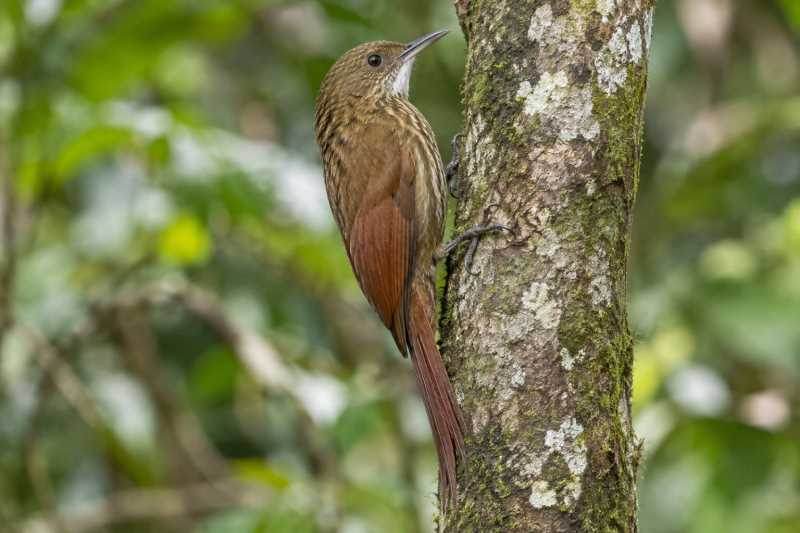
The White-chinned Woodcreeper is a medium-sized bird, measuring approximately 18 to 22 centimeters in length. Its plumage is predominantly brown, which helps it blend seamlessly into the forest environment. The defining feature of this bird is its white chin and throat, which contrasts sharply with its otherwise dark brown feathers. This bird has a slender, slightly curved bill, well adapted for foraging on tree bark and foliage. The legs are strong and equipped with sharp claws, enabling the bird to cling to tree trunks with ease.
Habitat and Distribution
The White-chinned Woodcreeper is primarily found in the tropical and subtropical forests of South America. Its range includes countries such as Brazil, Colombia, Ecuador, Peru, and Bolivia. This bird is commonly associated with humid lowland forests and can often be found at elevations ranging from sea level to 1,200 meters. The dense canopy of these forests provides an ideal environment for the White-chinned Woodcreeper, offering abundant foraging opportunities and protection from predators.
Behavior and Ecology
The White-chinned Woodcreeper is known for its solitary and secretive nature. It is typically observed alone or in pairs, although it may occasionally join mixed-species foraging flocks. This bird is an adept climber and spends much of its time foraging on tree trunks and branches, using its strong legs and claws to move vertically with ease.
The feeding behavior of the White-chinned Woodcreeper is highly specialized. It primarily feeds on insects and other small invertebrates, which it gleans from the bark and foliage. Its long, curved bill is perfectly suited for probing crevices and extracting hidden prey. This bird also uses a technique known as "pecking," similar to that of woodpeckers, to dislodge insects from tree bark.
Reproduction and Life Cycle
The breeding season of the White-chinned Woodcreeper varies depending on its geographic location, but it generally occurs during the rainy season when food is abundant. The nest is typically built in a tree cavity or a natural crevice, providing safety and security for the eggs and chicks.
The female lays a clutch of two to three eggs, which are incubated for approximately two weeks. Both parents participate in feeding and caring for the chicks until they fledge, which occurs about 20 to 25 days after hatching. The fledglings continue to receive parental care for several weeks after leaving the nest, gradually learning to forage and survive on their own.
Vocalizations
The vocalizations of the White-chinned Woodcreeper are characterized by a series of melodious whistles and trills. These calls are used for communication between individuals, especially during the breeding season when establishing territories is crucial. The bird’s song is considered to be less complex than those of other passerine birds, but it serves its purpose effectively in the dense forest environment.
Conservation Status
The White-chinned Woodcreeper is currently listed as a species of Least Concern by the International Union for Conservation of Nature (IUCN). Despite this classification, the species faces several threats due to habitat loss and degradation. Deforestation for agriculture, logging, and urban development poses significant risks to the bird’s natural habitat. Conservation efforts are essential to ensure the long-term survival of this species and the preservation of its rainforest home.
Conclusion
The White-chinned Woodcreeper is a remarkable bird that embodies the beauty and complexity of the neotropical rainforest ecosystem. Its unique adaptations and behaviors make it a subject of interest for ornithologists and bird enthusiasts alike. Protecting the habitats of species like the White-chinned Woodcreeper is crucial for maintaining biodiversity and ecological balance in the regions they inhabit.
Further Research
Continued research and monitoring of the White-chinned Woodcreeper populations are necessary to better understand their ecological roles and responses to environmental changes. Collaborative conservation efforts involving local communities, governments, and international organizations can help safeguard the future of this and many other forest-dependent species.
By raising awareness and promoting sustainable practices, we can contribute to the preservation of the incredible biodiversity found within the rainforests of South America.
References
- BirdLife International. (2022). Species factsheet: Dendrocincla merula. Retrieved from BirdLife International website.
- Cornell Lab of Ornithology. (2022). White-chinned Woodcreeper Overview. Retrieved from Cornell Lab website.
- Ridgely, R. S., & Tudor, G. (2009). Field Guide to the Songbirds of South America: The Passerines. University of Texas Press.
- Schulenberg, T. S., Stotz, D. F., Lane, D. F., O’Neill, J. P., & Parker III, T. A. (2007). Birds of Peru. Princeton University Press.
Related posts