The White-crested Elaenia: A Comprehensive Overview
The White-crested Elaenia (Elaenia albiceps) is a fascinating bird species belonging to the Tyrannidae family, which encompasses tyrant flycatchers. Known for its distinctive white crest, this bird is a testament to the diversity and adaptability of avian species across South America. This article delves into the various aspects of the White-crested Elaenia, including its habitat, behavior, diet, and significance in the ecosystem.
Taxonomy and Classification
The White-crested Elaenia is scientifically classified under the genus Elaenia, which consists of several similar species. The species name “albiceps” is derived from Latin, meaning “white-headed,” a reference to its notable crest. Within its taxonomy, the White-crested Elaenia is further divided into several subspecies, each with slight variations in plumage and size, reflecting its adaptation to different environmental conditions.
Physical Description
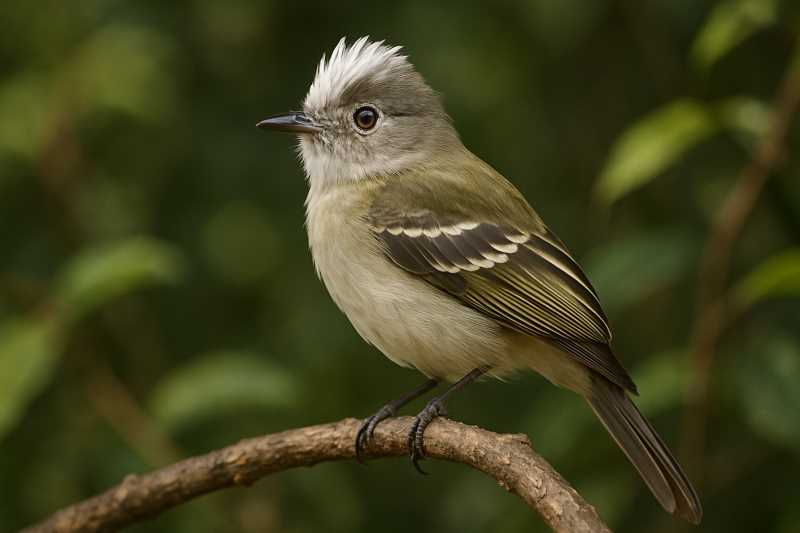
One of the most striking features of the White-crested Elaenia is its white crest, which can be raised or lowered depending on the bird’s mood or activity. This small to medium-sized bird typically measures about 15 cm in length. Its plumage is predominantly olive-green on the upper parts, with a lighter, often whitish, underbelly. The wings and tail are usually darker, creating a subtle contrast that aids in camouflage among foliage.
Habitat and Distribution
The White-crested Elaenia is widely distributed across South America, found in countries such as Argentina, Bolivia, Brazil, Chile, Colombia, Ecuador, Paraguay, Peru, and Uruguay. Its preferred habitats include subtropical or tropical dry forests, moist lowland forests, and high-altitude shrubland. This broad range of habitats demonstrates the species’ adaptability to different environmental conditions.
During the breeding season, the White-crested Elaenia prefers temperate regions, often migrating to higher altitudes. In contrast, it moves to lower elevations and warmer areas during the non-breeding season, showcasing its migratory behavior to exploit seasonal resources efficiently.
Behavior and Social Structure
The White-crested Elaenia is primarily a solitary bird, although it can sometimes be observed in small groups, especially during migration. It is known for being quite territorial, particularly during the breeding season, when males actively defend their nesting grounds through vocal displays and physical posturing.
Its vocalizations are a key aspect of its behavior, with a repertoire of calls used for communication, territory defense, and attracting mates. The calls are typically high-pitched and melodious, contributing to the soundscape of its natural habitat.
Diet and Feeding Habits
As an insectivorous bird, the White-crested Elaenia primarily feeds on a diet of insects and other arthropods. It employs a “flycatching” technique, perching on a vantage point before making agile aerial sallies to capture prey mid-flight. This feeding strategy not only sustains the bird but also helps regulate insect populations, highlighting its ecological role.
In addition to insects, the White-crested Elaenia occasionally consumes fruits and berries, especially when insect availability is low. This dietary flexibility allows it to thrive in various environments and cope with seasonal fluctuations in food resources.
Breeding and Reproduction
The breeding season of the White-crested Elaenia varies across its range but generally occurs during the warmer months when food is abundant. Nesting takes place in trees or shrubs, with the female building a cup-shaped nest from twigs, grasses, and other plant materials.
Typically, the female lays two to three eggs, which she incubates for about two weeks. After hatching, both parents participate in feeding and caring for the chicks until they fledge. The reproductive success of the White-crested Elaenia is closely tied to food availability and habitat quality, emphasizing the importance of conserving its natural environments.
Conservation Status
Currently, the White-crested Elaenia is classified as Least Concern by the International Union for Conservation of Nature (IUCN). This status reflects its wide distribution and stable population numbers. However, habitat destruction and fragmentation, particularly due to agricultural expansion and deforestation, pose potential threats to its long-term survival.
Conservation efforts aimed at preserving forests and natural landscapes are essential to ensure the continued existence of this species and the ecological balance it helps maintain. Additionally, research and monitoring programs can provide valuable insights into population trends and inform conservation strategies.
Conclusion
The White-crested Elaenia is a remarkable bird that exemplifies the adaptability and resilience of avian species. Its distinctive appearance, wide-ranging habitats, and ecological significance make it a subject of interest for ornithologists and bird enthusiasts alike. As we continue to learn more about this species, we can better appreciate the intricate connections between wildlife and their environments, fostering a greater commitment to conservation and biodiversity.
In summary, the White-crested Elaenia is not just a bird with a white crest; it is a vital component of South America’s avian diversity, playing a crucial role in its ecosystems. Protecting its habitats ensures that future generations can enjoy and study this remarkable species.
Related posts