The Streak-backed Canastero: A Hidden Gem of the Andean Highlands
The Streak-backed Canastero (Asthenes wyatti), a member of the Furnariidae family, is a captivating bird species that has intrigued ornithologists and birdwatchers alike. Inhabiting the high-altitude regions of the Andes, this elusive bird is often overshadowed by its more flamboyant avian neighbors. However, its subtle charm and unique adaptations make the Streak-backed Canastero a fascinating subject of study.
Habitat and Distribution
The Streak-backed Canastero is primarily found in the Andean regions of South America, with its range extending across Colombia, Ecuador, Peru, Bolivia, and northern Chile. This bird thrives in the rugged terrain of the high-altitude páramo and puna grasslands, which can be found at elevations ranging from 2,500 to over 4,000 meters above sea level.
These habitats are characterized by their harsh climatic conditions, with cold temperatures, strong winds, and low oxygen levels. Despite these challenges, the Streak-backed Canastero has adapted remarkably well, utilizing the sparse vegetation and rocky outcrops to its advantage. The bird often constructs its nest in crevices or among dense shrubs, providing protection against predators and the elements.
Physical Characteristics
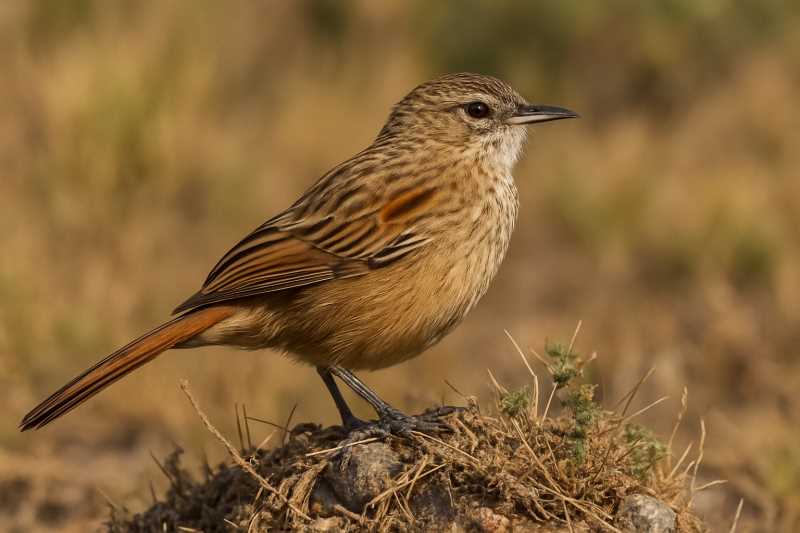
The Streak-backed Canastero may not boast the vibrant plumage of some of its avian counterparts, but its understated beauty is nonetheless captivating. It measures approximately 16 to 18 centimeters in length, with a wingspan of about 20 to 23 centimeters. The bird’s most distinctive feature is its streaked back, which gives it its common name. These streaks, in various shades of brown and grey, provide excellent camouflage against the rocky Andean landscape.
The rest of the bird’s plumage is primarily brown, with subtle variations that help it blend seamlessly into its environment. Its underparts are lighter, typically a pale buff or grey, and the bird’s long, slightly curved bill is well-suited for extracting insects and other small invertebrates from crevices and dense foliage.
Behavior and Diet
The Streak-backed Canastero is a highly active and industrious bird, often seen flitting among rocks and shrubs in search of food. Its diet consists mainly of insects and other small invertebrates, which it skillfully extracts from the undergrowth using its specialized bill. The bird is also known to consume seeds and plant material, particularly during the breeding season when protein-rich food sources may be scarce.
Canasteros are generally solitary or found in pairs, maintaining territories that they defend vigorously against intruders. During the breeding season, which typically occurs from September to December, these birds become particularly vocal, using a series of high-pitched calls to communicate with potential mates and ward off rivals.
Breeding and Nesting
Nesting is a critical aspect of the Streak-backed Canastero’s life cycle. The bird constructs its nest from grass, twigs, and other plant materials, often incorporating wool or feathers for insulation. These nests are strategically placed in sheltered locations, such as rock crevices or dense shrubbery, to protect the eggs and chicks from predators and harsh weather.
A typical clutch consists of two to three eggs, which are incubated by both parents for approximately 14 to 16 days. Once hatched, the chicks are tended to by both parents, who diligently provide food and protection until the young are ready to fledge, usually about three weeks after hatching.
Conservation Status and Threats
Currently, the Streak-backed Canastero is classified as a species of Least Concern by the International Union for Conservation of Nature (IUCN). This status is largely due to its wide distribution and stable population numbers. However, like many high-altitude species, the Streak-backed Canastero faces potential threats from climate change, habitat loss, and human encroachment.
Climate change poses a particular risk to the bird’s habitat, as rising temperatures and changing precipitation patterns could alter the delicate balance of the páramo and puna ecosystems. Additionally, agricultural expansion and infrastructure development in the Andes threaten to encroach upon the bird’s natural habitat, potentially leading to population declines in the future.
Conclusion
The Streak-backed Canastero is a testament to the resilience and adaptability of life in the harsh conditions of the Andean highlands. While it may not be as conspicuous as some of its colorful counterparts, its unique adaptations and behaviors make it a worthy subject of admiration and study. Continued research and conservation efforts are crucial to ensuring the survival of this remarkable species in the face of environmental change.
As birdwatchers and conservationists continue to explore the remote regions of the Andes, the Streak-backed Canastero serves as a reminder of the incredible biodiversity that exists in these isolated and often overlooked habitats. By appreciating and protecting such species, we contribute to the preservation of the world’s natural heritage for future generations.
Related posts