West Solomons Owl: A Unique Avian Resident of the Pacific Islands
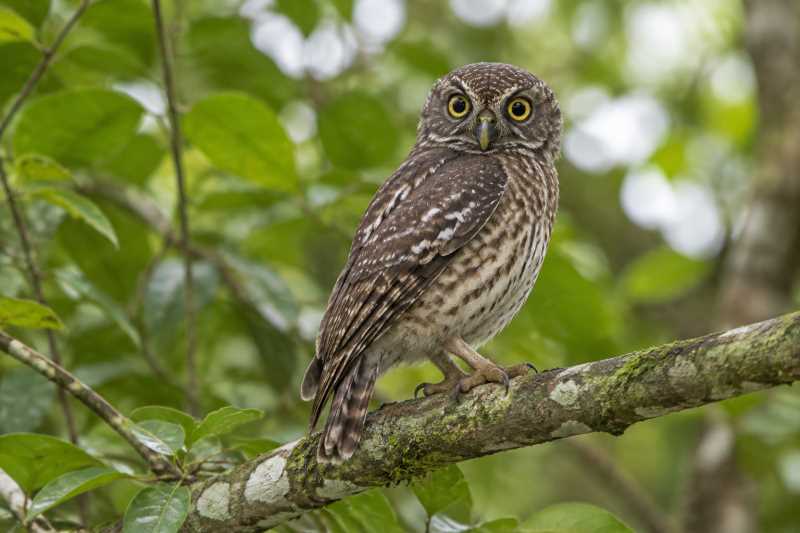
The West Solomons Owl (Athene jacquinoti), a captivating bird of prey, inhabits the dense forests of the Solomon Islands, a stunning archipelago in the Pacific Ocean. Despite its elusive nature, this owl holds a special place in the intricate tapestry of island biodiversity, showcasing unique adaptations and characteristics that make it an integral part of its ecosystem.
Natural Habitat
The West Solomons Owl is endemic to the Solomon Islands, primarily residing in the lush, humid lowland and montane forests that dominate the landscape. These owls prefer habitats that provide ample cover and abundant prey, often found in dense forests with a rich undergrowth layer. The islands’ isolation has led to a distinct ecosystem where many species, including the West Solomons Owl, have evolved unique traits to adapt to their specific environment.
Physical Characteristics
Measuring approximately 20 to 25 centimeters in length, the West Solomons Owl is relatively small compared to other owl species. It sports a distinctive appearance with mottled brown and white plumage, providing excellent camouflage against the forest floor and tree bark. Its large, expressive eyes are perfectly adapted for nocturnal hunting, allowing it to spot prey in the dim light of the forest understory. The owl’s rounded wings and silent flight enable it to move stealthily through its habitat, a crucial adaptation for both hunting and avoiding predators.
Behavior and Diet
Primarily nocturnal, the West Solomons Owl is most active during the night when it embarks on hunting expeditions. Its diet consists mainly of small mammals, insects, and occasionally other birds. Using its acute sense of hearing and exceptional night vision, the owl is an expert hunter, capable of detecting the slightest movement in the underbrush. Its hunting technique involves perching silently and swooping down on unsuspecting prey with remarkable precision.
Reproduction and Lifespan
The breeding habits of the West Solomons Owl are still not entirely understood due to its elusive nature. However, it is believed that, like many owl species, it nests in tree cavities or abandoned nests of other birds. The female typically lays a small clutch of eggs, and both parents are involved in nurturing and feeding the young. The lifespan of the West Solomons Owl is not well-documented, but it is presumed to be similar to other small owls, living anywhere from 10 to 15 years in the wild, depending on environmental conditions and predation pressures.
Conservation Status
The conservation status of the West Solomons Owl has been a subject of concern among ornithologists and conservationists. The bird is currently classified as Near Threatened, primarily due to habitat loss and degradation. The rapid deforestation in the Solomon Islands, driven by logging and agricultural expansion, poses a significant threat to the owl’s natural habitat. Conservation efforts are underway to protect the remaining forests and ensure the survival of this and other endemic species. Local and international conservation organizations are collaborating to promote sustainable land-use practices and enhance protected areas.
Importance in Ecosystem
The West Solomons Owl plays a vital role in maintaining the ecological balance within its habitat. As a predator, it helps control the populations of small mammals and insects, preventing them from becoming overabundant. This regulation is crucial for maintaining the health and diversity of the forest ecosystem. Additionally, the presence of the West Solomons Owl serves as an indicator of forest health and biodiversity, as its survival is closely linked to the well-being of its habitat.
Challenges and Future Prospects
While efforts are being made to conserve the West Solomons Owl, numerous challenges remain. The ongoing threat of habitat destruction, coupled with climate change, poses significant risks to the owl’s survival. Rising temperatures and changing weather patterns could alter the availability of prey and suitable nesting sites, further exacerbating the pressures on this species. However, with increased awareness and targeted conservation strategies, there is hope for the future of the West Solomons Owl.
Conservationists are advocating for more comprehensive surveys and research to better understand the owl’s ecology and behavior, which is essential for developing effective conservation plans. Community engagement and education are also crucial components, as local populations play a vital role in preserving the natural environment. By fostering a greater appreciation for the unique biodiversity of the Solomon Islands, it is possible to create a sustainable future for the West Solomons Owl and the myriad other species that share its habitat.
In summary, the West Solomons Owl is not just a fascinating bird; it is a symbol of the rich natural heritage of the Solomon Islands. Protecting this species requires a concerted effort from local communities, governments, and international organizations. Through collaborative conservation efforts, the West Solomons Owl can continue to thrive as a testament to the incredible diversity of life on our planet.
Related posts