The Wattled Jacana: Master of the Marshlands
The Wattled Jacana (Jacana jacana) is a captivating bird species renowned for its striking appearance and remarkable adaptation to life in aquatic environments. Found predominantly in the wetlands of Central and South America, this species is a testament to the wonders of avian evolution and ecological specialization. This article delves into the unique characteristics, habitat, behavior, and conservation status of the Wattled Jacana, offering a comprehensive overview of this fascinating bird.
Physical Characteristics
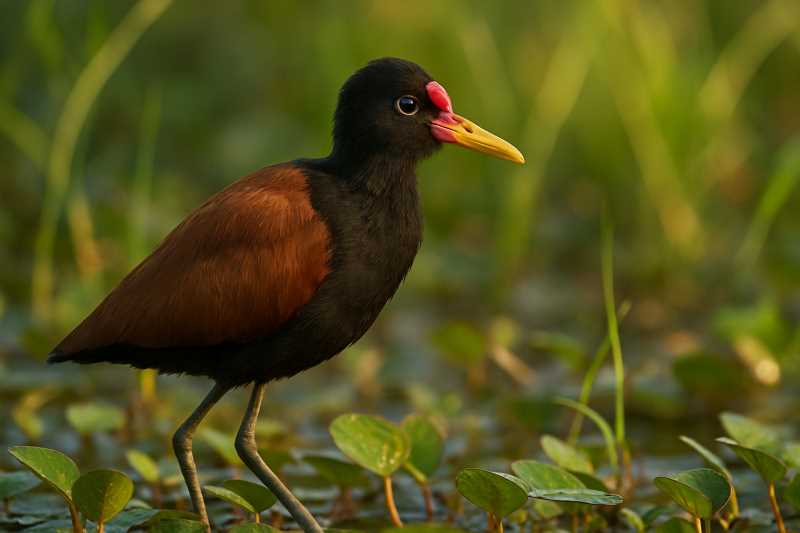
The Wattled Jacana is easily identifiable by its distinct features. Adult birds measure approximately 20 to 25 centimeters in length, with a wingspan ranging from 40 to 55 centimeters. One of the most notable characteristics is the bird’s elongated toes and claws, which can measure up to 7 centimeters. These adaptations allow the Jacana to gracefully walk on floating vegetation, an ability that has earned it the nickname “lily-trotter.”
The plumage of the Wattled Jacana is a striking combination of deep chestnut and black, with the wings displaying a golden-yellow hue that is particularly visible during flight. The most distinctive feature, however, is the wattled frontal shield—a fleshy, red appendage that stretches from the base of the bill to the forehead. This vibrant wattle is not only a key identifying feature but also plays a role in social interactions and mating displays.
Habitat and Distribution
Wattled Jacanas inhabit freshwater wetlands, including marshes, ponds, and lakes with abundant floating vegetation. Their range extends from Panama in the north to Argentina in the south, making them a common sight in countries such as Brazil, Venezuela, and Colombia. These habitats provide ample resources for foraging, nesting, and raising chicks.
The bird’s distribution is closely tied to the availability of suitable wetland environments. Seasonal changes in water levels can influence local populations, prompting migration to more favorable areas. Despite this, the Wattled Jacana is considered a resident species, with most individuals remaining within a relatively confined geographic range throughout the year.
Feeding Behavior and Diet
The Wattled Jacana is primarily insectivorous, feeding on a diverse array of invertebrates found in its aquatic habitat. Its diet includes insects, snails, spiders, and small fish. The bird’s foraging technique is both efficient and graceful; it uses its long toes to navigate floating vegetation, deftly picking prey from the water’s surface or beneath leaves.
Interestingly, the Wattled Jacana is also known to consume plant material, particularly seeds and small fruits. This dietary flexibility allows the bird to thrive in environments where insect populations may fluctuate seasonally.
Reproductive Behavior and Social Structure
One of the most fascinating aspects of the Wattled Jacana’s life history is its polyandrous mating system. In this arrangement, females are larger and more dominant than males, often maintaining harems consisting of multiple partners. The female lays eggs in the nests of several males, each of whom assumes responsibility for incubation and chick-rearing.
Nests are typically constructed on floating vegetation, providing protection from terrestrial predators. The eggs, numbering between four to six per clutch, are incubated for about 22 to 28 days. Once hatched, chicks are precocial, leaving the nest shortly after birth to follow their father as he forages.
This unusual role reversal in parental care is a rare phenomenon in the avian world, highlighting the unique evolutionary strategies employed by the Wattled Jacana to ensure reproductive success.
Conservation Status and Threats
Currently, the Wattled Jacana is classified as a species of “Least Concern” by the International Union for Conservation of Nature (IUCN). This status is largely due to its wide distribution and stable population numbers. However, the bird faces several threats that could impact its long-term survival.
Habitat loss and degradation, primarily due to agricultural expansion and urban development, pose significant challenges to the preservation of wetland ecosystems. Pollution, particularly from pesticides and industrial runoff, can also adversely affect the quality of the bird’s habitat and food sources.
Climate change represents another looming threat, with altered precipitation patterns and rising temperatures potentially impacting wetland hydrology. Conservation efforts aimed at protecting and restoring wetland habitats are crucial for ensuring the continued survival of the Wattled Jacana and the myriad other species that depend on these ecosystems.
Conclusion
The Wattled Jacana is a remarkable example of nature’s adaptability and diversity. Its unique physical adaptations, intriguing social structure, and vibrant appearance make it a subject of fascination for ornithologists and birdwatchers alike. As we continue to explore and understand the intricate web of life that exists within our planet’s ecosystems, the Wattled Jacana serves as a reminder of the importance of conservation efforts in preserving the rich tapestry of biodiversity that sustains us all.
Related posts