The Enigmatic Petit’s Cuckooshrike: A Comprehensive Insight
In the lush, verdant forests of Central Africa, where biodiversity teems and the chorus of avian calls fills the air, resides a bird of understated elegance: Petit’s Cuckooshrike (Campephaga petiti). Despite its relatively unassuming presence, this bird plays a crucial role in the ecosystem, contributing to the intricate tapestry of life in its habitat. This article delves into the various facets of Petit’s Cuckooshrike, exploring its characteristics, behavior, habitat, and the conservation efforts necessary to ensure its survival.
Physical Characteristics
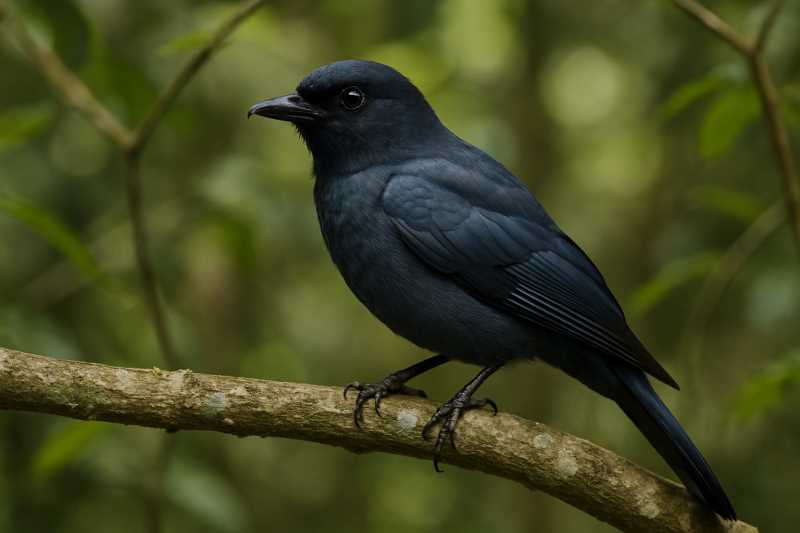
Petit’s Cuckooshrike is a medium-sized bird, with a length ranging from 20 to 25 centimeters. It exhibits sexual dimorphism, where males and females differ in coloration. Males typically showcase a striking black plumage with a subtle sheen, which can appear bluish under certain light conditions. Their appearance is complemented by a robust, slightly hooked bill adapted for their insectivorous diet.
On the other hand, females are generally more subdued in coloration. They display a greyish tone with streaks or spots, which provides effective camouflage against predators. This dimorphism not only aids in identification but also suggests differences in roles and behaviors between the genders.
Habitat and Distribution
Petit’s Cuckooshrike is predominantly found in the tropical and subtropical moist forests of Central Africa. Countries such as the Democratic Republic of Congo, Uganda, and Gabon host populations of this bird, where they thrive in the dense canopy layers. These regions offer an abundance of food resources and nesting sites, critical for the survival of the species.
Unlike many birds that adapt to urban or semi-urban environments, Petit’s Cuckooshrike prefers the undisturbed forest interior. This preference for pristine habitats makes them particularly susceptible to habitat destruction, a growing concern due to logging, agriculture, and human encroachment.
Behavior and Diet
As an insectivorous species, Petit’s Cuckooshrike primarily feeds on a variety of insects and arthropods. It employs a methodical approach to foraging, often seen gleaning insects from leaves and branches. Their diet is supplemented by occasional fruits and seeds, showcasing their adaptability in food selection.
Socially, these birds are relatively discreet, often observed alone or in pairs rather than flocks. Their calls are soft and melodious, contributing to the symphony of the forest without overpowering it. During the breeding season, which aligns with the rainy season to ensure the availability of food, males engage in subtle displays to attract females, including soft vocalizations and aerial maneuvers.
Reproduction and Lifespan
The breeding habits of Petit’s Cuckooshrike are characterized by monogamous pair bonds. After selecting a suitable partner, the pair works together to construct a nest, typically a cup-shaped structure made from twigs and leaves, securely placed in the fork of a tree branch.
The female lays a clutch of two to three eggs, which both parents incubate. This cooperative breeding behavior extends to chick rearing, with both parents actively involved in feeding and protecting the young. The fledgling period is relatively short, with chicks becoming independent within a few weeks of hatching.
Conservation Status and Efforts
Currently, Petit’s Cuckooshrike is not classified as endangered. However, its dependence on forest ecosystems makes it vulnerable to habitat loss. Deforestation for timber, agriculture, and infrastructure development poses significant threats to their natural habitats.
Conservation efforts focus on habitat preservation and sustainable land use practices. Establishing and maintaining protected areas where logging and agricultural activities are restricted can provide safe havens for Petit’s Cuckooshrike and other forest-dependent species.
Additionally, raising awareness about the impact of habitat destruction on bird populations is crucial. Local communities play a vital role in conservation, and educating them about the importance of biodiversity can foster stewardship and active participation in conservation initiatives.
Conclusion
Petit’s Cuckooshrike, with its subtle beauty and ecological significance, embodies the delicate balance of life within Central Africa’s forests. While not immediately threatened, the specter of habitat loss looms large, making it imperative for conservation efforts to prioritize the preservation of these vital ecosystems. By understanding and valuing each species’ role, like that of Petit’s Cuckooshrike, we can work towards a sustainable future where both humans and wildlife thrive.
Related posts