Introduction
The Black-fronted Duiker (Cephalophorus nigrifrons) is a captivating and elusive species of antelope native to the dense forests of Central and West Africa. Known for its distinctive markings and secretive nature, this small ungulate plays an important ecological role in its habitat, contributing to seed dispersal and forest dynamics. Despite its importance, the Black-fronted Duiker faces numerous challenges, including habitat loss and hunting pressures, making it a species of conservation concern. This article delves into the intricate details of the Black-fronted Duiker’s life, from its physical characteristics and habitat to its behavior and conservation status.
Physical Description
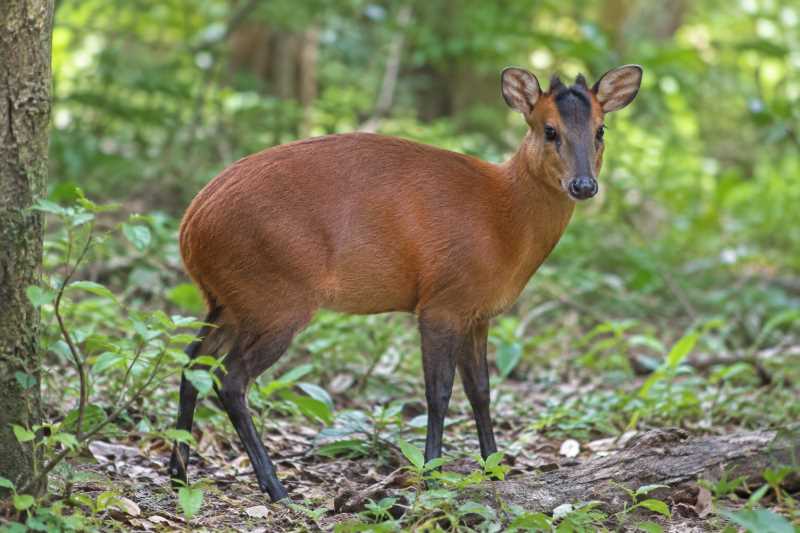
The Black-fronted Duiker is a small, stocky antelope characterized by its striking coloration and compact build. Adults typically weigh between 15 to 20 kilograms and stand about 40 to 50 centimeters tall at the shoulder, with males generally being slightly larger than females. The most distinctive feature of this species is the black markings on the face, which give the duiker its name. These markings are contrasted by a chestnut to reddish-brown coat that covers most of the body. The underparts are usually lighter in color, creating a subtle gradient that aids in camouflage within the forest understory.
The duiker’s horns are relatively short, measuring about 5 to 10 centimeters in length, and are present in both sexes. These horns are straight and slightly ridged, serving primarily for defense and intraspecific competition rather than foraging. The species’ large, rounded ears are highly sensitive, allowing them to detect predators and other threats in their dense forest habitat.
Range and Habitat
The Black-fronted Duiker is primarily found in the tropical rainforests of Central and West Africa. Its range extends from southeastern Nigeria, through Cameroon, Gabon, and the Democratic Republic of the Congo, reaching as far east as Uganda and Rwanda. This species favors dense, primary forests with a thick understory, which provides ample cover and abundant food resources. They are also known to inhabit secondary forests and areas of regrowth, indicating some level of adaptability to habitat changes, although they prefer regions with minimal human disturbance.
These duikers are typically found at altitudes ranging from sea level up to 3,000 meters, but they are most commonly associated with lowland forests. The dense vegetation not only supplies the necessary dietary needs but also offers protection from predators and human hunters.
Behavior and Diet
Black-fronted Duikers are primarily diurnal, with peak activities occurring during the early morning and late afternoon. They are solitary creatures, although they may sometimes be observed in pairs, particularly during mating seasons. These duikers are highly territorial, marking their territories with secretions from facial glands and engaging in vocalizations to communicate with conspecifics.
Their diet consists mainly of fruits, leaves, seeds, and shoots, making them crucial agents of seed dispersal within their ecosystems. The duikers have a unique feeding strategy, often following troops of monkeys or birds to exploit the fruits dropped from the canopy. This symbiotic relationship highlights the importance of the Black-fronted Duiker in maintaining forest biodiversity.
Identification Tips (Field Recognition Cues)
Identifying the Black-fronted Duiker in the wild can be challenging due to its elusive nature and the dense habitats it occupies. However, there are several key features and behaviors that can aid in recognition:
- Facial Markings: Look for the distinctive black facial markings that contrast with a reddish-brown body coat.
- Size and Build: Note the small, stocky build typical of duikers, standing around 40 to 50 cm tall.
- Horns: Both sexes possess short, straight horns that are usually between 5 to 10 cm in length.
- Behavior: Observe the duiker’s solitary behavior and tendency to remain within dense vegetation, often staying motionless when threatened.
- Habitat: Focus on areas of primary or secondary tropical forests, particularly regions with minimal human disturbance.
Conservation Status (With Threats and Protections)
The Black-fronted Duiker is currently classified as Near Threatened on the IUCN Red List of Threatened Species. The primary threats to this species include habitat destruction due to logging, agricultural expansion, and infrastructure development. Hunting pressure, driven by the bushmeat trade, also poses a significant risk to their populations.
Conservation efforts are underway to protect the duiker’s habitat and curb hunting practices. Protected areas, such as national parks and wildlife reserves, play a crucial role in preserving critical habitats. Furthermore, community-based conservation programs aim to involve local populations in sustainable resource management, offering alternative livelihoods to reduce reliance on hunting.
Frequently Asked Questions
How can I spot a Black-fronted Duiker in the wild?
Spotting a Black-fronted Duiker requires patience and knowledge of their habitat preferences. Look for them in dense tropical forests during early morning or late afternoon, and focus on areas with minimal human disturbance. Watching for their distinctive black facial markings and listening for their subtle vocalizations can also aid in identification.
What role do Black-fronted Duikers play in their ecosystem?
Black-fronted Duikers play a vital role in seed dispersal, which is crucial for maintaining forest biodiversity. By consuming fruits and defecating seeds in different locations, they help promote plant regeneration and contribute to the overall health of their ecosystem.
What conservation measures are in place for Black-fronted Duikers?
Conservation measures for Black-fronted Duikers include habitat protection through national parks and reserves, as well as community-based programs that focus on sustainable resource management. These efforts aim to reduce habitat destruction and hunting pressures, ensuring the species’ long-term survival.
Are Black-fronted Duikers dangerous to humans?
Black-fronted Duikers are not dangerous to humans. They are shy and elusive animals that tend to avoid human contact. Any encounter with a duiker is typically brief as they prefer to retreat into dense vegetation when approached.
What threats do Black-fronted Duikers face?
The main threats to Black-fronted Duikers include habitat loss due to deforestation, agricultural expansion, and hunting for bushmeat. These pressures have led to a decline in their population, emphasizing the need for effective conservation strategies.
Related posts