The Ural Owl: A Silent Sentinel of the Forests
The Ural Owl (Strix uralensis) is an enigmatic and captivating species that inhabits the dense boreal forests of Europe and Asia. Known for its haunting calls and piercing stare, the Ural Owl is a silent sentinel of the forest, playing a crucial role in the ecosystem. This article delves into the intriguing characteristics, habitat, behavior, and conservation status of this remarkable bird.
Characteristics and Identification
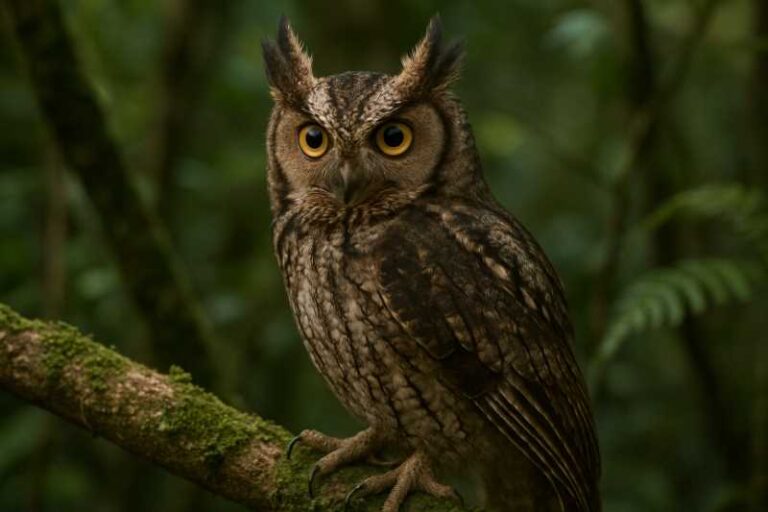
The Ural Owl is a medium to large-sized bird, with a body length ranging from 50 to 60 centimeters and a wingspan of approximately 110 to 134 centimeters. It possesses a distinctive round head, adorned with a facial disk that is pale in color with dark concentric rings around its dark eyes. This owl’s plumage is predominantly grey-brown, with a pattern of streaks and bars that provide excellent camouflage against the forest backdrop.
One of the most notable characteristics of the Ural Owl is its vocalization. It emits a series of deep, resonant hoots that can be heard echoing through the forest, particularly during the breeding season. These calls are not only used for communication between mates but also serve as a territorial proclamation, warning potential intruders of their presence.
Habitat and Distribution
The Ural Owl inhabits a vast range across the boreal forests of Europe and Asia, extending from Scandinavia and the Baltic States through Russia and the Russian Far East, reaching as far as Japan. It favors mixed and coniferous forests, often in undisturbed areas with a rich undergrowth and plenty of old trees. These environments provide ample nesting sites and a diverse prey base, which is crucial for their survival.
This species is highly adaptable and can be found at varying altitudes, from lowland forests to mountainous regions. However, they tend to avoid areas with high human activity, preferring remote and secluded habitats where they can hunt and breed with minimal disturbance.
Diet and Hunting Behavior
The Ural Owl is a formidable predator, primarily feeding on small mammals such as voles, mice, and shrews. It is also known to prey on birds, amphibians, and insects when the opportunity arises. Its hunting technique is characterized by a combination of patient observation and swift, silent flight. The owl’s exceptional hearing allows it to detect prey even in complete darkness, honing in on the slightest sounds of rustling leaves or movement in the underbrush.
Once the prey is located, the Ural Owl swoops down with remarkable precision, capturing its target with powerful talons. This efficiency in hunting not only ensures its survival but also helps regulate the populations of small mammals in its habitat, maintaining ecological balance.
Breeding and Reproduction
Breeding season for the Ural Owl typically begins in late winter to early spring. The species is monogamous, with pairs often remaining together for life. They prefer to nest in tree cavities, often utilizing old woodpecker holes or natural crevices in mature trees. In some cases, they may also occupy abandoned nests of other large birds.
A typical clutch consists of two to four eggs, which the female incubates for about a month while the male provides food. Once hatched, the chicks are altricial, meaning they are born relatively undeveloped and require significant parental care. Both parents are involved in feeding and protecting the young until they fledge, which occurs around five to six weeks after hatching.
Conservation Status and Threats
While the Ural Owl is not currently considered endangered, certain populations face threats from habitat destruction and fragmentation, primarily due to logging and land conversion. Climate change also poses a potential threat, as shifts in temperature and weather patterns could impact their prey availability and suitable habitat.
Conservation efforts for the Ural Owl focus on protecting their natural habitats, promoting sustainable forestry practices, and raising awareness about the importance of preserving old-growth forests. In some regions, nest boxes are being installed to provide additional nesting sites, aiding in the stabilization of local populations.
Conclusion
The Ural Owl is a remarkable species that embodies the mystery and beauty of the boreal forests. Its role as a predator and its haunting calls enrich the biodiversity of its environment, making it an invaluable component of the ecosystem. Understanding and protecting this owl is vital for maintaining ecological balance and ensuring the health of the forests it calls home.
By fostering awareness and implementing conservation measures, we can help secure a future for the Ural Owl, ensuring that its haunting calls continue to echo through the forests for generations to come.
Related posts