The Tawny-throated Dotterel: A Jewel of the South American Grasslands
The Tawny-throated Dotterel (Oreopholus ruficollis) is a captivating bird species that graces the high-altitude grasslands and open landscapes of South America. With its unique appearance and fascinating behaviors, this bird has piqued the interest of ornithologists and bird enthusiasts alike. In this article, we delve into the life and characteristics of the Tawny-throated Dotterel, exploring its habitat, behavior, conservation status, and the significance it holds within its ecosystem.
Appearance and Identification
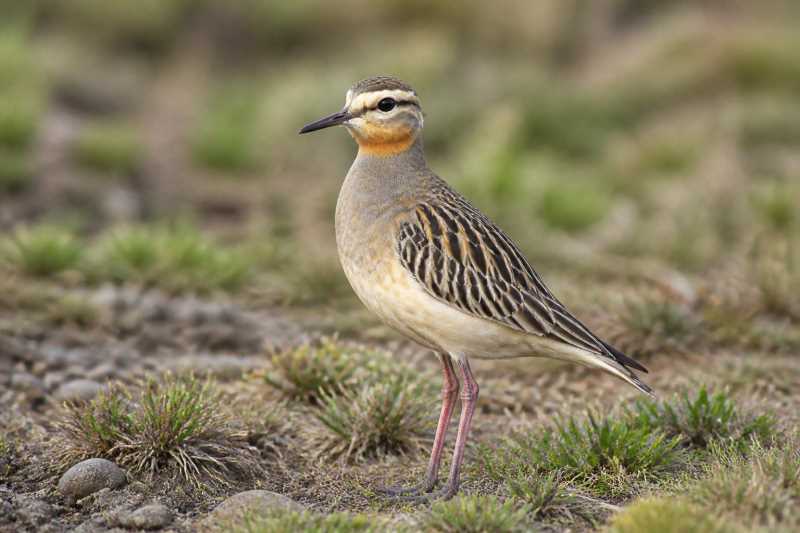
The Tawny-throated Dotterel is a medium-sized shorebird, distinguishable by its striking plumage and elegant posture. It measures approximately 27 to 31 centimeters in length, with a wingspan that can reach up to 60 centimeters. The bird’s most notable feature is its tawny-colored throat, which contrasts beautifully with its greyish-brown upperparts and white underparts. The dotterel also exhibits a distinct facial pattern, characterized by a white eyebrow stripe and a dark line running through its eye, giving it a sharp and alert expression.
The bird’s long, slender legs are adapted for traversing its grassy habitat, and its slightly upturned bill is ideal for foraging. During the breeding season, males and females exhibit similar plumage, although males may appear slightly brighter. Juveniles resemble adults but with more subdued coloring.
Habitat and Distribution
Oreopholus ruficollis is predominantly found in the temperate and subtropical grasslands of South America. Its range extends from southern Peru and Bolivia through Argentina, Chile, Uruguay, and into the southern regions of Brazil. The bird favors open environments such as puna grasslands, pampas, and altiplano regions, often at elevations between 3000 and 4500 meters.
The dotterel’s preference for high-altitude grasslands is driven by its dietary and nesting needs. These areas provide an abundance of invertebrates, seeds, and plant material, which constitute the bird’s primary diet. The open landscapes also offer suitable sites for nesting, where the bird’s cryptic plumage provides excellent camouflage against potential predators.
Behavior and Diet
The Tawny-throated Dotterel is a ground-dwelling bird known for its intriguing foraging behavior. It primarily feeds on insects, spiders, and other small invertebrates, which it hunts by running swiftly across the ground and then making sudden stops to peck at prey. The bird may also consume seeds and plant material, particularly during the non-breeding season when insect availability is reduced.
Socially, the Tawny-throated Dotterel is often observed in small flocks, especially outside the breeding season. These flocks can include other shorebird species, with which the dotterels share their habitat. During the breeding season, however, pairs become territorial, actively defending their nesting sites from intruders.
The breeding season for the Tawny-throated Dotterel typically occurs between September and December, coinciding with the austral spring and summer. The bird nests on the ground, creating a simple scrape lined with grass and leaves. Clutch size usually consists of two to three eggs, which are incubated by both parents. The chicks are precocial, meaning they are relatively mature and mobile shortly after hatching, allowing them to quickly adapt to their environment.
Conservation Status and Threats
Currently, the Tawny-throated Dotterel is listed as a species of Least Concern by the International Union for Conservation of Nature (IUCN). Despite this relatively secure status, the bird faces several threats that could impact its populations in the future.
Habitat loss is a primary concern, as agricultural expansion and land-use changes encroach upon the bird’s natural grassland habitats. In particular, the conversion of grasslands to croplands or pasture for livestock poses a significant threat. Additionally, climate change may alter the dotterel’s high-altitude habitats, affecting food availability and breeding conditions.
Conservation efforts for the Tawny-throated Dotterel focus on habitat preservation and sustainable land management practices. Protecting key grassland areas and promoting awareness among local communities are essential steps in ensuring the species’ continued survival.
Ecological Significance and Cultural Importance
The Tawny-throated Dotterel plays a vital role in its ecosystem as both a predator and prey. By controlling insect populations, the bird contributes to the ecological balance within its habitat. Additionally, as a prey species for larger birds of prey and mammals, the dotterel is an integral part of the food web.
Culturally, the Tawny-throated Dotterel holds significance for indigenous communities in the Andes, where it is often associated with traditional folklore and symbolism. Its presence is considered an indicator of healthy grassland ecosystems, reflecting the interconnectedness between nature and cultural heritage.
Conclusion
The Tawny-throated Dotterel is a remarkable example of adaptation and survival in the diverse landscapes of South America. Its distinctive appearance and behaviors make it a fascinating subject for study and appreciation. While currently not endangered, proactive conservation measures are essential to preserve its natural habitat and ensure that future generations can continue to admire this elegant bird. As we strive to protect the Tawny-throated Dotterel, we also safeguard the rich biodiversity of the South American grasslands, underscoring the importance of conservation in maintaining the delicate balance of our planet’s ecosystems.
Related posts