Introduction
Goldie’s Lorikeet (Glossoptilus goldiei) is a vibrant and captivating species of parrot native to the rainforests of New Guinea. Known for their striking plumage and lively behavior, these birds are a favorite among avian enthusiasts and researchers alike. This article delves into the fascinating world of Goldie’s Lorikeet, exploring their habitat, behavior, conservation status, and the challenges they face in the wild.
Taxonomy and Description
Goldie’s Lorikeet belongs to the family Psittaculidae, which includes a wide range of colorful parrots known for their brush-tipped tongues and specialized feeding habits. The species was first described by Italian ornithologist Tommaso Salvadori in 1882 and is named in honor of the Scottish naturalist Andrew Goldie, who collected the type specimen.
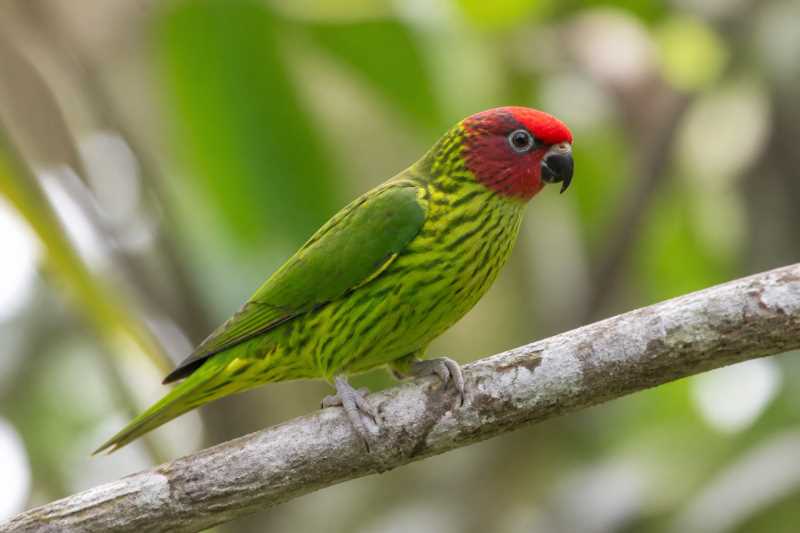
Adult Goldie’s Lorikeets are small, measuring approximately 19 cm (7.5 inches) in length and weighing around 45-60 grams. Their plumage is predominantly green, with a bright crimson crown, a vivid yellow nape, and a striking blue throat and chest. The underparts are a lighter green, while the tail feathers are edged with a subtle blue hue. Their eyes are a deep red, adding to their vibrant appearance.
Habitat and Distribution
Goldie’s Lorikeet is endemic to the montane rainforests of New Guinea, primarily found at elevations between 1,000 and 2,500 meters. They inhabit the mid-montane and lower montane forests, where they can be seen flitting through the canopy in search of food. These birds have a preference for areas with an abundance of flowering trees, which provide a rich source of nectar and pollen.
The distribution of Goldie’s Lorikeet is largely restricted to the central and eastern parts of the island, with populations reported in the Owen Stanley Range, the Huon Peninsula, and the Central Highlands. Despite their relatively limited range, they are considered fairly common within suitable habitats.
Behavior and Diet
Goldie’s Lorikeets are highly social birds, often seen traveling in small flocks of up to 15 individuals. They are known for their acrobatic flight patterns and swift, darting movements as they navigate the dense forest canopy. Their vocalizations are a series of high-pitched chirps and whistles, which they use to communicate with each other while foraging or in flight.
The diet of Goldie’s Lorikeet is primarily composed of nectar and pollen, which they obtain from a variety of flowering plants, including eucalyptus, melaleuca, and schefflera. Their brush-tipped tongues are specially adapted to extract nectar from deep within the blossoms, while their beaks are used to crush pollen grains. In addition to nectar and pollen, they also consume fruits, seeds, and the occasional insect.
Breeding and Lifespan
Breeding season for Goldie’s Lorikeet typically occurs between June and October, coinciding with the peak flowering period of many native plants. Nesting sites are usually located in tree hollows or crevices high above the ground, providing protection from predators.
Females lay a clutch of two to three eggs, which are incubated for approximately 24 days. Both parents are involved in feeding and caring for the chicks, which fledge about eight weeks after hatching. In the wild, Goldie’s Lorikeets have a lifespan of around 10-15 years, although they can live longer in captivity with proper care.
Conservation Status
Despite their vibrant appearance and popularity, Goldie’s Lorikeets are classified as Least Concern by the International Union for Conservation of Nature (IUCN). Their populations are considered stable, and they are not currently facing any major threats in the wild.
However, habitat loss due to deforestation and land conversion for agriculture poses a potential risk to their long-term survival. Conservation efforts aimed at preserving their natural habitats, along with sustainable land-use practices, are essential to ensure the continued existence of these stunning birds.
Challenges and Threats
The primary threat to Goldie’s Lorikeet is habitat destruction, as large swathes of New Guinea’s rainforests are cleared for timber, palm oil plantations, and agricultural expansion. This not only reduces the available habitat for the lorikeets but also affects the abundance of flowering plants they rely on for food.
Climate change also poses a significant threat, as shifting weather patterns and increasing temperatures can alter the flowering cycles of plants and the availability of nectar. This could have cascading effects on the lorikeet’s food supply and breeding success.
Conservation Efforts
Efforts to conserve Goldie’s Lorikeet and their habitats are underway, with several organizations working to promote sustainable land-use practices and protect the rainforests of New Guinea. Community-based conservation initiatives are also being implemented to engage local communities in the preservation of their natural heritage.
Raising awareness about the importance of preserving biodiversity and the unique ecosystems of New Guinea is crucial to ensure the continued survival of Goldie’s Lorikeet and other endemic species. By supporting conservation efforts and promoting sustainable practices, we can help safeguard the future of these remarkable birds.
Conclusion
Goldie’s Lorikeet is a testament to the rich biodiversity of New Guinea’s rainforests. Their vibrant plumage and lively behavior make them a cherished species among birdwatchers and conservationists alike. While they are not currently under significant threat, ongoing efforts to protect their habitats and raise awareness about the challenges they face are essential to ensure their continued survival.
Through concerted conservation efforts and sustainable practices, we can help preserve the incredible beauty and diversity of New Guinea’s avian fauna, ensuring that future generations can continue to marvel at the wonders of Goldie’s Lorikeet.
Related posts