Taiwan Partridge: A Jewel of Taiwan’s Avian Diversity
The Taiwan Partridge (Arborophila crudigularis) is a captivating bird species endemic to the lush forests of Taiwan. Renowned for its vibrant plumage and distinctive calls, this bird plays a significant role in Taiwan’s rich biodiversity. This article delves into the fascinating world of the Taiwan Partridge, exploring its habitat, behavior, and conservation status.
Habitat and Distribution
The Taiwan Partridge is primarily found in the mid-elevation broadleaf and mixed montane forests of Taiwan. These birds prefer dense undergrowth areas, which provide ample cover and food resources. The island’s varied topography, ranging from sea level to mountain peaks, offers diverse habitats that support a wide range of flora and fauna, including the Taiwan Partridge. However, their preferred habitat is typically found at elevations between 1,000 and 2,800 meters.
This species is endemic to Taiwan, meaning it is not found naturally anywhere else in the world. The island’s isolation and unique ecosystems have contributed to the evolution of this distinctive bird, making it a crucial component of Taiwan’s natural heritage.
Physical Characteristics
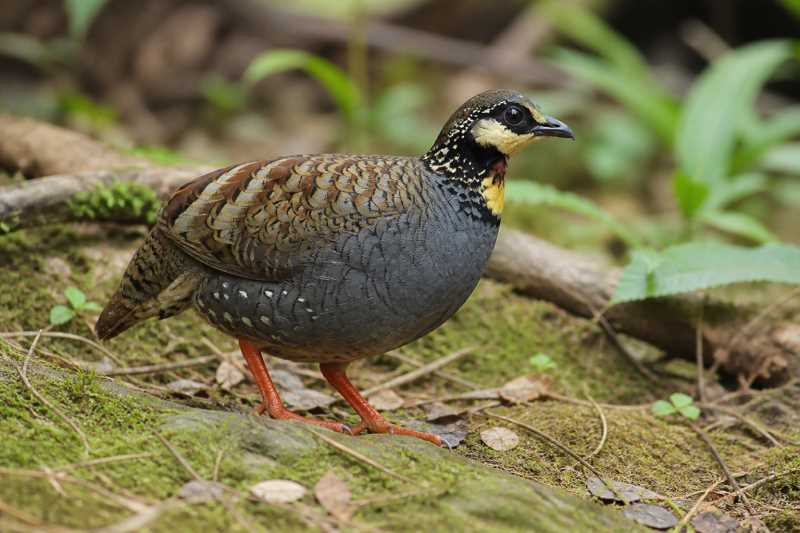
The Taiwan Partridge is a medium-sized bird, measuring around 28 to 32 centimeters in length. Its plumage is characterized by a striking combination of rich browns, grays, and blues, with white and black markings that make it easily distinguishable. The bird’s head is adorned with a slate-gray crown and a contrasting white throat patch, bordered by a bold black line.
Both sexes appear similar, although females tend to be slightly smaller and less brightly colored than males. Juvenile partridges resemble adults but have a more subdued coloration, which assists in camouflage during their vulnerable early months.
Behavior and Diet
Taiwan Partridges are primarily ground-dwelling birds, spending much of their time foraging on the forest floor. Their diet mainly consists of seeds, berries, insects, and other small invertebrates. They use their strong legs to scratch through leaf litter in search of food.
These birds are known for their social behavior, often seen in small family groups or pairs. During the breeding season, which typically occurs between April and June, they exhibit a range of vocalizations. Their calls, a series of whistles and trills, serve as communication between mates and to establish territories.
Taiwan Partridges are monogamous, forming long-term pair bonds. The female usually lays a clutch of 4 to 6 eggs in a shallow nest on the ground, hidden among vegetation. Both parents take turns incubating the eggs and caring for the chicks once they hatch.
Conservation Status and Threats
The Taiwan Partridge is currently classified as Near Threatened on the IUCN Red List. The primary threat to this species is habitat loss due to deforestation and land-use changes, driven by agriculture and urban development. Although the bird is not immediately at risk of extinction, its population is experiencing a decline, warranting concern and conservation efforts.
Efforts to conserve the Taiwan Partridge are ongoing, with a focus on habitat protection and restoration. Several protected areas and national parks in Taiwan provide refuge for this and many other endemic species. Additionally, awareness campaigns aim to highlight the importance of preserving Taiwan’s unique biodiversity.
Conclusion
The Taiwan Partridge is a remarkable example of Taiwan’s rich avian diversity. Its presence in the island’s forests is a testament to the unique evolutionary processes that occur in isolated ecosystems. Protecting the Taiwan Partridge and its habitat is not only crucial for maintaining biodiversity but also for preserving the natural heritage of Taiwan for future generations.
As we continue to face global environmental challenges, the conservation of species like the Taiwan Partridge serves as a reminder of the interconnectedness of all life on Earth and the importance of safeguarding our natural world.
Related posts