The Carrion Crow: An In-depth Look at Corvus corone
The Carrion Crow (Corvus corone) is a bird species that has long fascinated ornithologists, ecologists, and casual bird watchers alike. Known for its intelligence, adaptability, and distinct appearance, the Carrion Crow is a member of the Corvidae family, which includes other highly intelligent birds such as ravens, magpies, and jays. This article delves into the various aspects of the Carrion Crow, including its physical characteristics, behavior, habitat, and the role it plays in ecosystems.
Physical Characteristics
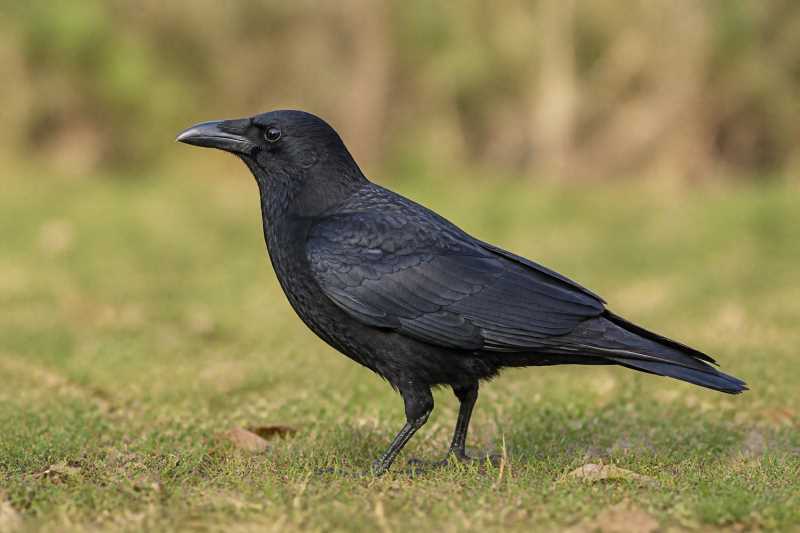
The Carrion Crow is a medium-sized bird, with a body length ranging from 44 to 51 centimeters and a wingspan of approximately 84 to 100 centimeters. It typically weighs between 370 to 650 grams. Its plumage is entirely black, often with a slight sheen that can appear either greenish or bluish in certain lighting conditions. This glossy appearance is a distinguishing feature among corvids.
The crow’s robust bill is black and slightly curved, well-suited for a diet that includes a variety of foods. Its eyes are dark brown, and its legs and feet are also black, contributing to its overall monochromatic appearance.
Behavior and Intelligence
Carrion Crows are renowned for their intelligence. They are problem solvers, known to use tools and exhibit behaviors that suggest a high level of cognitive function. Studies have shown that crows can recognize human faces, use traffic to crack nuts, and even engage in play.
They are also social birds, often seen in pairs or small family groups. During winter, however, they may form larger flocks, sometimes joining other corvids. This social structure is believed to aid in the learning and transmission of complex behaviors.
Vocal communication is another remarkable aspect of Carrion Crow behavior. They have a wide array of calls and can mimic sounds from their environment. Their vocalizations are used to communicate with other crows, establish territory, and warn of potential threats.
Habitat and Distribution
Carrion Crows are highly adaptable and can be found in a range of environments across Europe and Asia. They inhabit woodlands, agricultural areas, urban settings, and coastal regions. This adaptability is one of the reasons for their widespread presence.
In urban areas, Carrion Crows have thrived by exploiting human developments, often seen scavenging in parks, gardens, and rubbish dumps. Their ability to adapt to different environments has helped them maintain stable populations despite changes in land use and human encroachment.
Diet and Foraging
As omnivores, Carrion Crows have a diverse diet that includes insects, small mammals, fruits, seeds, and carrion. Their name is derived from their propensity to feed on carrion, although they are not exclusively scavengers.
Their foraging behavior is opportunistic and resourceful. In urban settings, they are known to raid bins and exploit food scraps. In rural areas, they may follow tractors to feed on disturbed soil invertebrates and seeds.
Breeding and Lifespan
Carrion Crows are monogamous, forming long-term pair bonds. They typically breed in the spring, with nesting beginning in March or April. Nests are constructed from twigs and lined with softer materials, often located high in trees or on man-made structures like pylons.
A typical clutch consists of 3 to 6 eggs, which are incubated for about 18 to 21 days. Both parents are involved in feeding and raising the young, which fledge approximately 4 to 5 weeks after hatching.
In the wild, Carrion Crows can live for up to 20 years, although many do not survive beyond their first few years due to predation and environmental hazards.
The Ecological Role of Carrion Crows
Carrion Crows play an important role in their ecosystems. As scavengers, they help in the decomposition process by consuming carrion, which aids in nutrient cycling. Their predation on insects and small mammals also helps control those populations.
Moreover, their presence in urban environments can be seen as an indicator of ecological health, as they thrive in areas where biodiversity is maintained.
Human Interaction and Cultural Significance
Throughout history, crows have held a significant place in human culture and mythology. Often associated with mystery, death, and the supernatural, they feature prominently in folklore and literature. Despite negative connotations, many cultures also revere crows for their intelligence and adaptability.
In contemporary settings, Carrion Crows are often misunderstood and may be perceived as pests. However, their adaptability and intelligence make them fascinating subjects of study, offering insights into avian cognition and behavior.
Conservation Status
The IUCN Red List classifies the Carrion Crow as a species of Least Concern. Their adaptability to various environments has allowed them to thrive despite habitat changes and human encroachment. However, ongoing monitoring is essential to ensure their populations remain stable, particularly in areas where habitat destruction and pollution are prevalent.
Conclusion
The Carrion Crow is a remarkable bird, exemplifying the intelligence and adaptability of the Corvidae family. From its distinct physical characteristics to its complex behaviors, the Carrion Crow continues to captivate those who study it. As we continue to learn more about these birds, they remind us of the intricate connections within ecosystems and the importance of preserving biodiversity in all its forms.
Related posts