The Snowy Sheathbill: Antarctica’s Unique Avian Resident
In the icy expanses of Antarctica and the sub-Antarctic islands, one bird stands out for its adaptability and survival skills in some of the harshest environments on Earth—the Snowy Sheathbill (Chionis albus). Often overshadowed by the more iconic penguins and seals of the region, the Snowy Sheathbill is a fascinating species that plays a crucial role in the Antarctic ecosystem.
Physical Characteristics and Identification
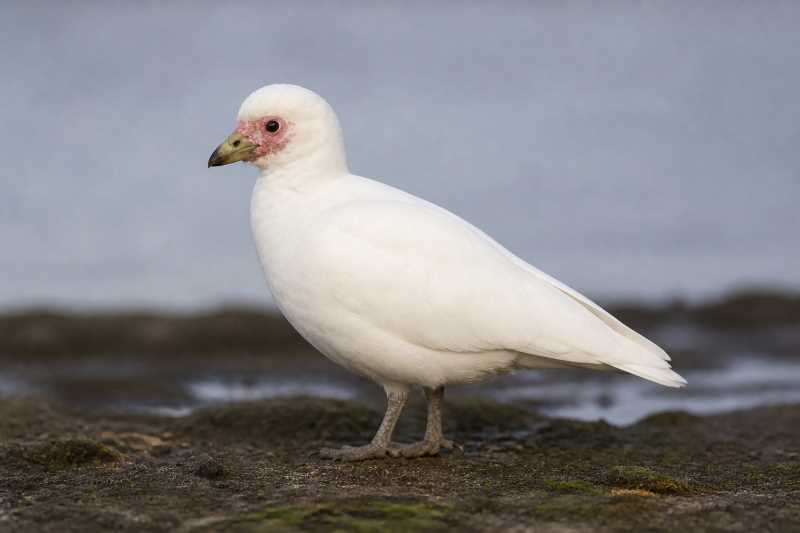
The Snowy Sheathbill is a medium-sized bird, typically measuring around 34 to 41 centimeters in length. It is the only land bird native to Antarctica, making it a unique avian resident of the continent. The bird’s most distinctive feature is its pure white plumage, which provides excellent camouflage against the snowy landscape. It has a robust body, short legs, and a distinctive sheath-like covering over its nostrils, which gives the bird its name.
The sheathbill’s beak is short and stout, with a slight hook at the tip, adapted for its opportunistic feeding habits. The legs and feet are strong, enabling it to walk over rocky and icy terrains. Despite its pigeon-like appearance, the Snowy Sheathbill is not a true seabird and lacks webbed feet. Its red eyes and pinkish legs contrast starkly against its white feathers, adding to its unique appearance.
Habitat and Distribution
Snowy Sheathbills are non-migratory birds that inhabit coastal regions of Antarctica and the sub-Antarctic islands, including the South Orkney Islands, South Georgia, and the South Sandwich Islands. They are often found near penguin colonies and seal rookeries, where they take advantage of the abundance of food resources.
Unlike many other birds in the region, Snowy Sheathbills do not have a specialized habitat preference and are quite adaptable. They can be found on rocky shores, ice-free areas, and even human settlements, where they scavenge for food scraps. Their adaptability to different environments is a testament to their survival instincts in a challenging habitat.
Diet and Feeding Behavior
The Snowy Sheathbill is an omnivorous scavenger, and its diet is highly varied. It feeds on a wide range of organic matter, including carrion, eggs, and chicks of other bird species, as well as invertebrates and plant material. During the breeding season, it is not uncommon for sheathbills to feed on the feces of seals and penguins, which are rich in undigested nutrients.
Sheathbills are opportunistic feeders, often seen foraging in large groups around penguin colonies, where they clean up after the penguins. They also prey on the eggs and chicks of other birds, making them both scavengers and predators. This opportunistic feeding behavior plays a vital role in the ecosystem by controlling waste and helping to recycle nutrients.
Breeding and Reproduction
Breeding occurs during the Antarctic summer, from November to March. Snowy Sheathbills are monogamous and form long-term pair bonds. They nest on rocky cliffs and ledges, often in crevices or under rocks to protect their eggs from predators and harsh weather conditions. The female typically lays two to three eggs, which are incubated by both parents for about 28 to 32 days.
Once hatched, the chicks are cared for by both parents and fledge after approximately nine weeks. The parents continue to feed and protect the fledglings until they are capable of foraging independently. The survival rate of chicks can be highly variable, influenced by food availability and predation pressure.
Conservation Status and Threats
The Snowy Sheathbill is currently listed as Least Concern by the International Union for Conservation of Nature (IUCN). Despite its stable population, the species faces several threats. Climate change poses a significant risk, with rising temperatures potentially affecting food availability and breeding habitats.
Human activities also present challenges. Increased tourism and research activity in Antarctica can lead to habitat disturbance and increased competition for food resources. However, protective measures under the Antarctic Treaty System help mitigate some of these impacts.
Conclusion
The Snowy Sheathbill may not be as celebrated as Antarctica’s penguins or seals, but it is an integral part of the region’s biodiversity. Its remarkable adaptability and unique ecological role highlight the complexity and resilience of life in the extreme environments of the Antarctic.
As we continue to study and understand this enigmatic bird, it becomes increasingly important to ensure its conservation and the protection of its fragile habitat. The Snowy Sheathbill reminds us of the interconnectedness of life and the importance of preserving the natural world for future generations.
References
- BirdLife International. (2023). "Chionis albus." The IUCN Red List of Threatened Species.
- Trivelpiece, W., & Fraser, W. (1996). "Ecology and status of the Snowy Sheathbill in Antarctica." Journal of Avian Biology.
- Stonehouse, B. (1975). "The biology of Snowy Sheathbills on the Antarctic Peninsula." British Antarctic Survey Scientific Reports.
Related posts